

Joel Rifkin House Listed for $799,999
The murder-linked East Meadow home once occupied by convicted serial killer Joel Rifkin has returned to the market at an asking price reported at about $799,999.
Located at 1492 Garden Street in East Meadow, Long Island, the single-family house reappeared in June 2026 on major real-estate platforms. Coverage places the asking range between $799,000 and $800,000. Under New York law, written inquiry is required before buyers must be told truthfully about crimes or deaths connected to the property.
Price History and Market Signals
The home previously sold for $322,000 in 2011, indicating an increase of roughly 148 percent over about 14 years.
Reports describe the current price as broadly consistent with comparable neighborhood listings, suggesting limited visible discounting. Broader housing policy debates, including expanded tenant protections, have also increased attention on how regulation shapes investor behavior and property values.
The property is described as a four-bedroom expanded ranch built in 1951, measuring about 1,649 to 1,675 square feet.
Media ethics and market psychology shape how such listings are discussed and interpreted by buyers today.
Why the East Meadow House Is Notorious
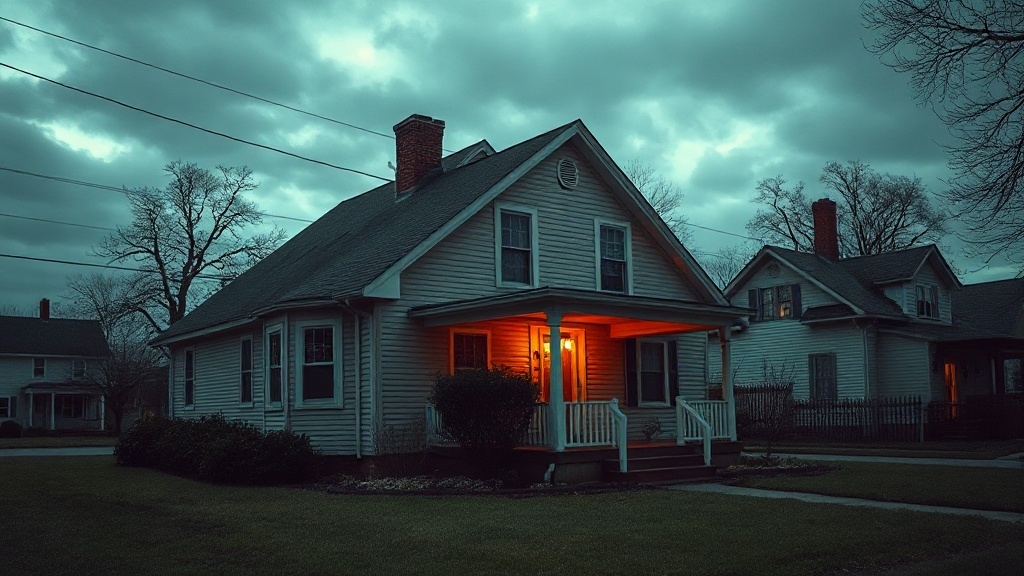
Rooted in one of Long Island’s most infamous murder cases, 1492 Garden Street became notorious because Joel Rifkin lived there during the years linked to his crimes. Reports also alleged that multiple killings and dismemberments took place inside the house and garage.
The East Meadow property was described as both a family home and a crime scene from 1989 to 1993. Rifkin later confessed to 17 murders, and news coverage identified the victims as female sex workers.
At least one body was reportedly stored in the detached garage. Its ordinary suburban appearance has only intensified public fascination in true crime coverage.
The four-bedroom ranch, built in 1951, looks unremarkable from the outside. Yet its history created lasting neighborhood stigma.
That contrast between a familiar setting and alleged violence is what fixed the address in public memory. In a very different corner of Long Island real estate, a record-breaking sale recently highlighted how dramatically buyer attention can shape a property’s public profile.


How Joel Rifkin’s House Price Compares
Despite the stigma tied to 1492 Garden Street, recent reporting places the former Joel Rifkin home on the market at $799,999. Some listings round that to roughly $800,000.
Market Comparison
Its price trajectory stands out against the previous recorded sale of $322,000 in 2011.
That change equals roughly a 148% gain over about 14 years. The current ask is about $478,000 above the prior sale price.
Recent coverage says neighborhood comparisons place it in line with nearby East Meadow homes. Reports describe no steep discount tied to the property’s history.
The house appears valued more like a standard East Meadow listing than a distressed outlier.
At roughly 1,649 to 1,675 square feet, with four bedrooms and two bathrooms, the home includes a garage, pool, and vaulted ceilings. Its pricing reflects current suburban Long Island conditions.
What Sellers Must Disclose in New York
In New York, most sellers of residential property with four or fewer units must complete a Property Condition Disclosure Statement. They must provide it before a contract is signed.
The form focuses on known defects and current conditions within the seller’s knowledge. It does not require a separate inspection.
It asks about structural issues such as roofs, foundations, walls, floors, beams, and damage related to water, fire, smoke, or insects.
It also covers mechanical systems, utilities, drainage, sewage, water supply, flooding history, legal disputes, zoning limits, repairs, and alterations.
Environmental questions may address mold, asbestos, lead pipes, fuel tanks, hazardous releases, wetlands, landfills, and floodplain proximity.
Not every transfer is covered. Exemptions include certain court-ordered, foreclosure-related, fiduciary, family, government, and some new-construction transactions under state law.
Why Notorious Long Island Homes Still Sell
For some Long Island properties, notoriety functions less as a fatal flaw and more as a market category of its own.
Built-in recognition from headlines, films, and true-crime coverage keeps these homes visible. Media fascination can turn stigma into awareness.
Four Forces Behind Sales
1. Brand recognition reduces buyer education.
The story is already widely known, so sellers spend less time explaining the property’s background.
2. Price cuts absorb hesitation.
That was clear when the Amityville house sold for $605,000, more than $200,000 below asking.
3. Scarcity and strong Long Island pricing support demand.
Regional median prices are still rising, which helps keep buyers in the market.
4. Buyer segmentation matters.
Niche collectors and curiosity-driven buyers may value architecture, land, or investment potential more than reputation.
In that environment, a dark history narrows the audience but does not erase it.
Proper pricing and location can still move inventory.
Assessment
The East Meadow listing shows how stigma can linger for decades while market forces still set a price. At $799,999, the property reflects location, lot value, and condition, but its history remains inseparable from public perception.
In New York, disclosure rules shape how much sellers must reveal, yet notoriety often travels faster than paperwork. Even so, Long Island’s tight housing supply and investor interest continue to move difficult properties into the market and eventually into contract.