

Why Queen City Quarter Is Back on the Market
In the wake of foreclosure, Queen City Quarter returned to the market after years of financial and operational distress undermined its recovery.
The previous owner defaulted on an $85 million loan, leading to foreclosure in March 2022. Deutsche Bank then acquired the property for $95 million at auction in August 2022 as the sole bidder.
That reset ownership, but it did not resolve weak post-pandemic performance or support a long-term bank hold strategy. CBRE was later brought in to help reposition the asset after foreclosure acquisition.
Vacancy, Traffic, and Reputation Pressures
Leasing remained severely challenged, with only about a dozen active tenants and vacancy near 76%.
Reduced foot traffic continued to pressure sales, while safety concerns and a nightlife-centered reputation discouraged broader demand. Comparable urban recovery efforts increasingly emphasize mixed-use integration and transit accessibility to rebuild activity and long-term value.
The 2023 rebrand improved optics, but community engagement, capital investment, and mixed use integration remained essential to any credible revival.
What’s Included in Queen City Quarter
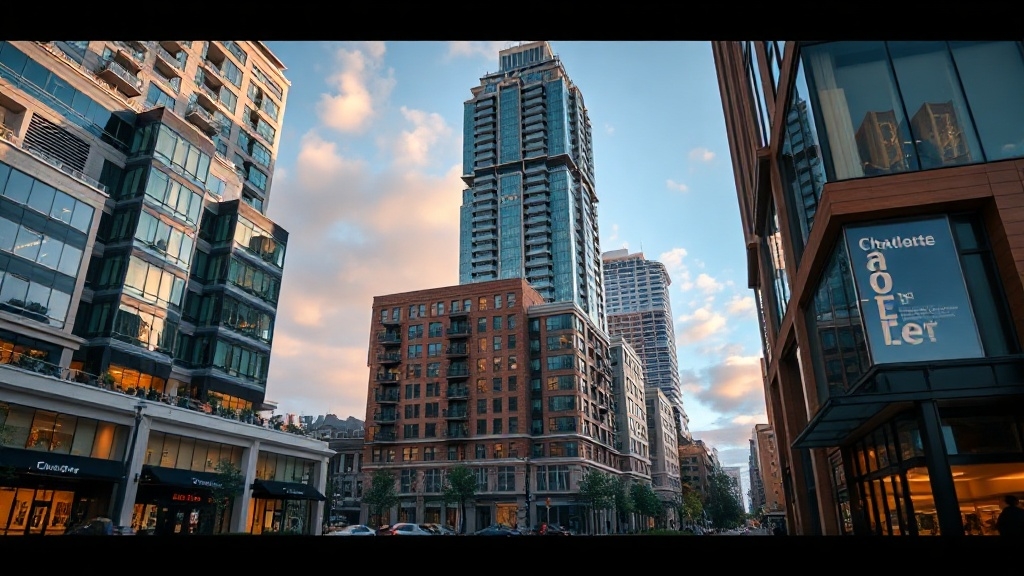
Queen City Quarter is a three-acre mixed-use complex at 210 E. Trade St. in Uptown Charlotte. It brings together retail, dining, office, hotel, and entertainment venues in an open-air setting between Trade Street and Fourth Street.
The property is positioned as a place to visit, stay, host, or lease.
Tenant Mix and Visitor Uses
Its mixed-use amenities include restaurants, bars, a coffee shop, retail space, and outdoor patios. These spaces serve both daytime visitors and nightlife traffic.
Past and current offerings have included Cantina Laredo, Fleming’s Prime Steakhouse & Wine Bar, Flying Biscuit, PJ’s Coffee and Wine Bar, and specialty retail concepts.
Entertainment venues have included a bowling alley, a five-screen cinema, rooftop space, and live entertainment uses.
The site also offers 1,100 underground parking spaces. It also connects to Overstreet Mall and the LYNX Blue Line.
Similar mixed-use assets continue to draw investor attention as growing housing demand and evolving urban development patterns reshape major real estate markets.


Why Vacancy and Foreclosure Forced a Reset
That broad mix of uses no longer translated into stable income once vacancy surged across both the property and Uptown Charlotte.
Occupancy at Queen City Quarter hovered near 30%, with just 30.6% reported in October across 50 tenant spaces and 302,324 square feet.
Fewer than 20 businesses remained open, and most surviving tenants were service-oriented, reflecting sharp market erosion in the entertainment and retail base.
Foreclosure Followed Broader Distress
Uptown office vacancy reached 24.6%, far above a balanced range, as hybrid work and flight-to-quality trends weakened older buildings.
Rising interest rates further constrained refinancing and recovery options.
In that setting, foreclosure reflected not a single asset problem but a wider lender strategy response to delinquency, declining demand, and persistent stress across Charlotte’s aging mixed-use and office inventory.
What a Sale Could Mean for Uptown Charlotte
At stake for Uptown Charlotte is whether a sale can turn one of Trade Street’s most visible weak points back into a functioning retail and pedestrian link.
Queen City Quarter remains tied to Overstreet Mall and the LYNX Blue Line, giving it unusual potential to improve pedestrian connectivity for office workers, residents, and visitors.
With uptown offices 94% leased and foot traffic up 2% to 3% in June 2026 from June 2024, the nearby customer base exists if the property can be repositioned.
Retail and Spillover
The complex is only about 32.5% leased, with more than 193,000 square feet available, so a buyer would be taking on more than routine leasing.
A reset in tenant mix, physical design, and public programming could help convert a gap in energy into stronger street-level activity.
What to Watch in the Next Sale Process
In the coming weeks, the sale process will likely be defined first by speed, buyer reach, and the market’s willingness to underwrite a large mixed-use asset with persistently weak occupancy.
CBRE is expected to launch marketing soon, but no public date is confirmed.
That compressed window could pressure financing timelines, site tours, and due diligence.
Buyer Demand Under Stress
CBRE has indicated both broad marketing and targeted investor outreach.
That approach could widen bidding while also testing interest from groups focused on repositioning distressed urban entertainment properties.
Vacancy remains the central underwriting issue.
Reports have placed occupancy between 12 and 14 filled spaces out of 50, with recent tenant closures and eviction activity adding uncertainty.
Pricing Pressure
Buyers will likely compare any offer with Deutsche Bank’s 2022 foreclosure acquisition at $95 million.
Assessment
Queen City Quarter’s contract status marks a critical turn for one of Uptown Charlotte’s most visible distressed assets.
After foreclosure, high vacancy, and years of uncertainty, the pending sale signals a possible reset for the mixed-use property and its surrounding retail corridor.
The outcome now depends on buyer identity, pricing, financing, and redevelopment intent.
Until a deal closes, the property remains a closely watched test of investor confidence in Uptown Charlotte’s recovery and long-term commercial stability.