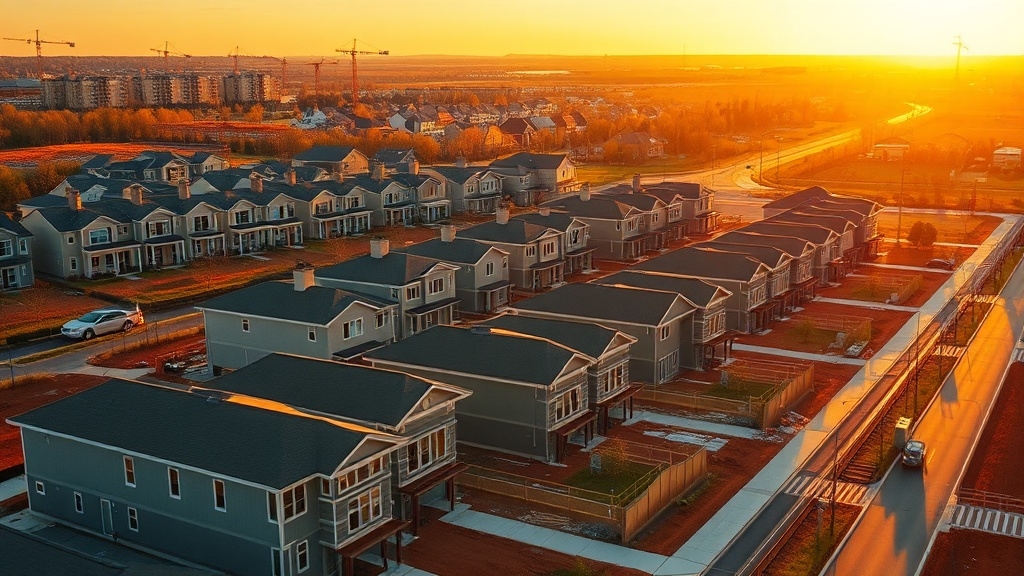
Why Denver Home Prices Are Falling Now
Pressure is building across Denver’s housing market as high mortgage rates, strained affordability, and broader economic uncertainty push more buyers to the sidelines.
Borrowing costs, inflation, tariffs, and immigration policy have made purchasing decisions harder to steer.
That uncertainty is feeding mortgage fatigue and buyer hesitation across the metro.
Denver’s price slide also reflects a post-pandemic correction.
Values surged 38.5 percent from March 2020 to April 2022, when unusually low rates inflated purchasing power.
Now, that pricing is being deflated.
The market is absorbing wider economic pressure rather than functioning on housing fundamentals alone.
Inventory has climbed to about 8,500 homes, the highest level in more than a decade.
The numbers show the reset clearly.
The median sale price fell to $571,250 in January from $614,000 in October.
Inventory rose 10 percent from a year earlier, adding to the market’s buyer advantage.
At the same time, 91 percent of metro homes lost value over the past year, the highest share nationally.
How Rising Inventory Is Reshaping Denver
As inventory expands, Denver’s housing market is becoming more segmented and more price-sensitive.
Active listings reached 8,228 by late January. From February to March, inventory climbed another 19.94%.
That unusual buildup, despite normal seasonal patterns, is giving buyers more choice. It is also increasing pricing pressure across slower-moving segments.
This shift mirrors Colorado’s broader move toward a buyer’s market, as rising inventory gives buyers more leverage in negotiations.
| Measure | Denver shift |
|---|---|
| Active listings | 8,228 in January |
| Pending sales | Up 30.69% in March |
Competition now varies sharply by category. Lower-priced homes remain relatively tight at 2.23 months of supply.
Attached and luxury properties are seeing longer marketing times. They are also facing wider negotiation ranges.
Pricing strategy has become central. Closed sales remain below the previous year.
Yet homes still averaged 19 days on market in March. That shows demand persists for well-positioned listings, not for every listing.
How Much Denver Home Prices Could Fall in 2026
Inventory growth is now feeding directly into the question of how far Denver home values could retreat in 2026.
February’s median sale price stood at $575,000, down 4.2% from a year earlier, even after a 1.8% monthly rise.
That suggests short-term firmness but broader downward pressure.
Current price scenarios point to additional declines if supply keeps expanding.
Active listings rose 11.1% year-over-year in January, while inventory was reportedly up nearly 600% in early 2026.
Downside Risks Build
Negotiation signals also imply softer pricing ahead.
The close-price-to-list-price ratio fell to 97.94%, and price reductions climbed to 19.7%.
Those shifts usually reflect changing buyer behavior as households gain leverage and resist higher asks.
A mild path would mean low-single-digit losses.
A deeper correction could approach the referenced 9% drop from mid-2025 levels.
What Slower Denver Home Sales Mean for Buyers and Sellers
For Denver buyers and sellers, slower home sales are reshaping the market into one that rewards patience and punishes mispricing.
With more than 8,200 active listings and homes lingering beyond 50 days, buyers hold more negotiation leverage. They can compare options, press for seller concessions, and restore inspection contingencies once waived during faster markets.
Sellers face a narrower buyer pool as elevated rates sideline first-time purchasers. Listings priced too high or poorly prepared risk sitting for months, even after reductions.
| Market factor | Buyer effect | Seller effect |
|---|---|---|
| Higher inventory | More choice | More competition |
| Longer market times | More leverage | Slower decisions |
| Fewer first-time buyers | Less urgency | Weaker demand |
| Seller concessions | Lower costs | Reduced proceeds |
Condos, already down 6.5% year-over-year, illustrate how incentives now matter more.
How Denver Housing Differs From National Trends
While Denver still shares the broader U.S. slowdown driven by elevated mortgage rates, its housing market has weakened more sharply in recent years.
This comes after outperforming national price growth for more than a decade.
Denver posted far stronger appreciation than the nation through the 2010s and early 2020s.
But the correction has also been steeper.
Prices fell 2.5% from June 2022, compared with a 0.3% national decline.
Meanwhile, 38.3% of listings saw price cuts versus 26.6% nationally.
Supply Pressures Remain Distinct
Unlike many markets, Denver still faces tighter inventory because of limited land, zoning constraints, and construction bottlenecks.
At the same time, inventory has improved from pandemic lows.
That gives buyers more options while still keeping supply below U.S. averages.
Demand Drivers Are Changing
Steady migration patterns and job growth once cushioned Denver.
But slower population gains and stretched affordability are now weakening demand.
Assessment
Denver’s housing market is undergoing a sharp reset as rising supply, slower sales, and weakening demand push prices lower.
The city’s downturn stands out nationally, reflecting pressure from elevated mortgage rates and fading pandemic-era momentum.
If inventory continues climbing through 2026, additional price erosion appears likely, especially in oversupplied segments.
For buyers and sellers, the market now demands faster price adjustments, longer timelines, and closer attention to shifting local conditions and affordability constraints.