

What Happened in the KC Wheel Sale?
The KC Wheel property changed hands in June 2026 as uncertainty continued to surround the stalled Pennway Point entertainment district in Kansas City.
The transaction involved the Westside site tied to the broader Pennway Point plan, a development that has lacked clear forward progress.
The property moved under a ground lease, marking an ownership transfer of the underlying real estate rather than a reset of the larger district. The buyer was Essential Properties, the New Jersey REIT identified in the article title.
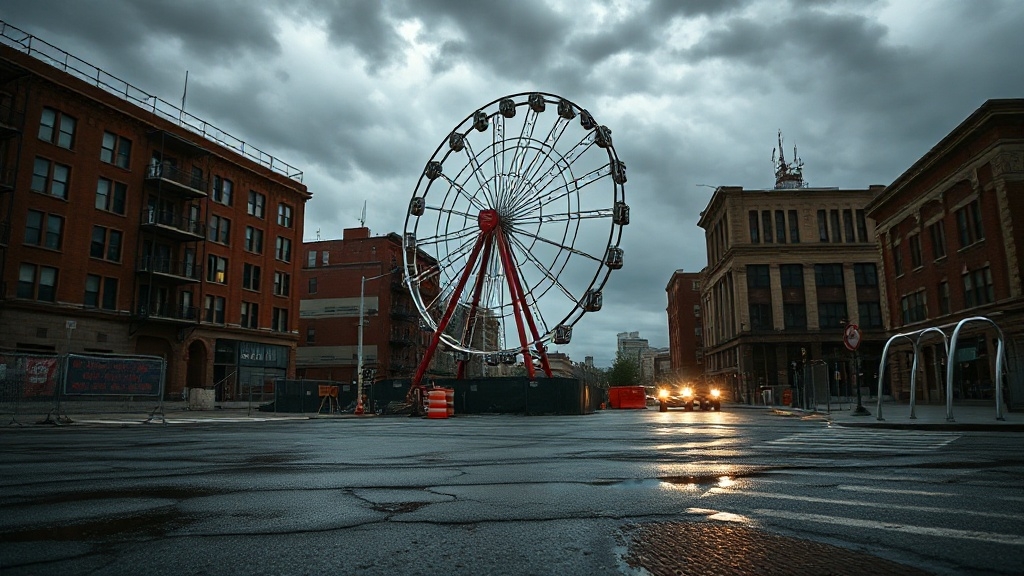
At the time of sale, the wheel was already turning off I-35 and continued operating separately from the unfinished district structure.
Public reporting indicated operational continuity, with no sign that the attraction’s day-to-day status changed because of the deal. Similar deals elsewhere have shown how strategic locations can preserve asset appeal even when surrounding development momentum slows.
The sale highlighted a shift in site control while broader questions about Pennway Point’s incomplete buildout remained unresolved.
Who Bought the KC Wheel Property?
Notably, Essential Properties Realty Trust bought the KC Wheel property, according to the Kansas City Business Journal.
The buyer is a New Jersey-based real estate investment trust, or REIT, identified as the new owner of the Westside site tied to the planned Pennway Point entertainment area.
The acquisition concerns the land near I-35 rather than the wheel’s day-to-day operation.
Reporting indicates the property now sits under a ground lease, placing control of the real estate with an institutional buyer as uncertainty continues around the broader district.
This kind of institutional ownership shift reflects broader real estate trends where market reach and control of strategic sites can influence pricing and redevelopment outcomes.
The transaction points to a change in land ownership within the redevelopment area, not a transfer of the separately operated attraction itself.
That distinction matters because Pennway Point remains stalled, while the site has moved into a new ownership structure.


Why Did the KC Wheel Property Sell?
Often, property tied to a stalled development sells because landowners and investors need to reposition assets when projected district growth fails to arrive on schedule.
At Pennway Point, weaker district economics and uncertain market sentiment appear to have reduced confidence in near-term buildout.
The site was part of a larger entertainment vision, but that broader destination had not fully stabilized or secured enough financing support.
Land Value and Ownership Realignment
The sale fits a pattern common in delayed projects, where owners reprice, restructure, or pursue land banking to manage carrying costs and recycle capital.
Because the KC Wheel operated under a ground lease and was owned separately, the transfer pointed more to a landholding realignment than to trouble with the attraction itself.
Limited public incentives likely added pressure, making a land sale a practical response to slower-than-expected development returns.
How Will the KC Wheel Stay Open?
Despite the property sale, the KC Wheel appears positioned to stay open because it operates as a separate, privately funded attraction. It has its own ticketing, staffing, and visitor support systems.
That operational independence supports continued service even while nearby Pennway Point elements face delays. Inspectors had already approved the ride, which helped public operations begin despite unfinished neighboring venues.
Tickets are sold online and at the onsite ticket booth. Support contacts also handle access, purchases, accommodations, and reservation changes.
Daily scheduling, changing hours, and onsite staffing allow flexible operations. Posted calendars help visitors check hours by day and event.
| Factor | Why it supports operations |
|---|---|
| Separate operator | Icon Experience runs it independently |
| Private funding | Less tied to district completion |
| Ticket access | Online and booth sales continue |
| Posted calendar | Hours adjust by day and events |
| Standalone services | Support systems function on site |
Could Pennway Point Get Tax Incentives Later?
Looking ahead, Pennway Point could still seek tax incentives later, but no such city-backed benefits had been applied to the project as of September 2023.
Reporting said the KC Wheel was privately funded, and its construction used no tax dollars. At that stage, 3D Development had not used Kansas City incentives for Pennway Point either.
Future Approvals Could Change Funding
Developers said they intended to pursue an Enhanced Enterprise Zone abatement and future approvals for a single-property Community Improvement District.
That district financing model would apply only within Pennway Point. If approved by the Kansas City Council, the CID could impose a 1 percent sales tax on purchases inside the district.
That revenue would support infrastructure and maintenance, not represent an existing subsidy for the project.
Assessment
The sale of the KC Wheel property marks a pivotal shift for a stalled riverfront district project in Kansas City.
Ownership has changed hands, but the attraction is expected to remain operating under a lease arrangement, limiting immediate disruption.
The transaction also underscores the financial and development pressures surrounding Pennway Point.
While future tax incentives remain possible, any renewed public support would depend on later approvals, project progress, and broader redevelopment conditions.