

Why This $15M Westchester Home Stands Out
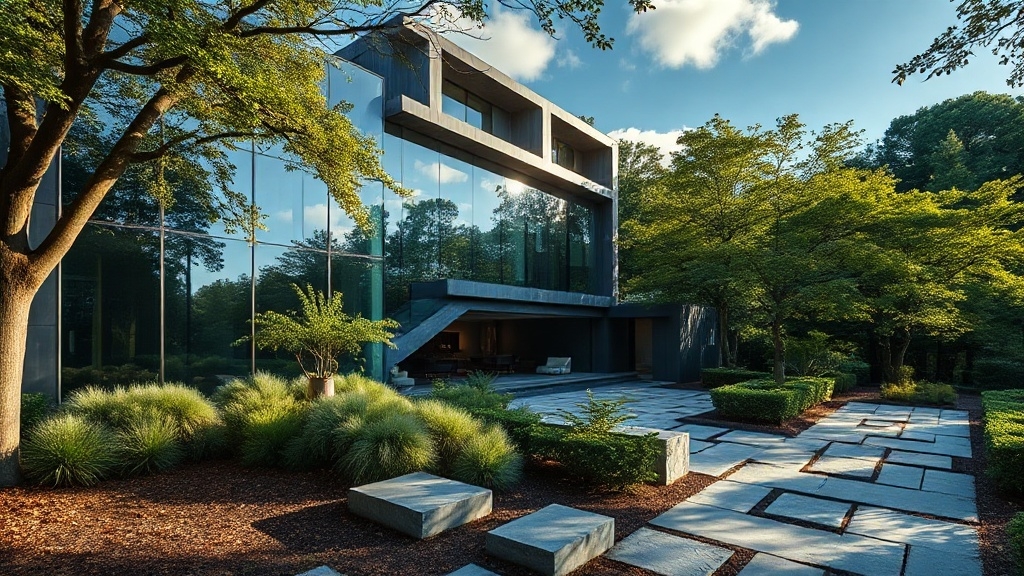
Few Westchester listings at the $15 million level present architecture as the primary event, but this mirrored contemporary home does exactly that.
Its reflective facade recedes into the environs, turning the structure into a study in light, surface, and controlled visibility.
A glass bridge heightens the sculptural composition and reinforces the sense that the residence functions as a design object, not simply a luxury house.
This Westchester property on an eight-acre estate includes three buildings and two in-ground pools, underscoring the scale behind its architectural presence.
Design Pressure at a Rare Price Point
At $15 million, the home sits in one of Westchester County’s rarest pricing tiers.
What distinguishes it is not acreage, waterfront access, or inherited grandeur, but architectural minimalism expressed through mirrored surfaces and modern form.
In a national market where prime residential land continues to command aggressive pricing, homes with strong design identity and privacy appeal can stand apart even more sharply.
The result aligns with buyers drawn to statement ownership, strong visual identity, and privacy-first living within an affluent market.
Why Westchester Works for a Mirrored Home
Westchester provides the physical and market conditions that allow a mirrored residence to function as intended.
Its lower-density setting gives bold architecture the visual breathing room often unavailable in Manhattan.
Large lots and private acreage support privacy, site integration, and the retreat-like quality such a home depends on.
The county also delivers strong commuter appeal.
Metro-North access places many towns within an hour of Manhattan, allowing owners to keep daily ties to the city while living in a more secluded environment.
Westchester County Airport adds another layer of convenience for regional travel.
Market conditions further strengthen the fit.
Affluent communities, architectural variety, and demand for high-end homes create room for a distinctive property to find buyers.
Top schools, amenities, and scenic surroundings reinforce long-term desirability and support value retention over time.
Recent luxury transactions elsewhere, including San Francisco’s record sale benchmark, show how standout homes can reset expectations for premium properties in competitive markets.


How the Mirror Facade and Glass Bridge Work
At the building level, the home’s mirrored effect comes from highly reflective glass or polished metal. These surfaces send daylight and surrounding views back outward.
Through reflective optics and structural glazing, the exterior can blur boundaries and soften mass. It also shifts with weather, light angle, and viewing position.
Double-glazed assemblies and coatings can limit solar heat gain. At the same time, they preserve daylight and broad views.
Key Effects
| Element | Function | Feeling |
|---|---|---|
| Mirror skin | Reflects surroundings | Quiet awe |
| Segmented panels | Control rigidity | Subtle order |
| Interior mullions | Smooth exterior plane | Calm continuity |
| Glass bridge | Connects volumes transparently | Suspended wonder |
The glass bridge typically uses laminated load-bearing panels with engineered supports. This allows for safe pedestrian use.
As a transparent connector, it extends sightlines and daylight. Surrounding reflective surfaces also intensify depth and movement.
How the $15M Price Compares in New York
In Manhattan, a $15 million listing stands far outside normal market conditions. The borough’s median home price is $1.44 million, placing this figure at more than 10 times the local benchmark.
Citywide, the $925,000 median makes the same asking price roughly 16 times typical levels.
This market positioning places the property in a rare upper-luxury class rather than the broad luxury middle. At Manhattan’s typical $1,445 per square foot, $15 million generally signals trophy-address inventory.
Compared with the $5 million tier, which can already secure 1,800 to 2,500 square feet, $15 million usually reflects a sharper premium for privacy, scale, or prestige.
The affordability gap is even clearer against New York’s $76,577 median household income and the city’s strained housing ratios.
Who Will Want a Home Like This?
Perhaps the clearest audience is the discreet luxury buyer, particularly high-net-worth purchasers who place a premium on privacy, low visibility, and architectural distinction.
This home also suits second-home buyers seeking a secluded, design-forward escape within the New York luxury orbit.
Its mirrored exterior appeals to discreet collectors who value rarity, custom execution, and homes that read as singular works.
Demand Drivers
Nature-focused owners may be drawn to the wooded surroundings, water reflections, and stronger visual bond with the site.
Architecture enthusiasts may be attracted to the polished steel, mirrored glass, sculptural form, and experimental modernist expression.
Entertainers or public figures may see it as a memorable setting that functions as a private celebrity retreat.
It is less a conventional status property than a controlled sanctuary for buyers who prefer concealment, calm, and visual drama in equal measure.
Assessment
At $15 million, the mirrored Westchester home enters a narrow segment of New York real estate defined by scarcity, design risk, and elite-buyer expectations.
Its reflective facade, glass bridge, and nature-driven setting separate it from more conventional luxury inventory.
The property is likely to attract buyers seeking privacy, architectural distinction, and a residence with strong visual impact.
In a strained high-end market, homes this specialized can command attention quickly, but only from a limited pool of qualified purchasers.