


What Seattle Social Housing Is
At its core, Seattle social housing is housing developed, owned, leased, and maintained by a public development authority rather than private market actors.
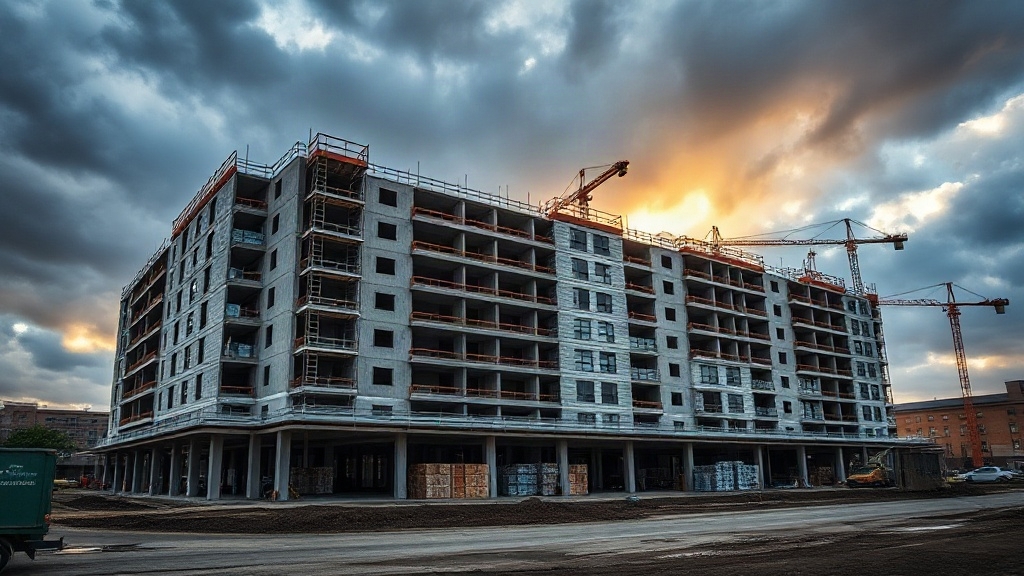
Created through Initiative 135 in 2023, Seattle’s model addresses residents who are rent-burdened and priced out of market-rate housing, yet often earn too much for traditional affordable programs. The urgency is heightened as stalled private tower projects threaten the city’s affordable housing pipeline and expose market stability risks.
Public Mission and Structure
It is designed to serve individuals and families earning up to 120 percent of area median income, with an emphasis on the missing middle.
The model treats housing as a public good through public ownership, holding it in perpetuity as a public asset beyond speculative market pressures.
Affordability and Governance
Rents are intended to remain permanently affordable and capped at no more than 30 percent of household income.
The approach also emphasizes tenant governance, long-term stability, social equity, and displacement prevention.
More than 10,000 people applied to live in Seattle’s first social housing building, underscoring the city’s dire need for affordable homes.
Inside Seattle Social Housing’s First 150 Units
In a major first test of Seattle’s social housing model, the Seattle Social Housing Developer has moved to acquire Elara at the Market, a 150-unit apartment building in Belltown near Pike Place Market.
The eight-story property at 2134 Western Ave. is reported to cost about $60 million to $60.9 million, or roughly $400,000 per unit.
Conversion Plan Relies on Turnover
SSHD says current residents will not be displaced.
Instead, tenant outreach and vacancy sequencing will guide conversion as apartments open.
The acquisition lands as Seattle faces a housing deficit of 71,060 homes, with project delays threatening to deepen shortages for years.
| Item | Detail | Impact |
|---|---|---|
| Building | 150 units | First acquisition |
| Affordable share | 75 units | Half the property |
| Resident protections | Rent freeze, fee cuts, transit passes | Lower tenant costs |
The first 15 vacancies are reserved for households at or below 30% AMI.
The next 45 target 30% to 50% AMI through a lottery.


Who Qualifies and What the Rents Cost
Seattle’s social housing model broadens who can qualify. It extends eligibility to households earning up to 120% of area median income.
Units are structured across four income bands: 0% to 30% AMI, 31% to 50% AMI, 51% to 80% AMI, and 81% AMI and above.
These eligibility tiers are wider than Seattle Housing Authority public housing. SHA generally caps access at 80% AMI and prioritizes households at or below 30% AMI.
Rent Pressures and Affordability Structure
The planned unit mix assigns 10% of homes to households below 30% AMI. The remaining homes are split with 30% in each higher bracket.
For comparison, SHA public housing typically sets rent at 30% of adjusted income. It also has a roughly $50 minimum rent, no application fee, and security deposits tied to unit size.
How Seattle Social Housing Is Funded
Funding now rests on a dedicated public revenue stream created by Proposition 1A, which voters approved in 2025.
The measure imposed a 5 percent tax on compensation above $1 million, paid by employers rather than employees.
That tax began producing payments after the city collected initial installments from about 170 employers for the 2025 tax year.
Early Support
Before that larger stream arrived, the developer received small startup support totaling $200,000.
That included $20,000 from Seattle and $180,000 from Washington state.
The state share reflected a reduction from a legislated $200,000 because of administrative costs.
City leaders also approved an interlocal agreement transferring about $115 million this year.
Seattle housing officials place this within a broader public financing framework using local, federal, and partner sources, while the social housing model emphasizes permanent affordability.
What Comes Next for Seattle Social Housing
After a year-long setup period for tax administration, staffing and property activity stand as the next immediate tests for Seattle’s social housing developer.
Staff hiring must advance so the authority can operate as builder and owner. A first property contract remains an early year-end milestone.
Tax payments begin January 31, 2026, then shift to quarterly collection.
Early Portfolio Risks
Administrative ramp-up still precedes major acquisitions.
Leadership has pointed to an inaugural mixed-income public housing launch by mid-2026. Multiple sites are being pursued for ground-up projects.
Scale-Up and Public Oversight
Early forecasts suggested about 300 units under ownership by year-end. Broader growth is tied to permanent affordability, public control, and rents capped at 30% of income.
Community engagement and legislative outreach are expected to shape planning support and long-term expansion.
Assessment
Seattle Social Housing has moved from concept to early execution, with its first 150 units showing how publicly backed mixed-income housing may work in practice.
Its broader target of 1,670 units reflects a major expansion effort amid persistent affordability pressure.
Eligibility rules, rent levels, and the funding structure will determine whether the model remains financially durable.
What follows is a high-stakes test of whether Seattle can scale an alternative housing system fast enough to matter.