


Key Takeaways
- Transit-ring parcels could gain powerful by-right density that resets land values and timelines.
- Political and legal friction will be real, so pro formas need delay buffers and contingency capital.
- The best-positioned investors marry small-parcel assembly with fast ministerial design, realistic parking strategy, and clear affordability math.
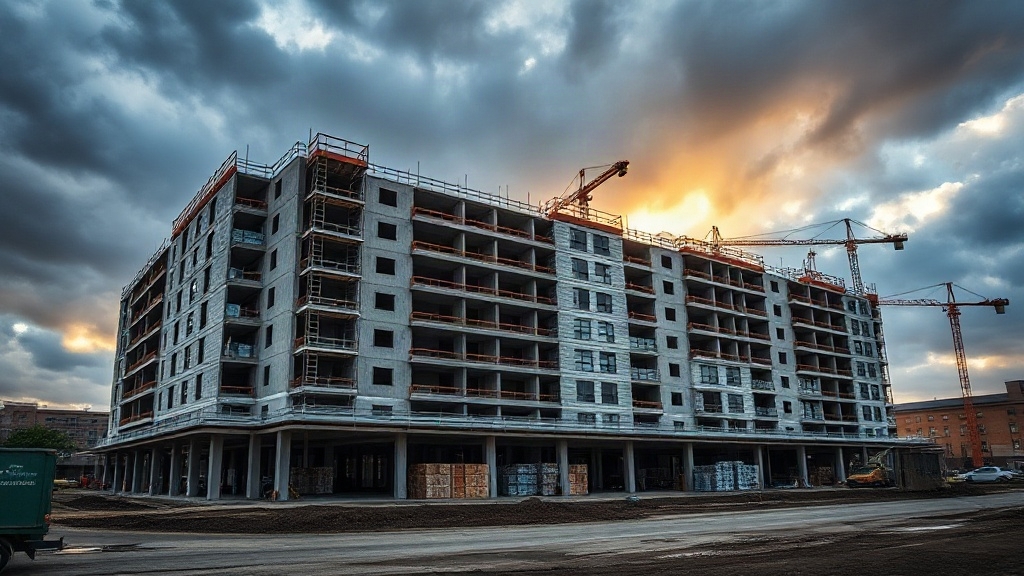
SB 79 could force six-story apartments next to single-family homes near transit, while only 18% of Californians can afford to buy.
The state promises supply relief. Neighborhoods warn of chaos. Your portfolio sits in the crossfire.
Will SB 79 create real affordability or just fuel land grabs and investor wars along bus and rail lines?
In this piece, we tackle:
- What the Law Does
- Where it Hits First
- Investor Math
- Legal Traps
- Action Plan
Strap in because this policy just moved the market.
What SB 79 Really Does To Your Street
The Core Rule Set Investors Must Know
California Senate Bill 79, known as the Abundant and Affordable Homes Near Transit Act, could transform thousands of single-family neighborhoods into high-density housing zones.
The law requires cities to approve new housing projects within a half-mile of major transit stops by right, without public hearings or lengthy planning battles.
Developers would be able to build up to six stories tall, even in areas once protected by R-1 single-family zoning.
SB 79 mandates ministerial approval, meaning local governments must issue permits within 60 days if a project meets baseline standards.
Those standards include basic safety, design, and limited affordability requirements. The law also defines itself as a matter of statewide concern, overriding local zoning ordinances, city charters, and community design boards.
Cities cannot block these projects through traditional appeals, which gives developers a new level of certainty rarely seen in California housing.
For investors, this means a radical shift in entitlement risk. Sites that once needed years of public review may now receive automatic clearance, cutting holding costs and streamlining deal flow.
Yet the same speed that excites developers deeply worries local homeowners who will see the suburban model of single-family homes replaced by dense apartment blocks.
Where The Map Lights Up First
SB 79 primarily targets high-cost, transit-rich areas.
The zones most affected are within a quarter to half mile of major rail and bus rapid transit lines, including the Los Angeles Metro A and E Lines, San Francisco’s BART stations, San Diego’s trolley system, and Sacramento’s Regional Transit network.
The California Department of Housing and Community Development will oversee implementation and require each jurisdiction to either adopt the new zoning or submit a local alternative plan with equivalent density.
This means cities like Los Angeles, San Francisco, Oakland, and San Diego will be the first to feel the impact, while smaller suburban cities such as Torrance, Pasadena, and Walnut Creek may soon follow.
Investors analyzing these markets should start mapping transit corridors, overlaying half-mile buffers, and identifying parcels with older, underused structures that could qualify for redevelopment.
As these locations rezone for higher capacity, land values are expected to rise sharply.
The best opportunities will likely emerge in urban nodes where demand, infrastructure, and public opposition intersect, creating the perfect storm of risk and reward.
Six-Story Shock Near Your Bus Stop
From One Unit Per Lot To Mid-Rise By Right
For decades, California’s R-1 zoning symbolized stability.
A single home per lot, quiet streets, and predictable neighborhood design defined suburban life.
SB 79 would rewrite that completely. Within designated transit zones, a property owner could replace a single-story home with a six-story multifamily structure without a zoning change or city council vote.
Developers would no longer face drawn-out public hearings, environmental impact debates, or lengthy appeals. Instead, approval becomes a checklist exercise.
If the plan meets height and transit proximity standards, it qualifies automatically.
For small investors, this opens the door to ground-up multifamily construction once limited to major developers.
Yet for homeowners, the shift could feel jarring. Imagine a six-story apartment complex rising beside a bungalow or duplex.
The change would permanently alter neighborhood scale, traffic flow, and sunlight access.
It also raises questions about infrastructure capacity, as older communities may lack water, sewer, and emergency services designed for such density.
This new dynamic will force local investors and residents alike to weigh property appreciation against community character. Those who adapt fastest will capture the equity jump.
Those who resist may face an entirely different landscape around their once-quiet lots.
Parking Rules That Change The Street Overnight
SB 79 eliminates mandatory parking requirements within a half-mile of high-frequency transit.
State leaders argue that residents near rail or bus corridors will rely less on cars, reducing greenhouse emissions.
In practice, most Californians still depend on vehicles for work and family life, especially in suburban and semi-urban areas.
Without off-street parking requirements, new six-story projects could funnel hundreds of cars onto neighborhood curbs.
Cities will have limited power to intervene since the law preempts their zoning control. Residents could find themselves circling blocks for open spaces or facing increased street congestion.
For developers and investors, this rule slashes costs by avoiding the need for underground or podium parking structures.
It also increases buildable square footage and improves returns on smaller lots.
However, backlash is already growing. City councils and homeowner associations warn of worsening gridlock and decreased livability.
Investors should view parking removal as a double-edged sword. It creates higher yield potential but also elevates reputational and political risk.
Smart developers may still include limited parking or car-share programs to calm public resistance and attract quality tenants.


Affordability Crisis Versus Neighborhood Backlash
Only 18% of Californians Can Afford to Buy
California’s housing affordability has collapsed to historic lows. Only 18 percent of Californians can afford to buy a median-priced home under current mortgage rates.
SB 79 was introduced as a response to this crisis, aiming to increase supply where jobs and transit intersect.
State lawmakers argue that if more housing is built near major transportation hubs, prices will eventually cool and families will gain access to areas once off-limits to all but the wealthy.
Proponents like Nolan Gray from California YIMBY believe that loosening zoning restrictions is the only realistic way to solve the shortage.
They point to other states like Texas and Florida, where expanding housing supply has slowed rent increases and stabilized home values.
The vision is clear: compact, transit-oriented housing clusters that allow more working and middle-class residents to live closer to jobs without relying on long commutes.
Still, critics question whether SB 79 truly delivers affordability. Most of the new developments permitted under this bill are expected to be market-rate apartments.
Construction costs and land prices remain high, which limits the number of units that can be leased below market.
Some projects will include deed-restricted affordable units, but skeptics argue the percentages will be too low to make a real difference in statewide affordability.
The Curious Opposition Case
Local officials like former Torrance Councilman Mike Griffiths argue that SB 79 is not a housing solution but an assault on local control.
He warns that the law will strip cities of their ability to preserve single-family neighborhoods and replace community dialogue with bureaucratic automation.
In his view, this bill would permanently erase the suburban dream that defined postwar California.
Opponents also worry about visual clutter and noise from mid-rise buildings towering over quiet residential blocks.
They fear declining property values for existing homeowners, blocked ocean and city views, and rising congestion from new residents who still own cars despite transit proximity.
Many believe that Sacramento is punishing cities for failing to meet unrealistic housing mandates instead of helping them finance infrastructure and services to support growth.
Critics say the real issue is not a lack of space but a lack of incentives.
They argue that the state could encourage development by restoring redevelopment agency funding or offering infrastructure subsidies, rather than forcing density onto unwilling neighborhoods.
Without local participation, they warn, the backlash will deepen and compliance will drag for years.
The Staunch Supporter Case
Supporters counter that California cannot afford to wait.
They argue that restrictive zoning laws have turned land scarcity into a permanent crisis, trapping families in rentals and pushing young professionals out of the state.
By enabling multifamily projects in transit-rich areas, SB 79 targets the locations where demand and infrastructure already align.
Proponents also emphasize that cities can still design alternative implementation plans, giving them some control over where density lands inside the transit ring.
These local plans can redistribute height and bulk to corridors that already have commercial zoning or underused lots, preventing disruptive infill on every single street.
To them, SB 79 represents a necessary correction to decades of underbuilding.
The law forces local governments to align housing supply with population and job growth while encouraging sustainability through reduced car dependence.
For investors, that means California’s most valuable markets are about to enter a new era of infill opportunity, where policy and profit may finally move in the same direction.
Timeline And Trigger Points Investors Must Track
Legislative Path And Effective Windows
SB 79’s journey through the California legislature shows how divided the state has become over housing reform.
The bill was introduced in January 2025 by Senator Scott Wiener of San Francisco, one of the state’s most vocal advocates for high-density development.
It barely passed the Senate in June with a one-vote margin, then faced fierce opposition in the Assembly before narrowly clearing a final vote in September.
Governor Gavin Newsom signed it into law in October 2025, calling it a “transformative step toward sustainable growth.”
The law will not take full effect immediately.
Most of its provisions become active on July 1, 2026, giving cities a limited window to prepare.
Between now and that date, each jurisdiction must either accept the new zoning rules or create a local alternative plan that meets the same density targets.
This preparation period is critical for investors.
Once the law activates, entitlements in qualifying zones will move much faster, and the value of developable parcels could rise sharply overnight.
Cities that drag their feet risk losing control of local planning entirely.
The state Department of Housing and Community Development will have oversight authority to intervene if a city refuses to comply.
For investors, this means identifying which municipalities are adopting early and which are resisting.
The early adopters will deliver the fastest permitting timelines and the least red tape.
Local Alternative Plans
SB 79 offers cities one escape hatch: the ability to propose a local alternative plan.
These plans allow local governments to reassign the required housing density from sensitive residential blocks to nearby corridors where taller buildings make more sense.
However, the total housing capacity cannot decrease. If a city wants to move density away from single-family areas, it must add the same number of units elsewhere inside the transit zone.
This process creates a new layer of opportunity. Investors who track these local planning adjustments will gain early insight into which parcels will be rezoned first.
For example, a city might choose to upzone its commercial strips along a major boulevard rather than allow height increases deep inside existing neighborhoods.
Those commercial parcels could become prime acquisition targets before values adjust.
Cities like Sacramento, Emeryville, and San Diego are already signaling support for SB 79 and are likely to move quickly on their local plans.
Others, such as Torrance and Glendale, may resist until state pressure mounts.
Real estate investors who monitor local hearings and mapping drafts will be able to position themselves ahead of the market once the law’s July 2026 trigger date arrives.
Investor Math That Changes Overnight
The Land-Lift Play
SB 79 has the potential to trigger one of the fastest land-value surges in recent California history. Parcels that were once restricted to a single-family home can now legally hold a mid-rise multifamily building.
This zoning upgrade creates what investors call a “land lift,” the increase in property value that results from greater allowable density.
For example, a 6,000-square-foot lot previously limited to one 2,000-square-foot home might now accommodate 20 to 30 apartment units, depending on the local plan and design standards.
That simple regulatory change can multiply the land’s value several times over, even before construction begins. Owners of these parcels may start receiving unsolicited offers from developers eager to assemble sites for mid-rise projects.
Savvy investors will not wait until maps are finalized. By identifying likely transit-adjacent parcels early, they can secure properties before the full market reacts.
A short-term hold strategy may yield windfall profits once zoning confirmation arrives, while long-term developers can position for mixed-use projects that blend residential and retail under one roof.
The new reality is clear: where trains and buses go, land value will follow.
Pro Forma Snapshot
The new zoning structure changes every major number in the pro forma.
A six-story project on a small infill parcel has different risk dynamics than traditional suburban builds. Investors will need to factor in new construction costs, affordability mandates, and accelerated timelines.
A typical five-story wood-over-podium building near a Los Angeles Metro line might cost about $400,000 per unit to build, including land and fees.
If the project delivers 25 units renting for $3,000 per month, gross annual income could exceed $900,000.
Even with affordability requirements reducing a small portion of revenue, the faster approval and absence of costly underground parking can significantly improve returns.
Below is a simplified example of a potential SB 79 pro forma scenario.
| Metric | Estimate |
|---|---|
| Total Units | 25 |
| Buildable Area | 6,000 sq ft lot |
| Construction Cost | $10 million |
| Average Rent | $3,000 per month |
| Gross Annual Income | $900,000 |
| Operating Expenses | 30% |
| Net Operating Income (NOI) | $630,000 |
| Stabilized Cap Rate | 5.5% |
| Estimated Value | $11.45 million |
| Developer Profit Margin | 14.5% |
While these figures are illustrative, they reveal how SB 79’s density bonus can convert a modest residential property into a viable multifamily asset.
The crucial variable will be timing. Early movers stand to capture the greatest margin before competition drives land costs higher.
Investors who wait may find their window of advantage closing as the market fully prices in California’s new era of by-right development.
Winners And Losers From 2026 To 2030
Likely Winners
The investors and developers who stand to benefit most from SB 79 are those already operating in transit-oriented corridors.
Builders with experience in mid-rise construction, modular assembly, and small-lot development will gain a significant advantage once the law becomes active.
Their ability to deliver projects quickly within the 60-day approval window could produce faster turnover and greater capital efficiency than traditional suburban projects.
Owners of older single-family properties inside the designated transit radius may also emerge as unexpected winners.
Many of these homeowners are sitting on parcels that could suddenly triple in development potential.
Those willing to sell or partner with small builders could unlock substantial equity through land assembly deals or joint ventures.
Cities that adopt SB 79 early and streamline their review processes may see new revenue through building fees and long-term property tax increases.
They could attract young professionals, renters, and downsizing families seeking housing near employment centers.
Areas such as downtown-adjacent corridors, near colleges, and along existing rail or bus rapid transit lines are positioned to see the greatest early investment activity.
Likely Losers
Communities with strong resistance to new development could find themselves at a disadvantage.
Cities that delay compliance may lose planning authority altogether if the state intervenes to enforce the law. This scenario could result in rapid, uncoordinated construction that frustrates both residents and local leaders.
Homeowners who rely on property views, privacy, or quiet neighborhood character may face long-term declines in satisfaction and possibly value stability.
As six-story buildings rise, they could cast shadows on smaller homes, add traffic, and reduce parking availability. These physical changes may not immediately destroy value but could alter neighborhood desirability over time.
Traditional homebuilders that focus on detached single-family production may see slower sales growth inside major metropolitan areas.
Their success could shift to suburban or exurban locations farther from the new transit density zones.
Market Outlook
The period from 2026 to 2030 is expected to become a test case for California’s balance between affordability and community impact. In high-demand cities, early adoption may produce fast gains in housing supply and increased investor activity.
Yet saturation risk is real. If too many similar projects launch at once, rental markets could experience short-term oversupply in localized areas.
Conversely, slower-moving regions could miss out on the initial wave of economic growth associated with construction and job creation.
Over time, population migration patterns may adjust, favoring neighborhoods that embrace the policy and successfully blend new housing with existing infrastructure.
The long-term outlook remains cautiously optimistic for investors.
As financing adapts and municipalities stabilize their planning frameworks, transit-oriented housing could become California’s most reliable growth sector, bridging the gap between rising demand and limited buildable land.
Legal And Political Crossfire You Cannot Ignore
Statewide Concern Versus Charter City Pushback
SB 79 was written to apply as a matter of statewide concern, meaning that both general-law and charter cities must comply.
This language removes one of the strongest legal shields local governments have traditionally used to preserve zoning control.
Still, many cities are expected to challenge the law’s reach, arguing that land use decisions are fundamentally local matters.
Early lawsuits are likely to center on constitutional authority, environmental procedures, and the definition of transit zones. Some municipalities may attempt to delay implementation by questioning the validity of the maps used to identify qualifying areas.
Others could claim that the law fails to consider site-specific conditions such as topography, infrastructure capacity, or historic preservation.
If the courts uphold SB 79’s statewide authority, it will mark a permanent shift in how California manages growth. The state would then possess clear precedent to override local zoning whenever it deems housing supply insufficient.
Investors who understand this legal landscape could navigate entitlement risk more effectively by aligning with state policy objectives instead of relying on local discretion.
Builder’s Remedy And RHNA Pressure
The builder’s remedy, a separate but related rule, already allows developers to bypass local zoning if a city fails to meet its state-mandated housing targets. SB 79 builds on that pressure by expanding where this kind of by-right development can occur.
Cities that resist implementation could face a flood of builder’s remedy filings from developers seeking to capitalize on their noncompliance.
In practical terms, this means local governments will be motivated to adopt SB 79’s provisions rather than risk losing total control.
The financial and administrative costs of litigation or noncompliance penalties could outweigh the benefits of delay.
For investors, these overlapping laws create a window of speculative opportunity.
Developers who act early in noncompliant cities might secure approvals under the builder’s remedy while others wait for local plans to align with SB 79.
However, these same markets may carry heightened uncertainty, as shifting political and legal conditions can suddenly change project timelines or costs.
Regulatory Forecast
Over the next several years, state agencies will likely issue clarifying guidance on affordability thresholds, design standards, and environmental consistency.
Cities that adapt quickly could negotiate cooperative frameworks with developers to maintain some degree of design oversight.
Those that refuse may see state agencies take direct control over approvals and enforcement.
The political tone of this debate is expected to remain heated. Local leaders defending neighborhood character will clash with state lawmakers prioritizing housing production.
This tension could shape future ballot initiatives aimed at either expanding or restricting Sacramento’s zoning authority.
Investors should expect ongoing legal motion and political volatility until at least 2030, when the long-term results of SB 79’s rollout become clearer.
Field Guide for Serious West Coast Investors
Heat Map Targets
By late 2025, California’s largest metropolitan areas have already begun preparing for SB 79’s activation.
Los Angeles, San Francisco, San Diego, and Sacramento are the most likely to move first, as their transit infrastructure meets the bill’s eligibility criteria.
These regions contain hundreds of miles of rail and bus rapid transit corridors surrounded by land zoned for single-family use.
Investors should expect the first zoning adjustments to appear around existing transit-heavy zones such as Downtown Los Angeles, the East Bay, and Central San Diego.
These areas combine high job density, consistent ridership, and a clear state incentive to concentrate future housing growth.
Smaller transit-adjacent cities like Emeryville, Culver City, and Pasadena may follow as they compete for state funding and development partnerships.
Mapping software and public data tools will become essential for identifying the exact parcels that fall within the bill’s half-mile radius.
Investors who gather this information before the law becomes active in 2026 will have a substantial advantage when acquisition activity accelerates.
Deal Checklist
Identifying profitable SB 79 opportunities requires disciplined evaluation.
The most attractive parcels will share certain traits:
- Adequate lot depth for efficient unit layouts.
- Flat terrain to reduce grading and structural costs.
- Existing utility connections or easy access to main service lines.
- No environmental hazards or historic preservation constraints.
- Favorable frontage for mixed-use potential.
Investors should also review fire hazard maps, flood zones, and local design guidelines to anticipate potential restrictions.
Projects that include affordable components may qualify for fee reductions or expedited review, improving total return on cost.
Joint ventures between landowners and developers could become common as smaller investors seek to participate without bearing full construction risk.
Partnerships with experienced architects and entitlement consultants will help navigate the new rules while keeping compliance costs low.
Red Flags
While SB 79 presents opportunity, several warning signs should not be ignored.
Parcels within very high fire severity zones or near coastal flood areas may face longer approval timelines or stricter building standards that increase costs.
Properties with active tenants or rent-controlled units may be excluded from the bill’s fast-track provisions to avoid displacement.
Another concern is localized resistance.
Even though SB 79 reduces public hearings, lawsuits and temporary moratoriums are possible in communities that view the law as overreach.
Investors should plan for potential litigation risk by maintaining flexible financing terms and construction schedules.
Finally, infrastructure readiness remains uncertain in many cities.
Transit corridors with older sewer or electrical systems may struggle to support new mid-rise construction.
If utility upgrades lag behind entitlement approvals, early projects could face costly delays.
Successful investors will anticipate these limitations, securing contingency capital and maintaining close contact with local public works departments to stay informed as the rollout progresses into 2026.
Case Studies To Watch
LA Metro Quarter-Mile Ring On An Arterial
In Los Angeles, multiple corridors surrounding the Metro A and E Lines are emerging as early testing grounds for SB 79’s impact.
Neighborhoods such as Mid-City, Koreatown, and Westlake already contain mixed-use zoning near transit stops, but SB 79 would extend by-right density deeper into adjacent residential streets.
Developers are quietly assembling small parcels along these corridors, anticipating that the new law will allow mid-rise buildings without traditional zoning changes.
Some of these projects could introduce between 20 and 40 new housing units per parcel once the rules activate in 2026.
Local residents are divided.
Long-term homeowners worry about parking loss and construction disruption, while younger renters see a rare chance for additional supply to reduce prices.
If early projects lease successfully and attract quality tenants, more builders will follow, signaling a potential shift toward higher-density living in transit-heavy Los Angeles neighborhoods.
The key indicator to watch is permit volume.
If applications rise steadily throughout 2026, it will confirm developer confidence in the law’s stability and enforcement.
Should delays or legal challenges emerge, market enthusiasm may cool temporarily, creating short-term buying opportunities for well-capitalized investors.
BART Station Area Small-Lot Assembly
Across the Bay Area, parcels near BART stations in cities such as Oakland, Berkeley, and Daly City show the strongest potential for small-lot consolidation.
Many of these neighborhoods already have multifamily zoning, but SB 79’s streamlined approval process removes layers of uncertainty that have long discouraged smaller builders.
By late 2025, early feasibility studies are focusing on parcels within a half-mile of major stations like MacArthur and Ashby.
These areas combine strong demand from commuters with older housing stock that could be replaced by mid-rise infill projects.
Property owners who act before rezoning maps finalize may see their land values rise as developers seek contiguous sites for future assembly.
Community reaction in the Bay Area remains mixed but pragmatic.
Residents acknowledge the need for housing but push for design guidelines that preserve neighborhood aesthetics.
This balance could result in gradual, phased redevelopment rather than sudden transformation.
Speculatively, the first successful mid-rise projects near these stations could establish a proof of concept that attracts institutional capital.
If financing remains accessible and rental absorption stays strong, BART corridor housing could become one of the most stable investment segments in the state by the end of the decade.
Emerging Mid-Market Examples
Outside the major metros, cities like Sacramento and San Diego are beginning to identify secondary transit corridors for SB 79-based redevelopment.
These regions may offer lower entry costs and faster approval cycles, appealing to investors priced out of coastal markets.
The next phase of observation will center on how mid-sized developers adapt.
Smaller operators with experience in adaptive reuse or modular construction could enter markets previously dominated by large firms.
If they succeed in keeping costs under control, it could signal a broader democratization of California’s multifamily development sector under SB 79.
Capital And Financing Under New Rules
Capital Stack Patterns
The introduction of SB 79 is beginning to reshape how developers approach project financing. Lenders are showing early interest in funding projects tied to transit-oriented infill, but many remain cautious until the law officially takes effect in mid-2026.
The simplified entitlement pathway is expected to lower perceived risk for construction loans, particularly for projects that can demonstrate compliance with state housing mandates and affordability thresholds.
Most new developments qualifying under SB 79 are expected to use a blend of bank construction loans, mezzanine financing, and private equity capital. Institutional lenders may favor developers with proven records in mid-rise multifamily construction.
Smaller investors may rely on joint ventures or crowdfunding structures to pool equity for land acquisition and predevelopment costs.
Over time, public-private partnerships could become more common as cities attempt to balance compliance with community concerns.
Transit agencies and redevelopment authorities may explore joint projects on publicly owned land, which could give investors access to prime locations at favorable lease rates.
As implementation nears, the capital landscape may favor those able to demonstrate both financial discipline and regulatory expertise.
Affordability Set-Asides And Credit Gaps
SB 79 includes provisions for affordability, requiring certain percentages of new units to remain accessible to lower and moderate-income households.
While these mandates vary based on project size and location, they will influence long-term net operating income and underwriting assumptions.
Developers will need to account for reduced rental revenue from restricted units when modeling cash flow and valuations.
In response, lenders and equity partners are beginning to factor potential tax credit opportunities into their projections.
Projects that meet affordability requirements could qualify for Low-Income Housing Tax Credits, state housing grants, or green building incentives tied to transit-oriented development.
These incentives may offset lower income from restricted units and help bridge financing gaps.
There is speculation that the state could introduce new funding pools or loan guarantees once the law is fully in effect.
Such measures would aim to encourage participation by smaller developers who might otherwise struggle with upfront costs or limited collateral.
As of November 2025, financial markets remain in a wait-and-see phase.
Debt providers are monitoring how quickly cities prepare their local implementation plans, while equity investors are evaluating where the first viable SB 79 projects will break ground.
The general outlook suggests that by 2026, transit-adjacent housing could evolve into a distinct lending category, combining predictable approval timelines with strong long-term demand from California’s growing renter population.
Community Impact Questions Investors Must Answer
Parking, Traffic, And Services
One of the most immediate concerns surrounding SB 79 is how higher-density housing will affect local traffic and public services.
The law’s elimination of mandatory parking within a half-mile of transit is intended to reduce car dependency, yet most residents in Southern and Northern California still rely heavily on personal vehicles for daily travel.
Today, there is little evidence to suggest that car ownership rates are falling at a pace that matches this policy change.
City planners anticipate a gradual adjustment period. Some municipalities are exploring new parking permit systems or shared mobility programs to offset the expected increase in on-street parking.
Investors considering developments in these areas must prepare for community discussions focused on congestion, emergency access, and public safety.
Public service strain may also arise.
Denser populations could increase pressure on schools, waste collection, and public utilities.
Local fire and police departments may need additional staffing or equipment to serve taller, denser residential buildings.
If cities fail to expand these services, investors could face delays in occupancy permits or higher local fees aimed at funding new infrastructure.
While supporters argue that new residents will bring economic vitality and expand local tax bases, the transition may be uneven.
Investors should monitor how cities handle resource allocation in the early rollout phase.
Areas that maintain infrastructure balance could enjoy stronger rental demand and property value stability, while those that lag behind may face tenant dissatisfaction and slower absorption rates.
Ownership Paths Inside Mid-Rise Product
Another critical question involves the type of housing ownership SB 79 will ultimately encourage.
As of late 2025, most proposed projects are structured as rental developments.
Developers favor rental formats because they allow for consistent cash flow and easier financing, especially when combined with state incentives tied to affordability and transit access.
However, there is growing interest in converting mid-rise projects into condominiums once markets stabilize.
Legal and insurance challenges currently make condominium conversions difficult in California, but state housing officials have hinted at reviewing those regulations in the near future.
If reforms materialize, the state could see an expansion of ownership opportunities in the same buildings initially developed as rentals.
For investors, this evolution could reshape exit strategies.
Developers might choose to hold properties as rentals for several years before selling individual units, creating hybrid models that serve both long-term renters and new homeowners.
Smaller investors could benefit from early entry into such projects, gaining exposure to potential appreciation while maintaining flexible ownership options.
The long-term community impact will depend on this balance between renters and owners.
Neighborhoods with stable ownership rates often experience higher civic engagement and property maintenance, while areas dominated by rentals can experience faster turnover and less community cohesion.
The outcome will likely vary by city, but investors who plan for both ownership and rental demand will be better equipped to thrive under SB 79’s new housing landscape.
FAQ
Does SB 79 Apply To Every Block Near A Bus Stop?
No. SB 79 only applies to properties located within specific distances of designated high-frequency transit stops, such as major rail lines or bus rapid transit routes.
These areas are usually defined as being within a quarter-mile to a half-mile radius of qualifying transit corridors. Standard bus routes that do not meet the frequency or capacity criteria are generally excluded.
As of Q4 2025, state officials are still refining which locations will be classified as eligible.
The expectation is that only a small percentage of the state’s total land area will qualify. Investors studying these maps will likely focus on urban corridors with consistent ridership and strong job proximity.
Will Cities Still Control Design And Setbacks?
Cities will retain some design oversight under SB 79, but their control will be limited to objective standards that cannot block a project outright.
They can enforce height transitions, landscaping requirements, or building design guidelines, provided these rules do not reduce the overall housing capacity required by the law.
This means a city can influence the visual character of a project but not the total number of units or the general scale of development.
Local planning departments are expected to create template-based design codes to streamline approvals. Investors should expect these standards to vary between jurisdictions, leading to different project costs and architectural requirements.
Can Projects Be Condos Instead Of Rentals?
Yes, but few are expected to start that way in the near term.
Now, most developers are pursuing rental projects because they are easier to finance and align with current lending criteria.
Condominium projects carry stricter liability and insurance requirements that have discouraged builders since the early 2000s.
However, if regulatory reforms reduce the risk and cost of condominium construction, a secondary market for ownership units could emerge.
This potential shift may take several years, but it represents a long-term opportunity for investors seeking diversification within the same building footprint.
How Does SB 79 Interact With ADUs And SB 9?
SB 79 functions as a complement to the state’s previous housing laws.
Accessory Dwelling Unit (ADU) regulations allow individual homeowners to add small secondary units on existing lots, while SB 9 permits duplexes or lot splits on single-family parcels.
SB 79 operates at a larger scale, targeting mid-rise developments that can add dozens of units in transit corridors.
Together, these laws form a multi-layered approach to expanding housing supply.
ADUs and SB 9 focus on incremental neighborhood infill, while SB 79 concentrates on higher-density redevelopment in urban zones.
The combination could reshape California’s residential market hierarchy, creating a gradient of density that moves outward from the state’s main transit networks.
As of late 2025, analysts speculate that the combined effects of these laws will gradually increase available housing over the next decade, though results will depend on local enforcement, financing conditions, and population trends. Investors who understand how these policies overlap may find new ways to maximize land use efficiency and long-term returns.
Assessment
As of November 2025, SB 79 is poised to reshape California’s housing and investment landscape by unlocking dense, transit-oriented development where single-family zoning once dominated.
The law’s impact will depend on how effectively cities implement it and how quickly developers adapt to faster approvals and affordability requirements.
Supporters expect it to expand supply, stabilize rents, and attract new capital to infill markets, while critics warn of infrastructure strain and uneven affordability outcomes.
Over the next five years, SB 79 will test whether California can balance rapid housing growth with community preservation, creating both risks and major opportunities for investors positioned along the state’s transit corridors.