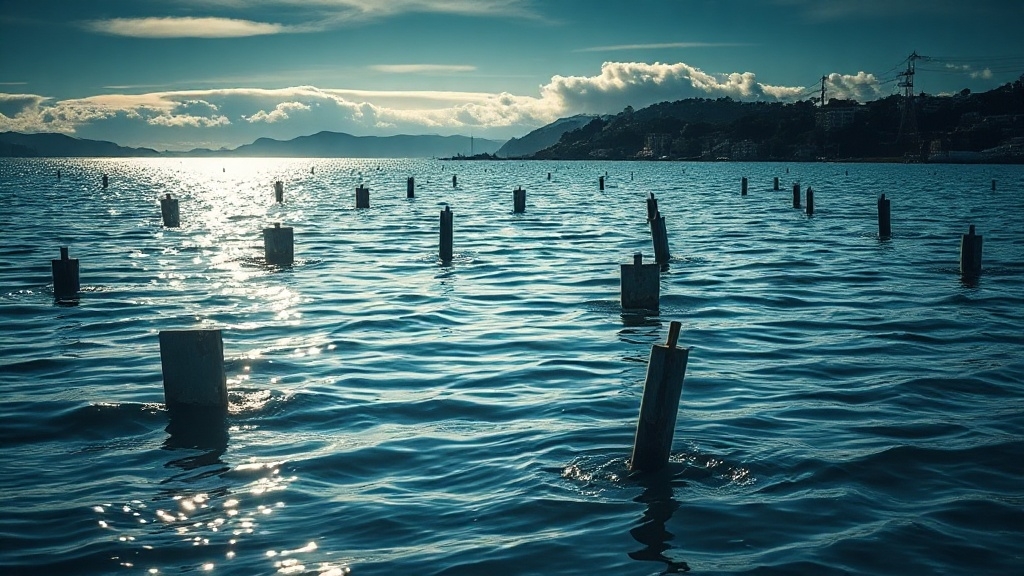


Why Did San Francisco Underwater Lots Sell So Cheap?
Why did these San Francisco parcels trade for less than $1,000 in some cases?
The answer was rooted in physical reality, legal limits, and weak near-term usefulness.
These roughly 5,000-square-foot lots sat underwater near Candlestick Point, often classified as tidelands or baylands. Buyers were urged to verify potential uses with city agencies before assuming any development potential. Similar caution has appeared across Bay Area real estate as remote work trends reshape demand and property expectations.
That sharply reduced conventional demand.
Speculation and Risk Suppressed Bids
Listings presented them as speculative plays rather than ready-to-develop homesites.
That framing signaled uncertain value, especially when zoning barriers, holding costs, and practical unbuildability remained in place.
Auction mechanics also mattered.
City sales with very low starting prices and thin competition often produce distressed outcomes instead of standard market pricing.
Market psychology further kept bids modest.
Many buyers saw novelty, confusion, environmental liability, and unclear upside, not dependable land value in a high-price city.
What Can You Do With San Francisco Underwater Lots?
Ownership offers little immediate utility.
These submerged parcels do not automatically grant buildable rights, usable waterfront access, or ordinary construction options.
Because the land remains underwater, practical use is minimal, and annual property taxes may still apply.
Any idea involving shoreline access, boat mooring, or structural changes would face permits, engineering demands, and public-agency approval.
Most realistic uses are speculative rather than functional.
Listings frame them as creative ownership, strategic land-banking, or long-term bets on future waterfront positioning.
Some buyers may view them as novelty holdings, bargain purchases, or long-shot appreciation plays tied to possible regulatory or shoreline change.
In other cities, major waterfront redevelopment backed by zoning amendments has shown how regulatory changes can reshape long-term land value expectations.
Even alternative concepts, including environmental or recreational applications, require careful legal research.
Private ownership alone does not guarantee access, utility, or development feasibility under zoning and bay-related environmental rules.

Where Are San Francisco Underwater Lots Located?
Most of San Francisco’s low-priced underwater lots are concentrated along the city’s southeastern waterfront, especially near Candlestick Point State Recreation Area in Bayview.
Reports repeatedly place these parcels along the edge of San Francisco Bay, where Bayview tidelands and submerged tracts appear in auction listings.
One widely cited example is 0 Bancroft Avenue Lot 17, a roughly 4,996-square-foot seabed parcel described as alongside Bancroft Avenue near Candlestick Point.
Bayview and South Basin Pattern
Coverage has also identified about 40 Bayview lots marketed together, totaling roughly 250,000 square feet of underwater land near Candlestick Point.
ABC7 likewise noted a nearby 5,000-square-foot parcel sold at auction for as little as $250.
Beyond Bayview, historic maps show many surveyed water lots in South Basin.
These areas reflect old shoreline boundaries, legacy fill, and the bay’s tidal ecology over time.
Why Do Investors Buy San Francisco Underwater Lots?
Investors are drawn to San Francisco’s underwater lots because they are ultra-low-cost speculative holdings in a market where conventional land is often prohibitively expensive.
In practice, buyers often treat them as land-banking plays with limited downside and potentially outsized upside.
A parcel bought for a few hundred dollars can seem attractive if future shoreline conditions, infrastructure, or permitting rules ever shift.
Speculative Appeal
Market psychology also plays a role. In an expensive city, even submerged, non-buildable parcels can look like bargains, especially when listings frame them as strategic positions within the Bay Area.
Legal ambiguity can add to the appeal rather than eliminate it. Private ownership may preserve future options tied to access, utility, or rights-based value, even when present-day development is heavily constrained.
Past resales at higher asking prices have also reinforced this speculative mindset.
What Do These Sales Say About San Francisco Real Estate?
How should sales of underwater lots for less than $1,000 be read in a city where typical home values still sit deep in seven-figure territory?
They are best understood as niche transactions involving severe constraints, not as a benchmark for San Francisco land values.
Sub-$1K parcels often carry buildability, access, utility, zoning, or title defects that sharply limit practical use.
Prime Housing Holds Firm
The broader market still shows resilience.
Typical home value stands near $1.369 million, while median sale prices have reached about $1.7 million.
Inventory also remains tight, with 747 active listings in April 2026, down 31.2% year over year.
Buyer Segmentation Deepens
These sales instead reveal buyer segmentation.
Demand remains strong for livable, usable housing, while marginal land without feasible development paths can fall to symbolic prices.
Assessment
These bargain sales reflected a narrow, unusual corner of San Francisco real estate.
Legal limits, uncertain future use, and speculative hope pushed prices far below typical land values.
The underwater lots carried more intrigue than immediate utility.
They attracted buyers willing to gamble on long-term change rather than present-day development.
Taken together, the transactions underscored a strange reality in one of the nation’s costliest markets.
Some parcels could still trade for almost nothing when access, rights, and practical value remained severely constrained.