

Is Downtown Austin Office a Buy Now?
Uncertainty defines the buy case in downtown Austin office.
Pricing has reset sharply, with downtown sales averaging about $186 per square foot and cap rates near 6.5%. That places the trade closer to value and turnaround investing than momentum buying.
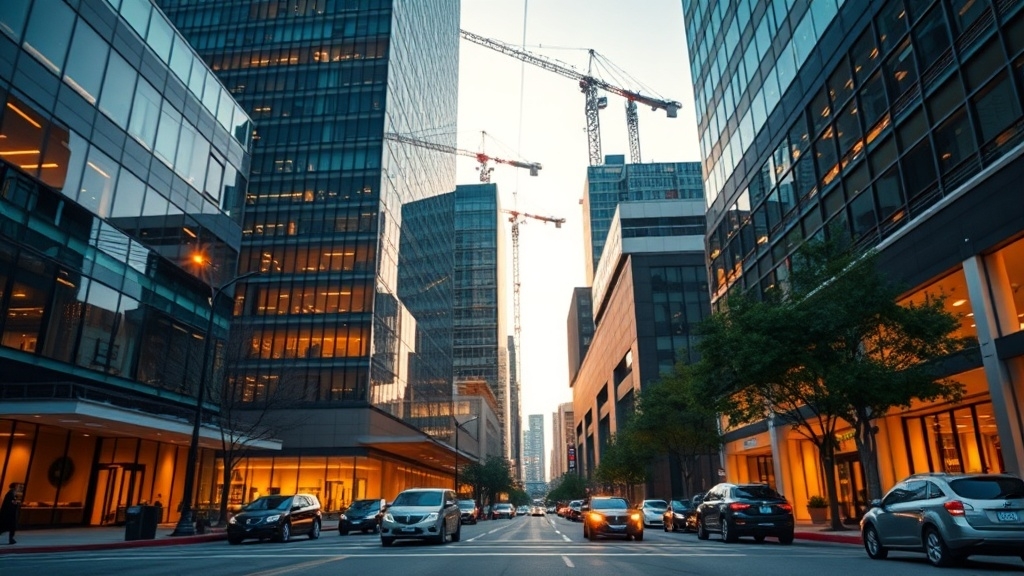
The case centers on discounted basis, limited near-term supply, and long term ownership. With only about 100,000 square feet under construction at year-end 2025, the market is effectively facing a construction shutdown after Waterline delivers. Similar Texas markets are seeing developers focus on amenity-rich properties as tenants favor higher-quality office space.
Selective Demand Supports Only Certain Assets
Leasing data shows demand still exists for premium buildings. Citywide absorption approached 1.1 million square feet in 2025, with a large share in the CBD.
Trophy and Class A assets captured major leases, reinforcing the flight-to-quality pattern. That makes tenant mix and building differentiation critical.
Well-located, amenity-rich properties appear better positioned as new construction fades. Buyers are effectively underwriting slow lease-up, higher improvement costs, and a longer repositioning timeline.
Why Downtown Austin Office Vacancy Hit 32.4
Downtown Austin office vacancy surged to a record 32.4% in Q4 2025 as an extraordinary wave of new supply collided with weaker post-pandemic demand and a sharp flight to quality.
Since 2020, roughly 14 million square feet arrived downtown, including The Republic and Waterline. Deliveries outpaced absorption.
Tenant Shifts Deepen Pressure
At the same time, post-pandemic dynamics kept office use below pre-2020 norms. Hybrid work, remote work, and slower leasing reduced space needs.
Tenant migration patterns favored newer trophy and Class AA towers. Older buildings were left with heavier losses and harder lease-up conditions in the CBD.
Downtown had already shown sustained imbalance through 2025. Vacancy readings remained above prior records and were materially worse than broader Austin market levels citywide.
Similar pressure has appeared in other markets, with remote work trends contributing to Oakland office vacancy rising above 23% in 2025.


Where Downtown Austin Office Demand Is Recovering
Shifting demand is reappearing first in Austin’s highest-quality office nodes. Newer Class A space and amenity-rich districts are capturing the clearest leasing momentum.
The Domain illustrates that pattern. Its Class A vacancy fell 7 percentage points year over year to 12.2%, roughly half the broader Austin office market.
That resilience has supported its description as Austin’s second downtown.
Walkability and Activation Support Leasing
Demand is strongest where tenants find modern buildings, nearby retail and dining, and mixed-use amenities. These features help employers recruit and retain workers.
Walkable districts with high-profile tenant mixes are drawing more interest than older inventory.
Downtown’s recovery remains uneven, but there are measurable signs of improvement. Some landlords are reporting better occupancy.
Activation efforts such as pop-up shops, markets, and community events are also helping strengthen perceptions of district vitality.
How Sublease Space Still Limits Downtown Austin Office Upside
Recovery in Austin’s best-performing office nodes is running into a stubborn constraint in the urban core.
Downtown sublease availability remains elevated at roughly 4.4 million square feet, leaving extensive shadow supply to compete with direct listings.
That overhang keeps absorption muted even as some Class A buildings post selective gains. Market-wide vacancy held at 24.8% in Q2 2025, while year-to-date absorption remained negative.
| Measure | Downtown Impact | Signal |
|---|---|---|
| Sublease inventory | Roughly 4.4M SF | Heavy shadow supply |
| Asking rents | $45.05/SF | Pricing pressure |
| Pipeline | 2.7M SF | More competition |
Large corporate tenants continue to add sublease space faster than the market clears it. That dynamic increases pricing pressure, weakens landlord leverage, and raises concessions.
With additional downtown supply still in the pipeline, true vacancy improvement remains delayed.
Which Downtown Austin Office Assets Fit the Buy Thesis
Several asset types now fit the buy thesis in Austin’s urban core. The strongest candidates include recently delivered trophy towers, well-located Class A buildings with weak lease-up, and older properties with redevelopment optionality.
Trophy towers under pressure
Sixth and Guadalupe, ATX Tower, The Republic, and Waterline show how new speculative supply created trophy discounts. High vacancy in these towers can create basis resets below replacement cost while preserving long-term leasing leverage.
Prime Class A and repositioning candidates
The CBD posted 32.4% vacancy, yet captured 40% of citywide absorption in 2025. That mix supports selective buys in prime corridors where Class A rents still average $68.43 per square foot.
Older downtown assets also offer conversion optionality. Sites near East Fifth Street, 15th and Red River, and parts of Congress Avenue north of the Capitol may support mixed-use or housing shifts.
Assessment
Downtown Austin office is not in broad recovery, but selective distress is creating a narrow buy window.
Vacancy remains historically high, and sublease availability continues to cap rent growth and delay pricing normalization.
Even so, leasing has improved in better-located, higher-quality buildings with stronger amenities and durable tenant demand.
The buy thesis rests on disciplined asset selection, basis advantage, and patience.
In this market, mispricing may reward buyers, but only where underwriting reflects prolonged weakness and uneven absorption.