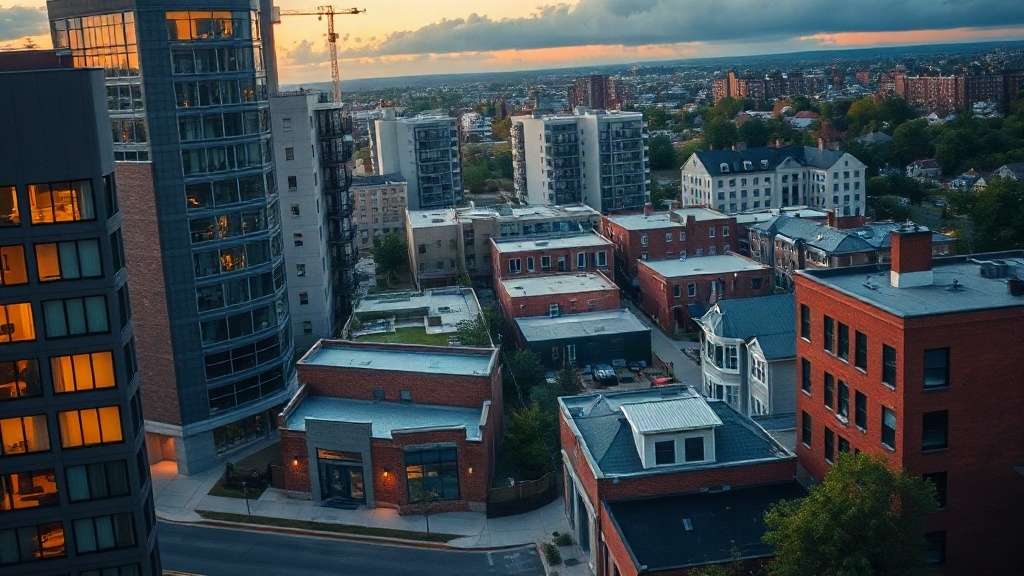


Why Raleigh Leads North Carolina Home Demand
Raleigh remains one of North Carolina’s clearest housing demand centers. Population growth, steady job creation, and still-active buyer competition continue to support the market.
Population gains keep adding households, with Raleigh and wider Wake County absorbing tens of thousands of new residents in recent years.
That growth keeps demand broad across price points rather than concentrated in a narrow luxury tier. Realtor.com data for August 2026 still classifies Raleigh as a balanced market, with a warm buyer-interest profile.
Demand Signals Stay Firm
Tech, life sciences, and research employment underpin job-driven demand. These sectors help the metro attract educated buyers with staying power. In other markets, major projects like open-air redevelopment plans show how employment and commercial investment can reshape local demand patterns.
Pricing also reflects resilience. Median listing prices near $470,000 and sale prices around $425,000 indicate sustained interest, even with modest year-over-year softness.
Midpriced inventory has expanded buyer access while preserving competition.
Homes still moved relatively quickly. Sale-to-list ratios stayed near 99%, and a meaningful share of listings sold above asking.
Why Cary, Morrisville, and Apex Stay Hot
Anchored by the Triangle’s tech corridor, Cary, Morrisville, and Apex continue to draw intense housing demand from buyers tied to Research Triangle Park and surrounding employment centers.
Tight Supply, Fast Absorption
Their appeal rests on commuter proximity, suburban stability, and school reputation. Morrisville offers some of the closest access to major campuses, while Cary and Apex extend that employment reach through strong highway connections and commutable neighborhoods.
Inventory remains restrictive. The combined market held 933 homes in July 2026, with 2.8 months of supply, while closed sales rose 8.5 percent and new listings were nearly flat.
Recent days on market of about 10 in Cary, 14 in Morrisville, and 15 in Apex show persistent urgency among buyers and little relief from pricing pressure.


Why Durham Stays Strong Near RTP
Durham remains one of the Triangle’s most durable housing plays because it sits directly beside Research Triangle Park. Nearly 400 companies and about 55,000 employees continue to support a deep employment base there.
Employment Pressure Holds
That RTP adjacency keeps commute patterns efficient for technology, life sciences, and corporate-service workers. RTP’s reported $25.1 billion economic impact also reinforces the corridor’s long-term hiring pull. Recent signs of renewed investor confidence in gateway markets, including a luxury market revival in Manhattan, also point to broader real estate resilience that can support sentiment in high-employment submarkets.
The wider Raleigh-Durham region added 15,400 jobs through April 2026. That was the strongest gain among large U.S. metros and helps explain Durham’s housing resilience.
Value and Demand Stay Intact
Durham also offers a firmer value proposition than closer-in hot spots. The median sale price is $425,000, and average marketing times are near 28 days.
Inventory has risen, yet conditions remain balanced to seller-favored. That suggests demand has not broken near RTP.
Why Holly Springs Keeps Growing Fast
Holly Springs is accelerating as one of southern Wake County’s fastest-growing housing submarkets. Growth is being driven by rapid in-migration, rising household formation, and a deepening life sciences employment base.
Population climbed from 41,239 in 2020 to 48,674 in 2024. Estimates place the town near 52,224 residents by 2026.
Household growth has been even more striking. It has more than doubled since 2010 and is projected to rise another 25.6% by 2031.
This expansion reflects strong family migration, especially from higher-cost nearby markets. School quality, suburban amenities, and a younger household profile continue to support demand for larger homes.
Housing supply remains pressured. Homes move quickly, and prices stay elevated near the upper end of the local market.
CommunityScale estimates that 4,432 additional units are needed within five years.
Genentech’s expansion is adding high-wage jobs. It also strengthens Holly Springs’ appeal as a life sciences hub.
Why Charlotte Is a Top North Carolina Housing Market
Beyond southern Wake County, Charlotte stands out as one of North Carolina’s most durable housing markets because it pairs strong in-migration with a broad employment base.
As a major financial and corporate center, Charlotte benefits from steady job growth across professional, logistics, and technology-related sectors. That diversity supports continued household formation and reduces reliance on any single industry.
Pricing Holds as Supply Normalizes
Late July 2026 figures show an average home value of $397,231 and a median sale price of $431,667. Homes go pending in about 25 days, while the 0.996 sale-to-list ratio signals buyers remain engaged.
Inventory has increased to 4,684 homes, with 1,249 new listings, creating more balance without major price weakness. Combined with urban amenities and relative affordability versus coastal metros, Charlotte continues attracting local buyers and relocating households.
Assessment
North Carolina’s housing pressure remains concentrated around technology and life sciences employment centers.
Raleigh, Cary, Morrisville, Apex, Durham, Holly Springs, and Charlotte continue to capture demand from job growth, in-migration, and limited supply in sought-after neighborhoods.
These submarkets show different risk profiles, but each reflects the same core pattern.
Employment expansion is reshaping local housing conditions faster than new inventory can fully respond, keeping competition elevated and affordability under sustained strain across major growth corridors.