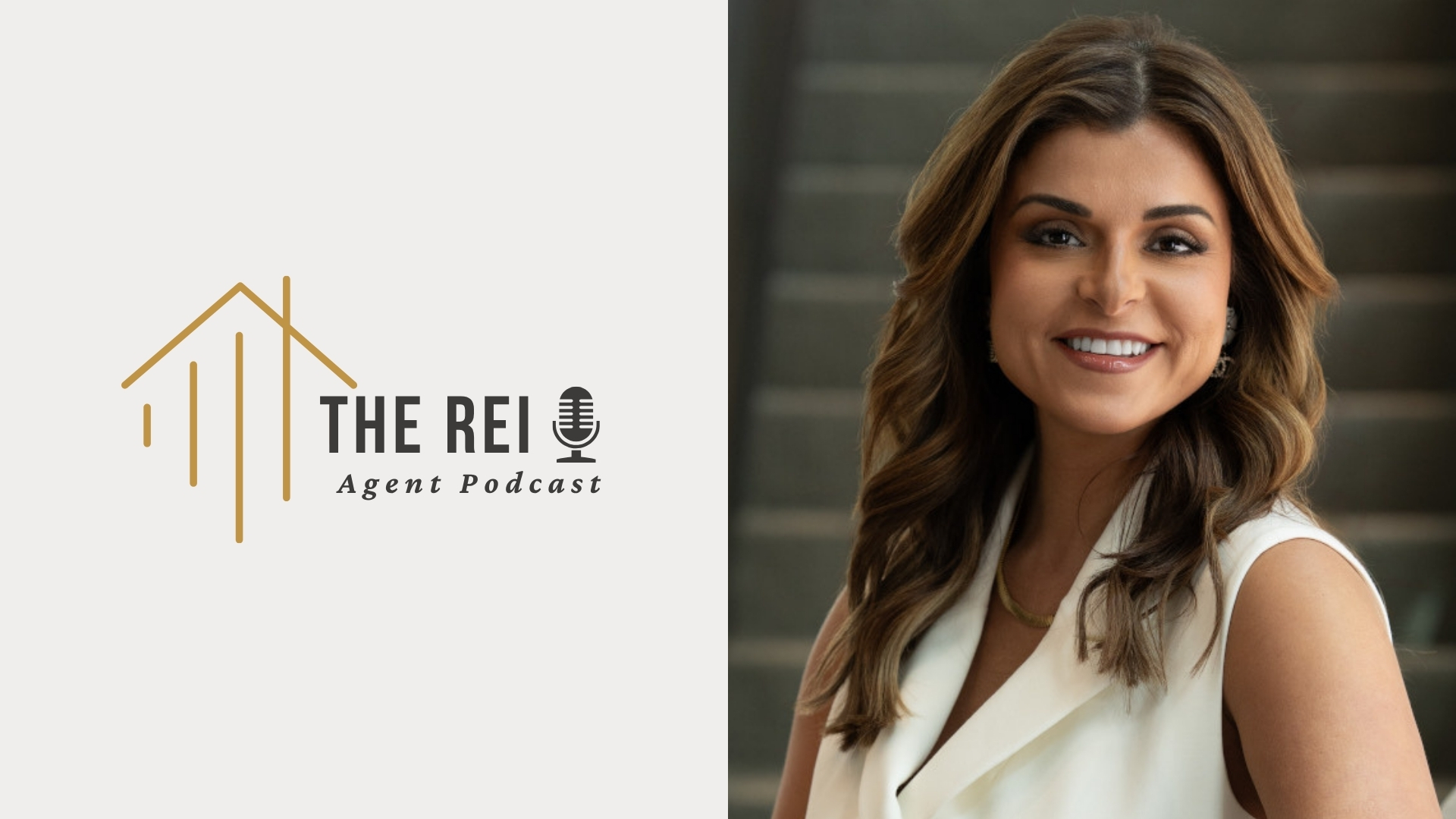
The Moment One Challenge Became A Calling
Every powerful career has a beginning, but Enas Latif’s story did not begin with certainty, privilege, or a perfect plan.
It began with frustration, a young family searching for a home, and the surprising realization that the people who were supposed to guide them were not really guiding them at all.
Long before she became an associate broker, team leader, investor, and top-producing professional in the Buffalo-Niagara market, Enas was simply a buyer trying to understand the process.
She and her husband were driving through neighborhoods, calling signs, and trying to make one of the biggest decisions of their lives without the education or clarity they needed.
Then came the line that changed everything.
“Even you could do a better job.”
It could have sounded like a joke. It could have sounded like an insult. But Enas heard something else inside it. She heard a challenge.
“Challenge accepted.”
That one decision eventually turned into a career that has lasted more than two decades. It also became a reminder that sometimes the life-changing door does not open with applause.
Sometimes it opens through irritation, discomfort, and the quiet decision to prove what is possible.
From Amman To Buffalo, And From Uncertainty To Impact
Enas was born and raised in Amman, Jordan, and moved to the United States in 1994. Like many immigrants building a new life, she did not arrive with everything figured out. It took time to discover her direction, and in 2001 she earned her real estate license.
Her early journey was not easy. English was her second language. She did not have a deep local network. She did not have the large sphere of influence that many new agents are told to contact first. She had to build momentum in a market where she was still becoming known.
That first year brought tears, doubt, and moments when quitting felt possible. But the difference was that Enas did not build her career on ease. She built it on consistency, mentorship, discipline, and the willingness to keep showing up when nobody was clapping yet.
The First-Year Struggle That Many Agents Understand
For new agents, the first year can feel brutally confusing. The licensing course teaches rules, forms, and legal basics, but it does not truly teach the business of building a business. Enas had to learn that part in the real world.
She did not have a long list of friends and family waiting to buy and sell with her. Instead, she found direction through a mentor at her office, someone who gave her a practical list of daily actions and told her to treat the business like a real job.
“If you treat it like a full-time job, you will make full-time money.”
That advice became a foundation. Enas called for sale by owners. She called expired listings. She asked other agents if they needed help with open houses. She did the work every day, even when the results were not immediate.
That is the part of success that rarely looks dramatic in the beginning. It looks repetitive. It looks ordinary. It looks like doing the same right things long enough for the market to finally notice.
Keep Barking Until Somebody Listens
One of the most unforgettable lessons from Enas’s story came from her mentor during a season of frustration. Enas was doing the work, but the business still was not coming in fast enough. She was putting in the effort, yet the results had not caught up.
Then her mentor gave her a line that stayed with her.
“Keep barking, one day somebody will listen.”
That simple sentence captures the heart of entrepreneurship. Not everyone hears the first call. Not everyone responds to the first attempt. Not every prospect becomes a client right away. But the person who keeps going long enough often reaches the moment when everything starts to shift.
For Enas, that shift came through her first for sale by owner listing. Then came the second, the third, and the fourth. The business began to snowball. Even more powerful, that first client relationship lasted for decades and led to family members, friends, and repeat opportunities.
That is why consistency is not just a productivity word. It is a trust-building strategy. It gives the market enough time to believe that an agent is serious, capable, and still standing.
Why A Sphere Of Influence May Not Trust A New Agent Yet
Enas also shared an important perspective for agents who feel discouraged when their own sphere does not immediately support them. Sometimes people are watching quietly. They may love the agent personally, but they still want to see if that person is truly committed to the business.
That can be painful, but it is not always rejection. Sometimes it is simply hesitation. People want to know that the agent understands the market, understands the process, and is not just trying something temporarily.
For that reason, prospecting outside the sphere can sometimes create momentum faster. Strangers do not necessarily know that the agent is new. If the agent does the homework, provides strong service, and shows professionalism, the relationship can begin without the same preconceived doubts.
Visibility Is Not Vanity When It Builds Trust
As the conversation moved into modern business-building, Enas and Mattias explored the role of visibility. Years ago, agents had to network in person for months or years to reach the number of people a single short video can reach today. Social media has changed the scale of visibility, but Enas was clear that visibility alone is not the goal.
The goal is credibility.
An agent can show personality, have fun, and be relatable, but Enas emphasized that real business comes from being seen as a professional who knows what they are doing. Viral attention may create views, but credibility creates trust.
“Showing credibility, I think, is key.”
This is where many agents can misunderstand social media. The point is not to chase every trend. The point is to show up consistently in a way that builds authority, demonstrates value, and reminds people that the agent is active, knowledgeable, and available.
The Real Secret Behind Durable Growth
When asked about the operational discipline behind her team’s long-term growth, Enas returned to the same core principle that shaped her beginning.
“Consistency is key.”
She coaches her team to develop good daily habits, maintain a consistent pipeline, and build balance between work and life. Without a consistent pipeline, agents often experience emotional and financial peaks and valleys. One month feels exciting. The next feels terrifying.
A steady pipeline creates a steadier paycheck. A steadier paycheck creates less stress. Less stress allows agents to manage their time and energy better. That is not just business strategy. It is quality-of-life strategy.
Do Not Build A Business On Leads Someone Else Controls
One of the strongest business lessons from the episode was Enas’s warning about relying too heavily on paid online leads. She did not dismiss them entirely. She acknowledged that they can supplement a business. But she made a clear distinction between using leads as support and building the entire business around them.
“Your business should be built on relationships.”
Old-school prospecting still works because relationships still work. Calling, following up, reaching out, educating, and staying connected may not sound flashy, but those actions create a stronger foundation than waiting for a platform to send the next opportunity.
When an agent depends completely on another company’s lead model, that agent is vulnerable to price changes, platform changes, increased competition, and lower-quality inquiries. But when an agent builds relationships directly, the agent owns more of the business foundation.
That message is especially powerful in a changing market. When easy business slows down, the agents who built real relationships are usually better positioned to keep going.
Pick The Right Three And Commit
Enas also offered practical advice for newer agents overwhelmed by too many lead-generation options. Instead of trying everything at once, she suggested choosing a few strategies that feel authentic and sustainable.
Some agents may thrive on video. Others may prefer blogging, open houses, phone calls, networking, or community involvement. The method matters less than the ability to do it consistently.
“Be consistent with it if you choose to do it.”
That advice is simple, but it is not small. A strategy that an agent cannot sustain is not really a strategy. It is only a short burst of effort. The real power is in choosing a lane, committing to it, and staying visible long enough for trust to grow.
Buffalo, Florida, And The Reality Of Local Markets
Enas brought a grounded perspective on market conditions because she works in both the Buffalo-Niagara region and Florida. Her view was not based on national headlines. It was based on local experience.
In Buffalo, she described a strong seller’s market driven partly by affordability and demand that still exceeds supply. But she also made it clear that even within one region, different pockets can behave differently. School districts, property condition, property type, pricing, and buyer demand all matter.
In Florida, she described a different environment, with more inventory and more leverage for buyers in many areas. But even there, she emphasized that location, pricing, flood zones, hurricane exposure, and buyer preferences can make one property behave very differently from another.
That is a major lesson for agents and investors. Markets are not monolithic. A national headline may create awareness, but local expertise creates decisions.
Listings, Buyers, And The Overlooked Power Of Investors
When discussing where agents should focus, Enas gave a balanced answer. Listings matter because they can create durability in the business. Buyers, especially first-time home buyers, can be deeply rewarding because they are often eager to learn and excited to start a new chapter.
But Enas also highlighted a group that many agents overlook: investors.
“Investors are bread and butter.”
Her reasoning was direct. Investors often do multiple transactions per year, and they may continue doing business for years. If an agent can serve investors well and maintain those relationships, that agent can build recurring opportunity instead of always starting from zero.
For Enas, this is not theory. She is also an investor herself, using both buy and hold strategies and fix-and-flip opportunities depending on the property, the price, and the market.
The Money Is Made When The Deal Is Bought
Enas shared one of the most important investment principles in the episode with remarkable clarity.
“You make your money on an investment when you buy it.”
That idea is foundational. A beautiful renovation cannot always rescue a bad purchase price. A strong rental market cannot always fix an overpaid acquisition. If the numbers are wrong at the beginning, the investor may spend years trying to recover.
For buy and hold investors, Enas discussed the importance of understanding how a property can be rented, whether through long-term tenants, short-term rentals, or other strategies allowed by local rules. For flippers, she pointed to properties that need care, improvement, and vision, especially in sought-after neighborhoods where value can be created.
She also acknowledged the difference between faster money and higher risk. Flipping can produce quicker returns, but it requires discipline, experience, capital, and the ability to manage uncertainty.
Agents Should Not Forget Their Own Financial Future
One of the most powerful parts of the conversation came when Enas spoke about financial security for agents. Active agents may earn strong income, but many forget to plan for retirement, market shifts, health challenges, or seasons when they cannot work at the same pace.
Her message was clear: agents help other people build wealth, but they should also think seriously about their own financial freedom.
“We should consider making ourselves money and securing our own financial freedom.”
That includes budgeting, investing, creating supplemental income, and not allowing a large commission check to become an excuse for careless spending. Enas spoke candidly about agents who earn well, spend quickly, and then find themselves stressed when the next check does not arrive on time.
“Budget yourself, people.”
It was a funny moment, but it carried a serious truth. Freedom is not only about how much money comes in. It is also about how intentionally that money is managed.
Balance Is Built Into The Calendar
Because The REI Agent Podcast explores success through a holistic lens, one of the most meaningful parts of the episode was Enas’s reflection on balance. She did not pretend that every day is perfect. In fact, she admitted that some days are better than others, especially during busy seasons.
But she has learned that ignoring balance eventually leads to burnout. Her morning routine helps her begin the day with clarity. Coffee with her husband, fresh air, sunlight, movement, stretching, walking, or going to the gym all help her feel grounded before the demands of the day begin.
She also spoke lovingly about family, friends, and quality time. For Enas, those relationships are not optional extras after the work is done. They are part of the life the work is supposed to support.
That is why she treats personal commitments like appointments. Time with family, friends, health, and rest must be placed on the calendar, or the business can consume everything.
The Survival Skill For High-Producing Agents
Enas described herself as a calendar nerd and a time-blocking nerd, but behind that playful description is a serious survival strategy.
“I think that’s the only way us agents can survive this industry and have balance.”
Real estate can easily become an always-on business. Calls, showings, negotiations, inspections, emergencies, and client needs can fill every open space. Without boundaries, success can start taking the place of health and relationships.
That is why time blocking matters. It protects what matters before the world starts making demands. It also helps agents stop treating their personal lives as leftovers.
Visibility Trumps Ability When No One Knows Who Is Capable
When asked what habit could help an agent double production without burning out, Enas gave another memorable answer.
“Visibility trumps ability.”
The point was not that skill does not matter. Skill absolutely matters. But if no one knows an agent exists, that skill may never get the chance to serve anyone.
Visibility can happen through social media, blogging, networking, selective events, community relationships, and intentional pipeline-building. Enas was careful to emphasize selectivity. Agents do not need to attend every event or chase every room. They need to be visible in the right places with the right people.
That kind of visibility creates future business. A client relationship today can become a referral tomorrow. A closed transaction can become a fan. A fan can become two or three future referrals. Over time, the pipeline becomes easier to maintain because it is built on real connection.
The Golden Nugget: Build A Business That Supports Life
Near the end of the episode, Enas shared the lesson that tied the entire conversation together. It was the kind of statement that does not just apply to agents. It applies to entrepreneurs, leaders, investors, parents, and anyone building something meaningful.
“Build a business that supports your life and not a life that supports your business.”
That is the heart of the episode. Success should not require the sacrifice of health, marriage, family, friendships, peace, or identity. A business can create freedom, but only if it is built with intention. Without systems, boundaries, and discipline, the same business that was supposed to create freedom can become the thing that runs everything.
Enas learned that working harder is not always the answer. Systems matter. Mentors matter. Mindset matters. Consistency matters. Relationships matter. Health matters.
“Either run your day or run your business or it will run you.”
That lesson feels especially important in an industry where ambition can be celebrated while burnout is quietly normalized. Enas’s story offers a better path. Work hard, but not blindly. Build big, but not at the cost of everything beautiful. Stay consistent, but do not lose the life that success was supposed to make possible.
The Book That Changed Her From The Inside Out
When asked about a favorite book, Enas recommended Think Like a Monk by Jay Shetty. She explained that many real estate professionals focus heavily on tactics, scripts, and strategies, but this book helped her think more deeply about mindset, emotions, priorities, and relationships.
That recommendation fit the full spirit of the episode. Real estate is not just about properties. It is a people business. Agents must manage conversations, emotions, expectations, stress, and trust. The stronger the inner foundation, the stronger the outer business can become.
“It really enlightened me in different ways and changed me inside out.”
A Life Built With Courage, Consistency, And Purpose
Enas Latif’s journey is powerful because it does not present success as magic. It presents success as something built. A young mother searching for a home became frustrated enough to imagine a better way. An immigrant entrepreneur with no easy sphere of influence became a top-producing professional. A new agent with tears and doubts became a mentor to others.
The pattern is clear. Enas did not win because every door opened quickly. She won because she kept knocking, kept learning, kept showing up, and kept building relationships one person at a time.
Her story reminds agents that a business can be profitable and personal. It can be ambitious and healthy. It can produce income and protect relationships. It can create opportunity for clients while also creating freedom for the person building it.
That is the deeper message of this episode. The best business is not the one that consumes a person’s life. The best business is the one that helps them live it more fully.
“Build a business that supports your life and not a life that supports your business.”
Transcript
[Mattias]
Welcome back to the REI Agent. My guest today is Enas Latif, Associate Broker and Team Lead of the Enas Latif Sales Team at Hunt Real Estate ERA in the Buffalo, Niagara region of Western New York, and has recently opened a Compass Branch in Tampa, Florida. An immigrant entrepreneur with over 20 years of experience in real estate, Enas has built one of the top producing teams in the Buffalo, Niagara market, earning recognition as a top 1% producer in the region.
Her story is one of building something from the ground up in a market that does not always make the national headlines, but has its own distinct dynamics and opportunities. As she understands better than almost anyone. Enas, welcome to the REI Agent Podcast.
[Enas Latif]
Thank you. Thank you for having me.
[Mattias]
So first of all, where are you from originally and what brought you to the US?
[Enas Latif]
I was born and raised in Amman, Jordan and moved here in 1994. Took a few years for me to figure out what I wanted to do. And in 2001 was when I actually got my real estate license.
[Mattias]
Okay.
[Enas Latif]
So you got to ride the swing up and- And down and up, rollercoaster, absolutely.
[Mattias]
Yeah, what a crazy time, I’m sure. Did you go straight to Buffalo then at that time or? Yes.
[Enas Latif]
Yes, I have been in Buffalo for, oh my goodness, going on 32 years now.
[Mattias]
Wow, go Bills.
[Enas Latif]
Go Bills.
[Mattias]
Right? Yeah, so cool. Tell me a little bit about, yeah, what got you to start real estate in the first place?
[Enas Latif]
It’s actually a funny story. So my husband and I were younger. We had a little baby and we started looking for a home.
We worked hard, saved some money, started looking for a home. And back then we didn’t have Google or Zillow or anything like that. We would drive around the neighborhoods we thought we wanted to live in, and call from the signs, that kind of thing.
And I believe we were getting a bit frustrated because our experience was an agent would set up an appointment to show us their listing that we just called them on. And didn’t really get an experience where any of those agents helped us understand the process, understand the market, or understand what we’re looking for and how to help us find a home. So it became really frustrating.
And jokingly, my husband on the way home one day, he said, even you could do a better job. And I was like, first of all, I’m not sure if this is a compliment or an insult, but I was like, you know what? Challenge accepted.
So a few days later, he saw a little ad in the paper for a breakfast seminar, if you’d like to start your real estate career, buy, hunt real estate. And I attended the seminar and here I am today.
[Mattias]
So are you happy he pushed you that direction now?
[Enas Latif]
Yeah, very much so. I have to say, maybe he didn’t push me to get into real estate or to get my license, but that first year was so challenging, especially for someone like me, who doesn’t have a COI or friends or family to get some business from to get you going like most agents do that first year. So it was a bit challenging and I had a lot to learn.
English was my second language. I struggled with that a little bit and had a lot to learn. So there were a few times where there were a lot of tears and I guess the lack of courage to want to continue, that’s when he really pushed me to stick with it.
[Mattias]
Okay, yeah. Sometimes that can be exciting and kind of fun to start. And then you get through the course and all that kind of stuff and you learn that the business is not taught to you at all in the course.
[Enas Latif]
Right, and where do you get your business from? Especially for someone like me, right? So with really not a lot of people that I knew here.
[Mattias]
Yeah, I mean, that’s something that people can struggle with if they’re wanting to relocate. I mean, I feel like that’s one of the other side of the sword or whatever, that people don’t talk about as much with real estate is you kind of feel like you’re almost become more and more married to your market, right? And you don’t have as much flexibility to move around, et cetera, but it’s possible.
I guess, do you have any tips for people who would be thinking about starting their business in a brand new market? Maybe a spouse needs to move or they just wanna, hey, I wanna go live in San Diego.
[Enas Latif]
Yeah, absolutely. I mean, the way I found a way to make it here in Buffalo, not being from Buffalo, honestly was a mentor at the office that I had. It was my branch leader.
And she gave me a list of things to do. And she said, just come in every day and do these things, be consistent. If you treat it like a full-time job, you will make full-time money.
If you don’t, you will not make money. And a lot of it was prospecting because the first things they teach you when you finish real estate school, the first thing they tell you is, oh, connect with your COI, send them letters, that kind of, I didn’t have COI. So it was more about calling for sale by owners, calling expires, doing as many open houses as possible, even though I didn’t have any of my own listings.
I started going around the office asking agents if they need help with open houses, those kinds of things. And I did it every day. And I was getting frustrated because I still wasn’t getting the business.
And one day she told me, she said, keep barking, one day somebody will listen. And she was not wrong. It was consistency that mattered.
And I had just kept doing it until I got my first for sale by owner listing, then my second and my third and fourth, like literally in a short period of time, they just all happened. And from there, really business started snowballing. And that first for sale by owner that I listed, I sold them a house.
And since then, now it’s been 26 years, since then I’ve worked with them and family members and friends of theirs multiple times.
[Mattias]
Yeah, it’s amazing how that works, right? And it’s so true. There’s just, even if you have a sphere of influence in your market, I mean, it can be a grind to get started and to have them trust you, to have them think of you.
They probably have another agent that they’ve been working with or whatever. I mean, if you’re new, most people know, like seven, eight other agents. So it can just take, it can be like you’re beating your head against the wall for a while.
But then there seems to be like a tipping point, right? Where things just start snowballing, start coming in, the business starts flowing.
[Enas Latif]
Very, very true. And I see that a lot with my agents on my team as I mentor them and help them get started. Often, their COI, to your point, maybe they know other people, but also they’re kind of sitting back and watching to see if you’re sticking with this business or not.
Do you know what you’re doing or not before they trust you to work with you? They know that you’re new, where maybe prospecting outside of that, those people don’t know that you’re new. As long as you do your homework and you provide good service, they’re not going to know that you’re new, where your COI does.
So sometimes it takes a little time to gain your COI’s trust. So don’t be discouraged by that.
[Mattias]
I think that thing that you said before, consistency is what’s so important. I think if you’re just consistent with something, and for me, I did a blog. I did a blog.
I started off with three times a week, just really short, simple things, and no AI then, right? And then it went down to two. And honestly, I don’t even know how many people actually ever read what I actually wrote, but I was sharing it on social media every time I wrote something.
And I think that just the act of having something that I’m sharing, hey, this is me doing something in real estate, and they’re like, oh yeah, he’s been, I mean, that’s been happening for a long time. So again, it’s not immediate, but that consistency, that showing up, and hey, I’m in the business, I’m doing this, putting that in front of people one way or the other, even if they’re not reading it, just seeing the headline, if you will. After a year or so, they start realizing and associating me with that.
So I think that was really helpful, that consistency.
[Enas Latif]
I love that. I think it positioned you as the expert and the go-to person, and it builds credibility for you without you even trying to prove anything to anyone. You’re just sharing good information.
Absolutely, love that.
[Mattias]
And I think that can look different for a lot of different people. Some people might want to be just on the social media, just sending stories or doing reels or that kind of stuff, and just kind of doing day-in-the-life maybe even. But I think it’s that consistency that it just, to remind everybody in your sphere, if you have it, that you’re doing this and this is your job and you’re good at it, you know what you’re doing.
[Enas Latif]
Yeah, and social media made things so much easier now. You can be visible to thousands of people by doing a few-minute clip versus how long did it used to take us with networking, let’s say, to reach 1,000 people. It would take you all year to meet 1,000 people through networking, if not longer, you know?
So it’s pretty amazing what you could do with social media, absolutely, but showing credibility, I think, is key.
[Mattias]
Yeah, it could be kind of a double-edged sword as well as if you’re just chasing trends and being a little too goofy. I don’t know if people will take you as seriously as you probably want them to if you actually want to convert some business. There’s a really funny agent that I follow and they’re super viral, but I think I try to look up their sales data once.
Like, I don’t know if they’ve done very much actual business. They might just be making money on the social media, so yeah.
[Enas Latif]
Yeah, that’s interesting, and I agree with you. It’s nice to have a little fun on it, I guess, and show your personality, but you definitely have to focus on becoming the expert and building credibility and showcasing that through social media, because it’s so easy to reach so many people at once. Over and over, too, right?
[Mattias]
Yep. So now your team has built a level of presence and production most agents only aspire to over your 20, well, 26 years, right, in the Buffalo-Niagara market. What’s the single most operational discipline you would point to as the biggest reason that growth has been durable and where do most agents try and fail to replicate it?
[Enas Latif]
Are you referring to my team as team members? Are you referring to me as a team leader?
[Mattias]
Yeah, no, your sales team, yeah.
[Enas Latif]
Yeah, my sales team, yeah. What I coach them on, first and foremost, is to be consistent and have good habits daily and have some balance between life and work as well, because otherwise, people will have the peaks and valley. You need a consistent pipeline for a consistent paycheck.
Then you’re not as stressed and you could really manage your time better. So to me, it’s consistency is key, really. Everything else you could work on, everything else you could definitely, you could definitely work on your objection handling techniques.
You can certainly potentially have more buyers or whatever, but being consistent in what you do is really the key, in my opinion.
[Mattias]
Yeah, it’s true. I think even the seasoned agents have to kind of be reminded a little bit of coming out of such a strong market that you’ve got to stay consistent. You’ve got to work on your sphere.
You’ve got to work on your database. You’ve got to work on your business, because it was always a concern of people that were joining in the pandemic and where everything was flying off the shelves and it was so crazy that they wouldn’t know how to do the business afterwards, but it’s easy to get lazy when it’s just following your lead, right?
[Enas Latif]
Yes, exactly. And I think a lot of the realtor culture started, or a lot of realtors, I should say, they started relying on all the online leads that were funneling through that time and just paying for leads and buying leads and all of that, which is fine. It’s a good supplement to your business, but your business should not be built on that, right?
Your business should be built on relationships, prospecting, old school prospecting still works and works really well. You’re building a relationship with that person versus someone just clicking online one after another, connecting with three different agents on the same day. You’re running to go show them a property and you’re hoping that they will work with you and maybe be able to build a relationship with them.
So going back to old school methods, you can call them old school if you want, but they work, which is focusing on relationships and outreach, be proactive about your business. Don’t wait for the business to come to you, for that phone to ring or for buying leads. It’s fine if you do it as a supplement, but don’t rely on it.
[Mattias]
Yeah, I think that’s really a good point. I mean, there’s a couple of points there that I wanted to add to is that we’re not, if you’re relying on somebody else’s model, their business model basically, right? I mean, if you’re buying leads, you’re relying on them.
And so they can change that. Like it’s gonna, it could get way more expensive. It can be different than what it has been.
I think a lot of people did struggle with the models getting more expensive or more saturated with other agents or maybe just less business in general. And if you’re starting out and you’re looking for more business, like you said, it’s not a bad way to go necessarily, but if you don’t focus on that relationship, you don’t focus on them being like long-term clients trying to get their friends and family multiple transactions from that connection. Yeah, you’re gonna be building a business model that’s like just reliant completely on something that you don’t really have control over.
And I also like to tell people that, think about what you want your business to look like when you’re kind of like, I know you’re desperate for anything right now, but when you’re like rolling, what do you want that to look like? Do you wanna be playing a receptionist and answering the call for like, that 1% of the people that you talk to that might be a good option? Or do you wanna be talking to your friends that you have a relationship with and working with warm referrals and that kind of thing.
And I think it’s true too, for like the consistency thing, if you’re posting on social media, are you cut out to be an influencer? Do you want that life? If not, maybe that’s not the place to focus.
Maybe a blog or something like that looks more as more your speed.
[Enas Latif]
Yeah, yeah, absolutely. It has to be something that you’re comfortable with and can be authentic. And is the ability to be consistent with it, right?
Is it sustainable for you? If it’s something so outside of your comfort zone, it may not be sustainable for you. So there’s so many different things that you could do to generate business.
Maybe a newer agent should pick the top three and stick with it for this year. And maybe next year, add another one or two that you’re like, okay, I can do this now. Or I’ll learn how to do this.
Or I’ll push myself out of my comfort zone to do this. But be consistent with it if you choose to do it. Commit to it.
[Mattias]
100%. I know some people who have tracked, like they’re very, very, like have multiple like spreadsheets and data sets and graphs to show where their business is coming from. And if they’re taking on something new, like paying for leads, for example, like actually track what the result was from that.
I know that takes a lot of discipline to do, but it’s a great thing to do for sure if you can. We had talked a little bit about the market shifting a little bit or not being as hot as it was through the pandemic. I’m curious what the data is actually telling you about your markets you’re in now.
[Enas Latif]
So Buffalo remains a very strong seller’s market, despite of maybe different news that we’re hearing in different areas of the country. And I believe a big part of it is affordability. It’s a very affordable housing market here in Buffalo.
I think we were rated multiple times in a row through the website Zillow being number one area to live in for affordability. So we definitely have more demand than we have supply at this time, but it’s kind of weird. You really have to understand the market because it’s sometimes even within our area, the Buffalo Niagara area, it can be in different pockets, can behave a little bit differently.
Different type of property can behave a little bit differently too. And things will still have to be priced well, whether it’s a single family home, a multifamily, something that needs work, something that’s moving condition. If it’s not priced right, we’re not attracting enough buyers to that home for it to sell.
And there are some properties that are just sitting on the market. So it’s a little bit different. You can’t generalize so much depending on school district and other things.
[Mattias]
Sure, that makes sense. That sounds similar to where we’re at. And I know that in Florida, there’s some other dynamics there as well with like insurance.
I know that’s been a big thing there. So from what I’ve heard, I interview people all across country and Florida is definitely one of the pockets that seems like it’s been hurting a little bit more. There’s been a little bit more of a price correction.
[Enas Latif]
Yeah, in Florida, there’s absolutely more inventory for the buyers to choose from. So they’re definitely at leverage and it is a buyer’s market there. However, it also depends from one area to another.
So some areas are more so of a buyer’s market than other areas. And again, if something is priced properly and has what the buyers are looking for in terms of offering certain things, maybe being out of the flood zone, being out of hurricane areas and things like that would become more attractive. So these things will matter when you’re looking at properties in Florida.
[Mattias]
That makes sense. What do you think is still a really good place for agents or your team selling agents to focus on? Like what kind of buyers, sellers, et cetera is a good thing to still pay attention to?
Is there a certain type of class or yeah, something that’s still strong in those markets?
[Enas Latif]
Yeah, I mean, I think that listings are the way to last in this business. They’re almost money in the bank. Obviously in a seller’s market, it’s easier to have listings, but of course I experienced markets where it was a buyer’s market and you carried that listing for months and months and months.
So making sure that you know what you’re doing if you’re in that type of market and you’re constantly remarketing your listings and maintaining the relationship with the seller. So if it took a little bit longer, they maintain the listings with you as well. So that’s really important.
But of course, working with buyers is always fun and gratifying, especially for some home buyers are a lot of fun to work with and they’re eager to get into a home, they’re eager to learn. And for me, maybe because I love real estate so much and I love teaching people about it and all the nuances. And also I always take in consideration protecting someone’s investments when they’re buying a property, even if they want to use it for their own family home, it’s still an investment, right?
So I like to educate them on that aspect of it too. So I really enjoy working with first time home buyers here and there as well. But also I think a lot of people in our industry overlook working with investors.
I mean, investors are bread and butter. Typically an investor is doing multiple transaction a year and they’re doing it for years and years. So that is a recurring paycheck if you could focus on working with a few investors throughout the year and maintain the relationship to keep them long-term.
So we really work with a lot of investors on our team.
[Mattias]
Yeah, I was gonna ask you too, you mentioned out there that you also have invested in real estate as well. So can you talk about that a little bit and maybe what some of the investment opportunities would be in the markets you serve?
[Enas Latif]
Yeah, so personally I do both invest in buying and holding and then invest in buying and flipping. Depends on the market and what I have available that I could buy at a good price. Because I believe that you make your money on an investment when you buy it, right?
Or what you pay for it is where you make your money. If you ever overpaid on it for an investment property, it will take a very long time to recoup your investment. So buy and hold meaning that you buy the type of property that you could rent.
And there are different properties that you could rent differently. Long-term tenants, short-term rental, Airbnb. So different options.
Of course, we have to check with municipalities and things like that on what’s allowed, what’s not. But there are also the opportunities where you could buy something that in need of tender loving care and beautifying a home. And especially if it’s located in a sought-after neighborhood and be able to then turn around and sell it for a profit if that’s what you want to do.
That’s of course quicker money, higher risk. So different types of investments.
[Mattias]
Yeah, no, I love it. I think getting tied in and we all have, been introduced to a property or have other agents be like, I don’t know what to do with this one, this is a disaster. And we come across these things and these are good opportunities.
If you can maybe partner with somebody that has had experience with renovating properties, maybe it’s a contractor, maybe it’s another agent that does it, to kind of get started, that could be really helpful. It’s how it worked for us. But yeah, what an opportunity.
It’s usually the best way to get a property, is if it needs that TLC, right? Because you’re not just trying to low ball somebody that doesn’t know better, but you have to go in and do the work and take the risk and risk your capital to get this property up to par. And if it’s in a great location and rents well, then usually you’re left with a good amount of equity.
So if you’ve done any of those BRRRR methods, that could be an awesome way for an agent to kind of build up a portfolio without really having to invest that much money. Out of pocket. So we did that through equity lines.
We got equity line on our first house, we moved into our second house, got an equity line on that. Eventually we got equity lines on like five different houses all together. But now we can use that temporarily to buy a house in cash at the auction steps if we want to, or however.
And then do a refinance after the renovations are done to keep it as a long-term rental, or just sell it and get the equity that you’ve built that way. But I love it.
[Enas Latif]
Yeah, absolutely. And agents sometimes forget, we make a lot of money, maybe at least the ones who are very active and successful in this business. But many agents forget about retirement.
And making sure that we have a supplemental income also, if the market tanks, if your health maybe takes a little, whatever you wanna say, but if you’re not healthy enough to be out there with buyers and sellers for a while, or for a long while potentially, making sure that you’re still financially secure is very important. Because if we can’t go out the door every day and work, we’re not making money, right? So you have to secure yourself financially, absolutely.
One little trick too on that, by the way, I love the equity method. I did that myself a few times, but then also, I realized that I had quite a bit of money I can borrow for free from my life insurance policies. So that’s one little trick too that maybe a lot of people are not aware of.
[Mattias]
Is this like an infinity banking kind of thing?
[Enas Latif]
Yeah, I mean, people can call it whatever it is, but truly, if you’ve been paying into life insurance for a long time, I mean, it’s free money to borrow, has very low interest. And if you’re flipping a property or investing in a property, it might be worth it to do that and maybe pay the money back so it doesn’t affect your policy later.
[Mattias]
Sure, yeah, I love that. Another thing too, is if you’re building relationships with banks, local banks typically, smaller community banks, they sometimes offer some really good financing for these kinds of things, especially if you have experience. I think it helps if you’ve done this a couple of times, you have a track record, et cetera.
I’ve gone to a closing, I bought a property and received a check that I could then use to help rehab the property. Now, typically, it’s not, I don’t always get everything. I don’t always get the property, no down payment and all the money for renovations with, again, no down payment.
Typically, it’s not that good, but a little bit of something and then we can supplement it with equity lines and get the deal done. So definitely, getting involved, having maybe something to show a bank, your experience once you get there, can definitely jumpstart you to get some of these deals that may be hard if you’re first starting or like, how the heck am I supposed to come to the courthouse steps and have money to just buy this in cash? This is usually the way.
And it can start as easily as just your first house you buy being like one that you wanna keep as a rental and that’s our story equity. And we all know that that’s not 25% down, so.
[Enas Latif]
Yep, exactly. So investors to work with for yourself, but then also become an investor in real estate, right? We’re in the market every day, you’re seeing all these deals, you understand the market, you know where the money is.
While you’re making other people money, which is totally fine, and we should consider making ourselves money and securing our own financial freedom.
[Mattias]
The goal, the Holy Grail, especially once people have seen some of the ups and downs of the market is if you can keep your lifestyle lower and ultimately cover your lifestyle with the cash flow that’s coming in, then you have a lot more freedom to not stress about the ups and downs of the business, either seasonality or just market shifts, et cetera. So that’s hard for some people, but it’s a good goal to have.
[Enas Latif]
Yeah, well, budgeting is important too, which a lot of Asians don’t do. You know, know your expenses, the must pay every month expenses, give yourself an allowance for extras and really stick with that budget. And, you know, I see many Asians in our market, you know, they get a big paycheck, they go buy this or buy that. And then like a couple months later, they’re complaining they can’t pay their bills. Well, you know, budget yourself, people.
[Mattias]
Got a Porsche payment coming due. I mean, it’s all sitting real fast. Yeah, totally.
Well, talk a little bit about how you keep yourself, like how do you keep your mind right? How do you keep your, you know, your stress levels good? You’re doing a lot.
You have, you know, multiple offices, you have teams, you’re selling a lot. Like how do you stay right yourself?
[Enas Latif]
Yeah, thank you for asking that. Well, some days are better than others, I’ll have to say. I make an effort to have some balance on a daily basis.
However, there are some days in the busy season where maybe I don’t have that exact balance, but you know what? I’ll always feel the burnout after. So I have to remind myself how important it is to have that balance.
So first thing first, you know, having my morning routine, it doesn’t have to be elaborate. For me, sitting down, having coffee, chatting with my husband together, we usually do it outside, so we’re getting fresh air and some sun, just wakes my body and mind in a whole different level. And some kind of movement, whether it’s a few stretches or going to the gym that morning or, you know, taking a walk, whatever it is, that’s important to me.
And I think it really helps me start my day on the right foot. And you know, the days where I rush and don’t do that, I feel the difference throughout the whole day. So for me, that’s really important.
Another thing for me, I love my family very, very much. I have two daughters and a grandbaby. I love my friends very much.
I have a small circle of really good friends that I enjoy spending time with, quality time with, and quality time happens to be my love language. So to me is carving time for, you know, to spend with my family, carving time to spend with friends no matter what, and treat it like an appointment is really been helpful in that work-life balance because otherwise you just keep working, working, working, you know, and it’s unhealthy.
[Mattias]
Absolutely, yeah. I mean, yeah, put it in your calendar. That’s like, that’s definitely a tip.
If you don’t, haven’t done that, like plan your personal stuff in your calendar as well. So like, you know, somebody asks you, you know, can you show me the house then? Like, oh, actually I’ve got an appointment.
I’m going to the gym. Yeah. But it’s an appointment, it’s important.
And so let’s work around it and let’s find another time.
[Enas Latif]
Some things if you have on repeat in your calendar, then it’s already embedded in your mind. Oh, Wednesdays, yeah, I’m available after 11 or I’m available after 10, right? Because you carve that time for yourself on repeat.
So I’m a nerd with calendars and I’m a nerd with time blocking. And I think that’s the only way us agents can survive this industry and have balance and not lose relationships and important things while we’re focusing on our career and becoming successful.
[Mattias]
Yeah, 100%. If you were talking to a team member that was wanting to, you know, double their production over the next 24 months without burning out, do you have like a single highest leverage habit or system change you’d point to them first to do, to implement?
[Enas Latif]
Yes, absolutely. Visibility trumps ability. So being visible in every way possible.
Social media could be one aspect, blogging, being at maybe selective, be selective on where you’re spending your time for networking or attending certain parties or attending certain gatherings that you know you might be able to connect with people who could benefit you and your business while you’re having a good time. You could do both at the same time, but be selective. You don’t need to go to every party, go to the ones where you know you meet the right people.
And I’m very selective with that myself. And then honestly, building your own pipeline of business. If you’re building your pipeline, you’re not relying on it to come in, then you will see the business in the next 12 and 24 months and it becomes easier to maintain and recreate.
Especially if you sold 12 houses this year, those are 12 relationships. At least eight of them will become your fan and refer you to probably two or three more people in the next four years. So you already guaranteed your business.
You just need to work really diligent on certain things now and be consistent with it now and then maintain the relationships from there.
[Mattias]
Yeah, that’s perfect. I love it. If you were driving, if you’re like most agents and you’re listening to this and you’re driving around and you don’t have your pen and paper handy, definitely go to reiagent.com to sign up for our newsletter. We will summarize these highlights here every week. So definitely subscribe to that to catch it. And with that, I wanna transition into our golden nugget section.
What golden nuggets do you have for our listeners today?
[Enas Latif]
Golden nugget? Let me see.
[Mattias]
You got a ton already.
[Enas Latif]
Yeah, I have a few, but I guess the biggest lesson for me is build a business that supports your life and not a life that supports your business.
[Mattias]
Okay.
[Enas Latif]
If that makes sense, yeah.
[Mattias]
No, totally, totally. Yeah, that’s gold. It’s so true.
I think the curse and the gift of this business is you kind of can create it the way you want it to be. But if you don’t, if you’re not intentional, it’s gonna run you over, especially if you take off, right?
[Enas Latif]
Absolutely. Either run your day or run your business or it will run you. And for years, I thought personally, and I say this from my own personal experience, that just working harder, all I need is work harder, work harder.
But today I know and I do believe that to be successful, you need to create the right systems for yourself and then stick with it. Even when you don’t feel like it, you create a system, you know that system works, you need to stick with it. And like we said, I mean, I can’t say the word consistent enough, I guess.
But make sure you’re surrounding yourself with the right people, you’re surrounding yourself with the right mentors, and the right mindset is everything too. And not sacrificing your health or your relationships during that process. And I say that from my own personal experience, really.
[Mattias]
No, so true. Do you have a favorite book or a fundamental one that you think everybody should read or just one you’re currently enjoying?
[Enas Latif]
Yes, I’m always reading all kinds of different books on self-help and real estate stuff and the high hanging fruits, all these books, right, that everybody else reads. But one time somebody recommended this one book to me and I love audibles, by the way, I can’t sit here and read for long, I’m not a good sit-on-a-chair person. But I listen to audibles when I’m walking or when I’m driving and I love them very much.
And this person recommended this book to me that was 10 hours long and audible. I was like, geez, what am I gonna finish that? I’ll tell you what though, as soon as I started listening to it, I couldn’t stop.
So the book is Think Like a Monk by Jay Shetty. And since then, I read it one more time. I do recommend it to almost everyone I know.
And I know it’s not a real estate book and that’s one of the reasons I recommend it to realtors especially because a lot of us are taught over and over and being told over and over and focusing on tactics, just tactics, tactics, tactics, where this book really focuses on mindset. And even in real estate, it’s a people business and I believe it’s directly tied to the ability to manage our thoughts, our feelings, our emotions, our priorities, and at the end of the day, our relationships. It’s a relationship business.
So it really changed, this book really enlightened me in different ways and changed me inside out. And I can’t recommend it enough to people.
[Mattias]
That’s a new one, I’ll have to check it out. And I have the same, Audible or Bust. I do like, I’m a little bit bougie with it.
I do kind of like to get the Kindle version if it syncs as well so that if there is something I wanna highlight at a stoplight or whatever, I can go in there and highlight it and take a note or whatever. But in reality, I mostly just listen to it and try to get as much as I can out of it. But yeah, Enos, thanks so much for being on the show.
This has been an incredible conversation. To everybody listening, if you got something out of today’s episode, please take a moment to subscribe to the REI Agent Podcast wherever you listen. Leave us a review if you can.
It truly helps us reach more agents and investors who are on this journey with us. Of course, you can find us on YouTube and all the different podcast platforms. And where can people find you?
Are you on social medias, websites, et cetera?
[Enas Latif]
Yes, absolutely. Enas Latif Realtor is my own personal social media on Instagram, but I also have enaslatifsalesteam.com is my website in Buffalo and the legacy group tampa.com is my website in Florida. But really to find me personally, just go to Instagram, enoslateefrealtor.
Awesome.
[Mattias]
Well, thank you so much for being on the show. It’s been a fun conversation.
[Enas Latif]
Thank you for having me.
[Erica]
Thanks for listening to the REI Agent.
[Mattias]
If you enjoyed this episode, hit subscribe to catch new shows every week.
[Erica]
Visit REIAgent.com for more content.
[Mattias]
Until next time, keep building the life you want.
[Erica]
All content in the show is not investment advice or mental health therapy. It is intended for entertainment purposes only.