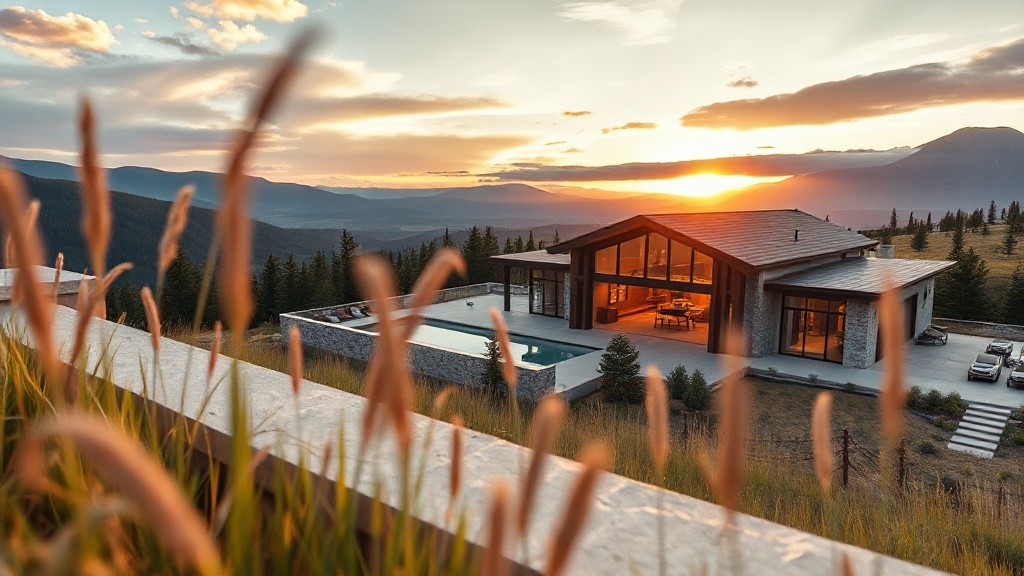


Why Idaho Luxury Is Splitting
In Idaho’s luxury market, the split is becoming more structural than cyclical.
Finite shoreline on Lake Coeur d’Alene, dock-capable parcels, and fully built private golf communities such as Gozzer Ranch and Black Rock leave the top tier competing for a fixed pool of assets.
That scarcity supports trophy waterfront values even as broader luxury inventory has loosened from pandemic extremes.
More than 60% of Idaho is federal public land, reinforcing the state’s outdoor-access advantage for buyers prioritizing privacy, recreation, and room to spread out.
Stable interest rates have also helped sustain confidence at the top end, echoing buyer confidence trends seen in other luxury markets.
Demand Fractures
The buyer base is also dividing.
Motivated relocators from California, Seattle, Portland, Austin, and New York still pursue privacy, natural beauty, and refined living.
A softer layer, shaped by the remote work divide, has weakened as return-to-office policies reduce migration momentum.
Status driven migration is reinforcing this separation.
Some buyers are chasing exclusivity and low-profile prestige, while others remain focused on space, affordability, and a slower pace.
How Boise and Hailey Changed Idaho Luxury
Across Idaho, Boise helped pull luxury housing out of a narrow resort-adjacent niche and into the state’s mainstream market.
Boise posted the fastest eight-year rise in top-tier list prices among major U.S. markets, with 90th-percentile pricing up 150% since 2017.
That surge reflected affluent migration, expanding inventory, and a durable preference for quieter living paired with urban elegance.
Before COVID, million-dollar homes remained rare and slow-moving in Boise.
Afterward, custom foothill estates, riverfront properties, luxury condominiums, and design-driven residences established a broader high-end identity.
Even as median demand cooled, upper-tier pricing continued climbing, showing deeper structural strength.
Statewide, inventory imbalance remained a defining force in 2025, reinforcing competition even as new construction expanded active listings.
Hailey also helped redefine Idaho luxury.
Its appeal centered less on visibility and more on mountain intimacy, privacy, and understated trophy-home demand beyond traditional resort branding.

Where Idaho Trophy Demand Is Concentrated
At the sharp end of Idaho’s trophy market, demand clusters inside controlled-hunt and limited-entry areas.
Access is deliberately restricted, and draw pressure is highest there.
Two application windows sharpen that pressure.
Sheep, moose, and goat tags open April 1 to 30.
Elk, deer, and pronghorn controlled-hunt applications run May 1 to June 5.
Trophy Hotspots Narrow Further
Idaho manages only a handful of elk units for trophy bulls.
That concentrates premium demand in recognizable trophy hotspots.
Units 40, 42, and 54 draw outsized attention for 350-inch-plus bull potential.
High-scarcity deer and antelope units show the same pattern.
Units 37-1, 39, and 54 post very low draw odds.
Those odds reflect controlled access, tight tag supply, persistent nonresident competition, and increasingly concentrated pressure in elite zones statewide.
What Northern Idaho Inventory Reveals
Northern Idaho’s luxury inventory now tells a different story than Idaho’s tightly controlled trophy hunt map.
Available supply has moved well above frenzy-era levels. Luxury listings reached 354 homes in December 2025, up 32 percent year over year.
Earlier signs appeared in March 2024, when 320 listings pointed to recalibration rather than shortage. By July 2026, Coeur d’Alene alone reported 447-plus active listings, underscoring broader seasonal inventory at the top.
Balance Replaces Scarcity
Sales have not kept pace with new choice. December 2025 recorded 69 luxury sales against 354 active homes, while March 2024 posted 24 sales versus 320 listings.
A 19 percent sales ratio in July 2026 signaled measured absorption and growing pricing sensitivity. Marketing times also lengthened, with days on market rising to 109, reinforcing a balanced market with active negotiation across counties.
Why Idaho Luxury Buyers Are Selective
Increasingly, Idaho luxury buyers are approaching purchases with far more caution than impulse.
At the top end, they are taking longer to commit, especially above $1 million, where perceived value must be obvious and pricing discipline is critical.
Even a 3 to 5 percent premium can sharply reduce showings, while days on market and price cuts are closely monitored.
Value, Condition, and Lifestyle Scrutiny
These buyers are not relying on price per square foot alone.
They compare location, layout, lot quality, and overall utility with surgical precision through lifestyle vetting.
Turnkey condition, accurate pricing, transparent disclosures, and strong presentation now shape interest as much as amenities.
Many are affluent locals or out-of-state arrivals with prior market experience, ample equity, and network influence.
That financial flexibility supports patience, selectivity, and deeper evaluation.
Assessment
Idaho’s $20 million-plus luxury segment reflects a market dividing between broadly affluent demand and a narrower trophy tier.
Boise and Hailey have helped redefine pricing power, while northern inventory points to uneven depth and longer decision cycles.
Demand remains concentrated in specific enclaves, not statewide.
At the top of the market, buyers are proceeding with precision, reinforcing a high-value environment where rarity, location, and product quality are determining which listings advance and which stall.