

What Sold in the Germantown Walmart Deal?
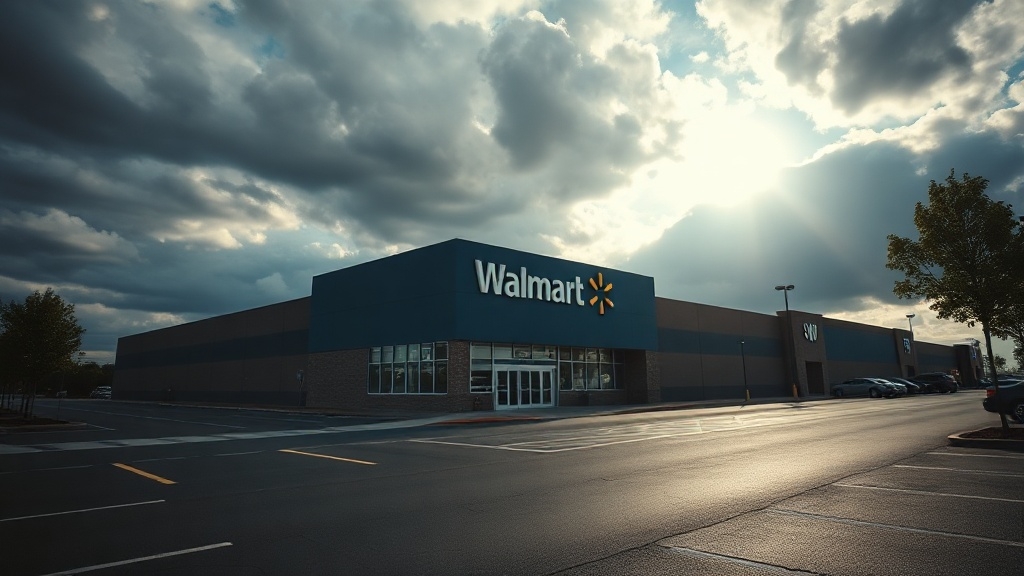
The asset sold was the 204,000-square-foot Walmart Supercenter box at W190N9855 Appleton Avenue in Germantown, Wisconsin. It was a large-format single-tenant retail property tied to Walmart Supercenter #1515.
This was the big-box building itself, not a small shop space or outparcel suite. Broker materials and market coverage identified it as a Walmart Supercenter sale within the Milwaukee-area retail market.
The property sits on Appleton Avenue, a major commercial corridor. It was presented as a standalone supercenter with a substantial retail footprint. Separate from the Wisconsin asset sale, Walmart’s Germantown, MD Supercenter at 20910 Frederick Rd highlights home delivery for refrigerated prescriptions including GLP-1 medications, insulin, and antibiotics.
Reporting described the transaction as a ground lease sale. Attention centered on the real estate structure rather than store operations. Broader market conditions in some metros show increased inventory can shift negotiating power toward buyers.
State records and brokerage coverage aligned on an $8.8 million sale price. The deal was framed as a notable Germantown retail asset disposition in regional coverage.
Who Bought the Germantown Walmart Property?
A Michigan-based real estate investment trust bought the Germantown Walmart property for $8.8 million, according to regional business reporting on the single-tenant retail sale.
Public coverage did not identify an individual purchaser by name. Instead, reports consistently described the buyer as a Michigan REIT and a national investor focused on income-producing retail assets.
REITs have recently benefited from logistics demand and have also identified grocery-anchored retail centers as strategic opportunities.
What reporting established
- Buyer type: real estate investment trust
- Geographic identity: Michigan-based, national investor
- Acquisition target: single-tenant Walmart Supercenter real estate
The purchase involved the store building at W190 N9855 Appleton Ave. in Germantown.
BizTimes and the Milwaukee Business Journal framed the deal as an institutional acquisition rather than a retailer purchase.
Available reporting also suggested the buyer has acquired other area Walmart properties. This reinforces its profile as a repeat acquirer of stabilized big-box retail investments.


Why Is the Germantown Walmart Still Open?
Despite the $8.8 million property sale, the Germantown Walmart is still open. A real estate sale does not automatically shut down the store operating inside the building.
Public listings still show the Supercenter open daily from 6 a.m. to 11 p.m. Walmart’s store page, store directory, and Apple Maps all list the location as active for regular shopping.
This kind of sale can leave store operations untouched. That can happen through lease continuity, an occupancy agreement, or another transition arrangement.
That separation allows the real estate to change hands while the retailer continues serving local demand. In other words, the property can be sold without interrupting day-to-day shopping.
The location also shows normal services, customer support, directions, and a working phone number. Continued operation helps preserve customer access and indicates the site is still functioning as a store, not sitting vacant.
What Does the $8.8M Price Suggest?
At $8.8 million, the transaction points more toward underlying real estate value than to the operating performance of the Walmart inside it.
That level looks modest against replacement cost for a large-format retail property and fits secondary-market pricing for a specialized box. It suggests a value acquisition, not a premium purchase.
Key Signals
Pricing likely reflects the building, site, and parking field as one package.
Functional obsolescence may limit reuse and suppress what buyers will pay.
Investors may view the parcel as a long-term land play with income attached.
If leased, the figure would be shaped by rent, lease term, and tenant credit. If vacancy risk exists, discounting would rise.
What Does the Germantown Walmart Sale Mean Locally?
For Germantown, the sale signals more than a simple property transfer. The former Walmart parcel has already been tied to redevelopment potential rather than long-term vacancy.
That matters locally because large vacant retail boxes can weaken a commercial corridor’s appearance and economic stability. A productive reuse could help preserve tax revenue, limit blight risk, and support fiscal value in an established suburb.
The site also fits a broader pattern in which former big-box properties shift toward housing, medical, or service-oriented uses after approval steps. A nearby tract was rezoned in 2017 for retirement housing, showing how local decisions can redirect land use over time.
Any eventual reuse could affect traffic patterns, building intensity, and neighborhood expectations. In that sense, the community impact may come less from the sale itself than from what Germantown permits next.
Assessment
The $8.8 million Germantown Walmart property sale points to continued investor demand for occupied big-box retail, despite broader market disruption.
Because the store remains open, the transaction appears tied to real estate ownership rather than an immediate operational change.
Locally, the deal signals stability in the near term.
It also underscores the high value placed on essential retail sites with established traffic, income potential, and long-term relevance in a shifting commercial property environment.