

What’s Happening at the Bronzeville Site?
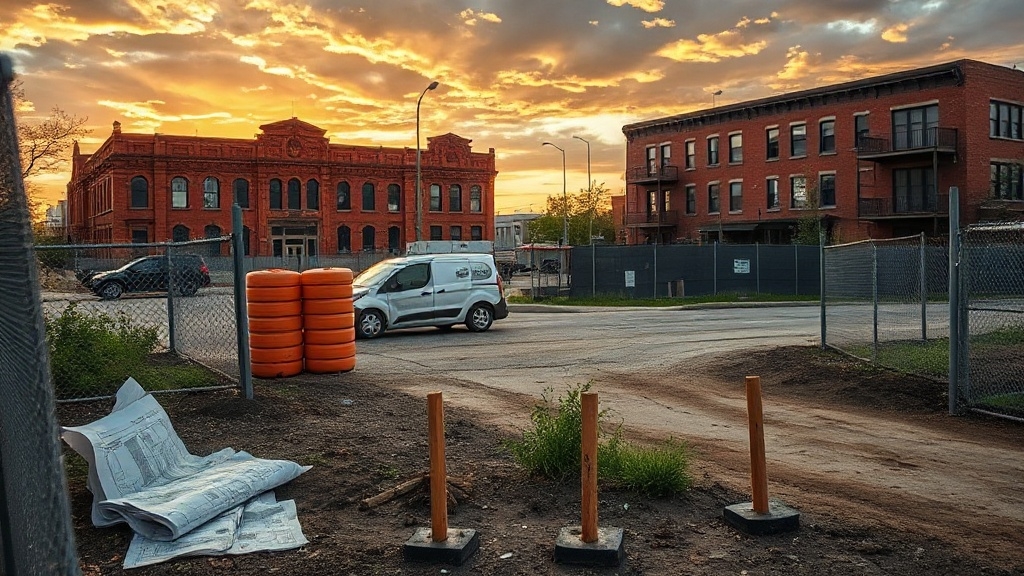
One visible shift is underway at the former Bronzeville Arts Center parcel, where site clearing and preparation are moving forward. This work is a necessary step before redevelopment can advance.
The work marks progress at the long-planned Bronzeville Center for the Arts site. It is intended to replace the former Wisconsin Department of Natural Resources regional headquarters parcel. The center has been envisioned on a 3-acre parcel to showcase independent Black artists and the history of African American and Afro-Diaspora art, underscoring its role as a cultural anchor. Similar city-led redevelopment efforts elsewhere have paired public planning with private financing to help move long-stalled projects toward construction.
Reporting has described clearing as a fall target. Backers have also tied site readiness to fundraising momentum and overall project advancement.
Cultural District Pressure
The parcel sits within Milwaukee’s Bronzeville Cultural and Entertainment District. Redevelopment there is closely linked to restoring a historic African American cultural and commercial center disrupted by highway construction.
Nearby projects, reopened institutions, community engagement, and ongoing cultural programming all underscore the site’s importance. It remains one of the district’s most visible symbols of broader revival efforts today.


What Options Exist for the Bronzeville Parcel?
With site preparation moving ahead, attention now turns to what redevelopment at the Bronzeville parcel could ultimately become.
The leading outcome remains mixed-use redevelopment, likely combining housing, neighborhood retail, and parking, subject to city approvals.
A revised plan is also possible if zoning, financing, or market conditions shift. Overlay rules could shape the project’s size and layout.
Another path would repackage the site for a different developer or concept. Any new direction would still need to align with district goals, community engagement, and historic preservation.
Large-scale projects elsewhere have shown how mixed-use redevelopment can evolve over multiple phases as financing, approvals, and leadership priorities change.
| Option | Impact |
|---|---|
| Mixed-use | Visible momentum |
| Modified plan | Cautious adaptation |
| New concept | Uncertain reset |
| Temporary hold | Lingering vacancy |
| City-backed action | Structured direction |
Public tools, including land sales, incentives, and review processes, could heavily influence the final use.
How the Bronzeville Center for the Arts Fits
At the center of the redevelopment debate, the Bronzeville Center for the Arts has been positioned as more than a standalone tenant. It reflects a nonprofit mission rooted in the art, culture, and history of the African Diaspora.
Founded in 2020, BCA presents itself as a cultural anchor focused on celebrating artists of African descent. It also aims to expand access to exhibitions, education, and immersive experiences.
Site Strategy and Public Reach
Its smaller Gallery 507 space on North Avenue has served as an early-stage presence. Meanwhile, the former DNR site was envisioned as the home for a larger center within a phased buildout strategy.
That role connects directly to community engagement and cultural preservation. It does so through audience-informed programming, accessible learning spaces, and public art partnerships.
These efforts extend visibility into Bronzeville. They also support the neighborhood’s identity as an emerging Midwest arts hub.
What the Funding Gap Means for the Project?
Threatening the redevelopment timeline, the proposed $5 million state allocation for the Bronzeville Center for the Arts is a pivotal piece of the project’s capital stack.
If that public contribution is reduced or removed, the project would face more than a simple shortfall. It would likely require a funding redesign affecting loans, donor commitments, grants, and match-based financing.
An open gap can make land acquisition and predevelopment costs harder to carry. It can also strain contingency reserves if temporary financing is used.
Lenders and contractors often require firmer funding certainty before final commitments. That dynamic increases timeline uncertainty and can pressure project leaders to consider scope reductions or additional private fundraising.
In Milwaukee’s competitive funding environment, replacing public dollars may prove difficult and more expensive over time.
When the Site’s Next Milestones Happen
Attention now shifts from the funding risk to the project’s immediate public timeline.
The city set July 3, 2025, for publication of the public hearing notice, which began the formal approval process for the Bronzeville site.
Project plans were also expected online before the Redevelopment Authority meeting. That added public transparency to the early review stage.
Decision Timeline Tightens
The Redevelopment Authority of the City of Milwaukee scheduled review of TID 128 for Thursday, July 17, 2025.
That review is a required step before final city action on the proposed $1.37 million financing package tied to Compass Lofts.
The decision timeline therefore points to mid-July as the next major checkpoint.
What These Dates Signal
If approved, the TID would clear a key hurdle for advancing the 67-unit mixed-use affordable housing proposal.
Post-review approvals would then shape execution steps.
Assessment
The Bronzeville parcel remains at a critical decision point as city leaders weigh three competing paths for the long-stalled site.
Each option carries distinct financial and development risks, with the arts center proposal constrained by a significant funding gap.
The next public meetings and formal reviews are expected to shape whether the land advances toward construction, returns to another planning phase, or faces renewed uncertainty in Milwaukee’s Bronzeville district.