

Ogden’s Former Fred Meyer Site Sold
In Ogden, the former Fred Meyer site has been sold to an Idaho-based development group, transferring control of a 14-acre parcel long regarded as one of the city’s most significant redevelopment opportunities.
The sale marks a new phase for a long-vacant commercial property that has drawn sustained public attention.
It also renews focus on how zoning changes could shape future plans and broader community impact.
Site History and Redevelopment Context
The former store closed years ago, and the old building was later demolished, clearing the site for new concepts. Demolition of the roughly 150,000-square-foot structure was completed in October 2016 after the site had sat vacant for years amid growing blight concerns.
That sequence left the parcel as a prominent underused property in Ogden’s commercial corridor. Similar redevelopment efforts elsewhere have highlighted the appeal of an open-air retail hub model designed to improve visibility and pedestrian interaction.
The structure dated to 1945 and originally served as a hospital before later retail use.
Its layered ownership history, including a 1992 sale to Pool Street Realty Trust, added complexity to redevelopment.
Where the 14-Acre Ogden Parcel Is
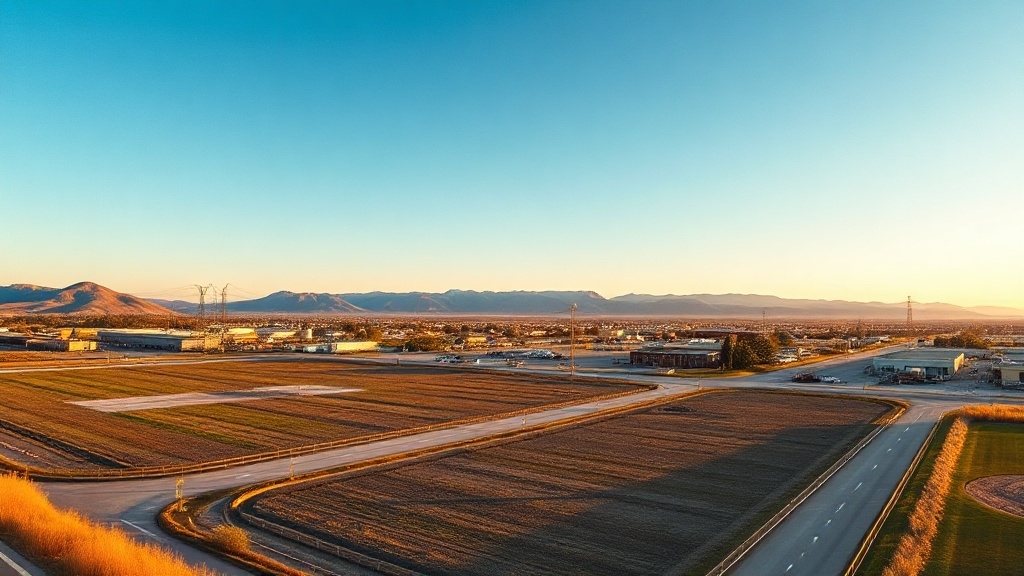
The 14-acre parcel sits within Ogden’s established commercial corridor, placing the former Fred Meyer site amid dense retail and service activity rather than on the city’s outer edge.
Its site location is in Ogden, Utah, within an active retail area shaped by major roadway access and high visibility.
The parcel is flanked by Home Depot to the north, with Del Taco to the west and a gas station to the southwest.
A Wells Fargo branch is also nearby, reinforcing the commercial context surrounding the property.
Rising development costs tied to construction inflation have become a major concern in Western urban projects, underscoring how financing conditions can shape redevelopment timelines for large commercial parcels.
Surrounding Retail Pressure
These neighboring uses show that the tract sits in an infill-style setting, not a remote fringe area.
Public reporting identifies it as a development site in Ogden, and its 14-acre scale places it among the city’s larger commercially positioned parcels for future investment.


Alturas Plans Retail and Mixed Use
Alturas Capital Partners has cast the Ogden property as a neighborhood-oriented retail and mixed-use center. The plan signals a retail-led redevelopment for the 14-acre former Fred Meyer site.
The concept points to more than a single commercial use. Public messaging centers on new shopping options and an active infill destination.
Leasing through Colliers International suggests ongoing retail activation efforts. The focus appears to be a visible corridor and nearby households.
| Element | Image | Role |
|---|---|---|
| Storefronts | Bright windows | Shopping draw |
| Shared spaces | Walkable paths | Mixed-use flow |
| Former big-box land | Revived frontage | Infill reuse |
The plan presents the long-vacant parcel as a reinvestment opportunity. It also suggests potential community benefits.
Expected effects include construction employment, later service jobs, and an improved commercial streetscape. No tenants have been named yet.
When Ogden Construction Could Begin
After the reported sale, no public timeline confirmed when construction at the 14-acre Ogden site could begin.
Available coverage treated the acquisition as an ownership change tied to future redevelopment, not as a signal that work was about to start.
Timing Signals Remain Limited
The clearest reading from the reporting was that any construction timeline would follow acquisition, planning, and project preparation.
Sources described the parcel as vacant and slated for retail and mixed-use redevelopment, but they did not cite permit issuance, mobilization, grading, or a groundbreaking date.
Why the Start Date Remained Unclear
For a project of this size, approval uncertainties commonly shape timing.
Site planning, engineering, utility coordination, financing, and tenant commitments can all affect when construction begins.
Based on the available reporting, construction had not yet started, and no confirmed start month was publicly announced.
What Still Needs to Happen Next
Several steps still stand between the reported sale and any actual redevelopment activity at the 14-acre Ogden site.
Before construction, the buyer likely must complete zoning approvals, confirm land-use compatibility, and resolve any needed design review, setbacks, parking, access, and landscaping issues under city rules.
| Issue | What must happen |
|---|---|
| Land use | Final city confirmation |
| Zoning | Approvals or rezoning |
| Utilities | Capacity checks completed |
| Site conditions | Environmental reports reviewed |
| Permits | Plans approved, fees paid |
Infrastructure remains another major hurdle.
Utility coordination is typically needed for water, sewer, power, stormwater, roads, and traffic circulation.
Environmental due diligence, financing, tenant commitments, agency comments, hearings, a possible development agreement, and final permits also usually must be resolved before vertical work can begin on the parcel.
Assessment
The sale of Ogden’s former Fred Meyer site marks a significant shift for one of the city’s most visible vacant commercial parcels.
Alturas plans a retail and mixed-use project, but development remains contingent on city approvals and a signed development agreement.
Construction could begin in 2025 if those steps are completed.
Until then, the 14-acre property remains in flux, with final timelines dependent on negotiations, planning reviews, and municipal action in the months ahead.