

Florida Pool Homes vs Community Pools
Across Florida, the supply gap between private pool homes and homes tied to community pools is shaping buyer choices with unusual force.
Private pools appear on about 35% of listings in Pinellas, 23% in Hillsborough, and just under 19% in Pasco.
In The Villages, only 5.1% of active listings have private pools, underscoring scarcity during seasonal demand.
That imbalance is playing out against a cooling market in parts of Florida, where rising inventory is giving buyers more leverage but not necessarily improving affordability.
Cost Pressures and Access
That scarcity intersects with cost realities.
Private pool ownership carries monthly service bills, insurance costs, and sometimes higher taxes.
Larger lots and more square footage can also push entry prices higher.
Community pools shift those burdens into HOA fees and remove direct maintenance obligations.
Yet shared access can dilute real-world use, with some community pools sitting largely empty despite being included in neighborhood costs for many residents.
What the Florida Pool Premium Buys
Florida appraisals often reflect a 5 percent to 8 percent lift for well-maintained pools. Some estimates place average value gains near 8 percent.
That can mean more than $25,000 on a $500,000 home. It may also improve resale velocity in coastal communities where outdoor living strongly influences decisions.
The premium also buys alignment with neighborhood norms in pool-dense areas. In these markets, buyers may treat pools like expected permanent features.
Many owners also view a pool as a year-round escape thanks to Florida’s warm climate and the option to heat the water in cooler months.
Still, gains are tempered by insurance costs and maintenance expectations. Owners commonly face $150 to $450 in monthly operating expenses. In contrast to markets dealing with housing inventory shortages and stalled development, Florida lifestyle features can play an outsized role in buyer competition.
They may also see premium increases tied to liability, fencing, gates, and other safety requirements.


Why Florida Pool Home Inventory Is So Low
Florida’s pool-home shortage reflects a supply-and-demand imbalance that has not reset to pre-pandemic norms.
Listings with pools remain below 2019 levels, even though Florida has about 1.59 million residential pools. Only 15 to 17 percent of households own one, leaving demand far ahead of available supply.
Competition is especially acute in major metros, where few active listings attract multiple bidders.
Recent inventory declines have been driven less by weak listing activity than by sellers withdrawing properties from the market. That behavior removes pool homes from an already constrained supply.
Large pool homes also cost more to build or retrofit. Permits, compliance, seasonal maintenance, and insurance costs discourage some owners and developers from adding inventory quickly.
These barriers keep replacement supply limited.
Why Buyers Want Mega-Pool Communities
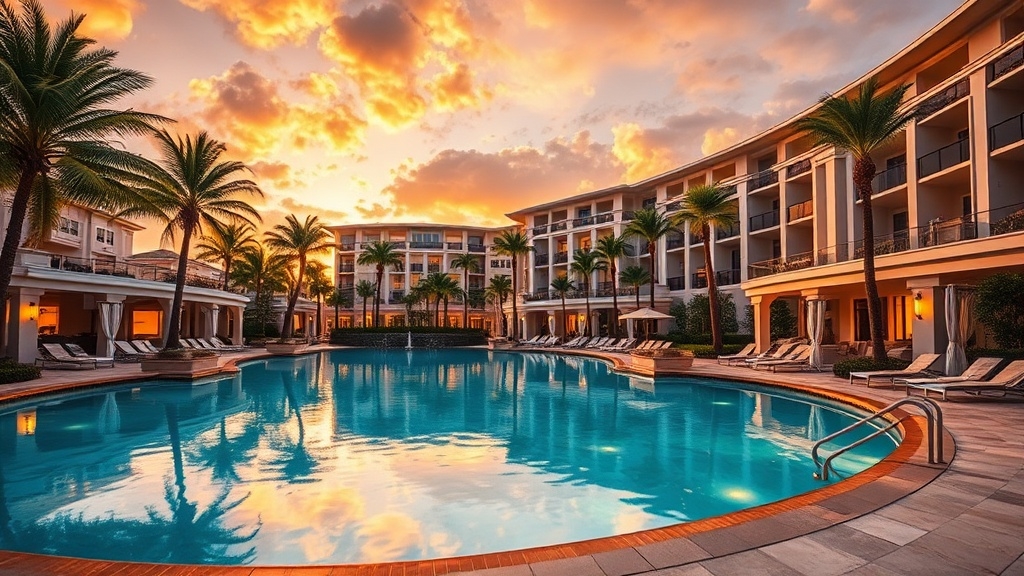
For many buyers, mega-pool communities solve the core problem of securing pool access without taking on the steep costs and friction of private ownership.
Private pool installation in Florida often runs from $35,000 to $65,000, yet resale gains usually recover far less.
Shared communities spread maintenance, insurance, and tax burdens across residents. That helps buyers avoid the $500 to $800 monthly upkeep often tied to private pools.
Climate, Value, and Convenience Press Buyers
Florida’s long warm season makes reliable pool access feel more like a practical lifestyle need than a luxury.
Mega-pool settings support communal fitness, children’s recreation, and seasonal socializing through heated water, shade, and managed facilities.
They also give buyers exposure to the 5% to 8% pool-access price premium without requiring backyard space, permits, or approval delays.
How to Compete for a Florida Pool Home
Competition for Florida pool homes intensifies the moment buyers move from lifestyle appeal to actual acquisition strategy.
Scarce inventory keeps pressure high, even though Miami recently showed more sellers than buyers overall. Pool-home supply remains thin, with only 35% of listings in Pinellas, 23% in Hillsborough, and under 19% in Pasco offering private pools.
Winning Terms Matter
In the most contested $800,000 to $1,200,000 segment, multiple offers are standard and sellers often expect full price or more. Buyers frequently rely on cash offers and limited inspection waivers to strengthen terms, especially in fast-moving areas like Lake Nona.
Price discipline also matters.
A Hillsborough pool home carries a median sold price near $575,000 versus $385,000 without a pool, making existing pools a costly but strategically superior acquisition.
Assessment
Florida’s mega-pool communities are intensifying competition in an already constrained market. Buyers are weighing private pool control against rising acquisition and maintenance costs, while limited inventory keeps premiums elevated.
Large-scale community amenities are widening the appeal of newer developments and shifting demand patterns in key regions. The result is a sharper divide between affordability and exclusivity.
Pool access is emerging as a defining factor in Florida homebuying decisions amid persistent supply pressure.