
What Makes Denver Office Conversion Feasible?
At the core of Denver office conversion feasibility, acquisition cost stands as the decisive variable.
Properties acquired near $60 per square foot can support conversion economics, while assets closer to $200 per square foot generally cannot.
This gap shapes market dynamics more than any other factor. Denver also ranks ninth nationally, with nearly 18 million square feet of Tier II conversion-feasible office space. The city’s broader service infrastructure, including Contact 3-1-1, also reflects the civic support systems that can complement downtown residential growth.
Financial and Policy Constraints
Feasibility remains strained because commercial rents usually exceed residential rents, leaving a persistent value gap.
Rehabilitation costs can approach new construction, especially when major systems must be reworked for housing.
High vacancy, typically at least 25%, strengthens the financial case. In a metro housing market with 8,500 homes in inventory, added downtown residential supply could arrive as buyers gain more negotiating power.
Public programs, zoning updates, and proposed tax support can help narrow costs.
Urban Conditions
Downtown walkability, transit access, and natural light further support practical residential reuse.
Which Denver Buildings Convert Best?
Best-fit office buildings in Denver share a narrow set of traits that clearly separate viable conversion candidates from stranded assets.
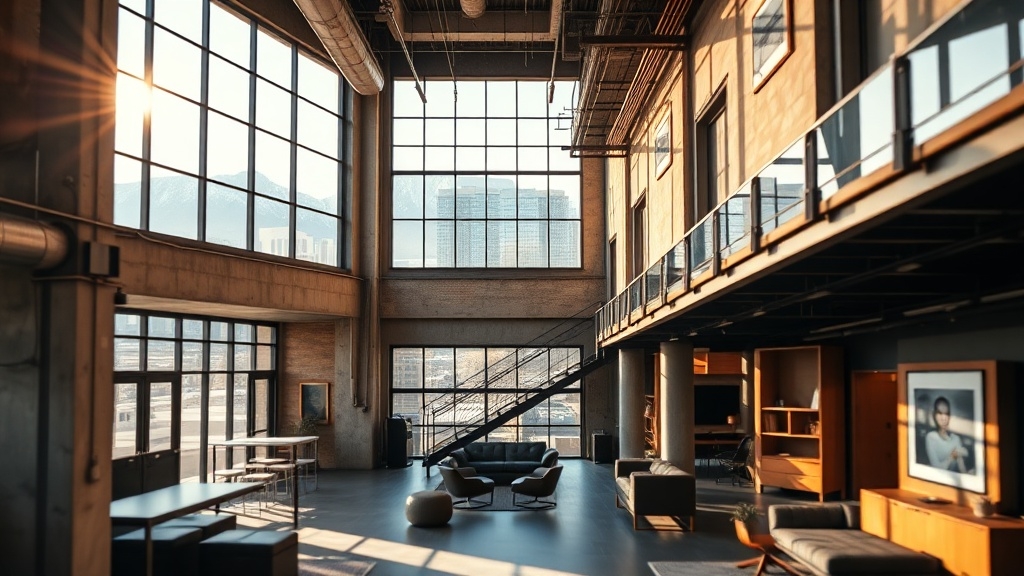
The strongest prospects combine shallow floor plates, open plans, strong window-to-wall ratios, and elevator cores placed near the edge.
Older concrete buildings with intact frames, replaceable windows, and at least 50% vacancy also align well with city rules.
Location matters too, especially transit access, walkability, and proximity to Union Station, RTD rail, and the 16th Street Mall.
Historic façades can further strengthen a building’s appeal.
As Seattle’s tower freeze shows, weak market stability and a housing supply crunch can make adaptive reuse more attractive than ground-up construction.
- Floor plates under 900 feet deep improve daylight access.
- Pre-1994 buildings inside the pilot polygon qualify most often.
- University Building, Logan Building, 1875 Lawrence, and Lincoln Crossing Tower rank highly.
- The top 16 candidates could produce 5,124 homes from 4.3 million square feet.
225 E. 16th Ave. also appears among the leading options.


Why Do Conversion Costs Spike?
Although Denver has identified a narrow band of office buildings that can physically convert, costs often surge once financing, retrofit demands, and code compliance enter the equation.
High interest rates have made construction financing far more expensive than it was three years ago. That pressure widens the gap between total project costs and available capital.
For many developers, conversions no longer pencil out under current borrowing conditions.
Older towers also carry heavy physical burdens. Office-to-multifamily projects average about 20% more than comparable ground-up construction, and major downtown retrofits can approach $200 million.
Aging mechanical systems, irregular floor plates, environmental complications, and required code upgrades add further expense.
Because those costs are so high, developers often must target top-of-the-market rents just to support project feasibility in Denver.
How Do Tax Credits and Loans Help?
Tax credits and public loans can help close the financing gap that has delayed many Denver office-to-housing conversions.
Colorado’s state tax credit can provide up to $3 million per project, with a $5 million annual statewide cap. It applies to qualified costs like windows, facades, elevators, and utilities when at least 50% of the building is converted to housing.
Applications are submitted to the Governor’s Office with project plans and cost estimates. Reviews are completed within 90 days, and approved projects receive a written reservation notice.
Developers must spend at least 20% of project costs within 18 months and complete the project by 2035. Before credits are issued, a certified public accountant must verify the eligible costs.
Once certified, the credit equals 25% of qualified spending. Developers often bring in investor partners to buy the credits for equity, which reduces the amount of debt needed during periods of high interest rates.
In addition, Denver Downtown Development Authority gap financing can cover roughly 20% of total project costs.
What’s Blocking More Denver Conversions?
Multiple obstacles continue to block wider office-to-housing conversions in downtown Denver.
Only 5 of 208 central business district office buildings meet basic suitability criteria.
Large floor plates rule out roughly 90% of downtown properties. Many pre-1990 buildings also lack layouts that can support practical apartments.
Slow Rules and Cost Pressure
Permitting remains a major brake.
Major commercial projects averaging $1.5 million or more face 286-day approval timelines. Repeated review and revision cycles add delay, zoning friction, and compliance costs tied to codes built for new construction.
Financing remains equally difficult.
High interest rates, rising construction costs, and rehabilitation risks push total expenses near new-build levels. A market mismatch also weakens feasibility, because office rents often exceed residential rents, especially outside stronger submarkets such as Union Station.
Assessment
Denver office conversions remain possible where acquisition costs are low, floor plates are narrow, and financing support closes stubborn gaps.
Yet high construction costs, building design limits, and uneven economics continue to restrict wider adoption.
Tax credits, public loans, and policy flexibility can improve feasibility, but they do not erase structural barriers.
The market signal is clear.
Only a limited share of obsolete office buildings can realistically convert without substantial incentives and carefully structured capital.