What Happens When Someone Stops Waiting for Permission?
Some people spend years waiting for the perfect opportunity. Ryan Herrera learned to create his own.
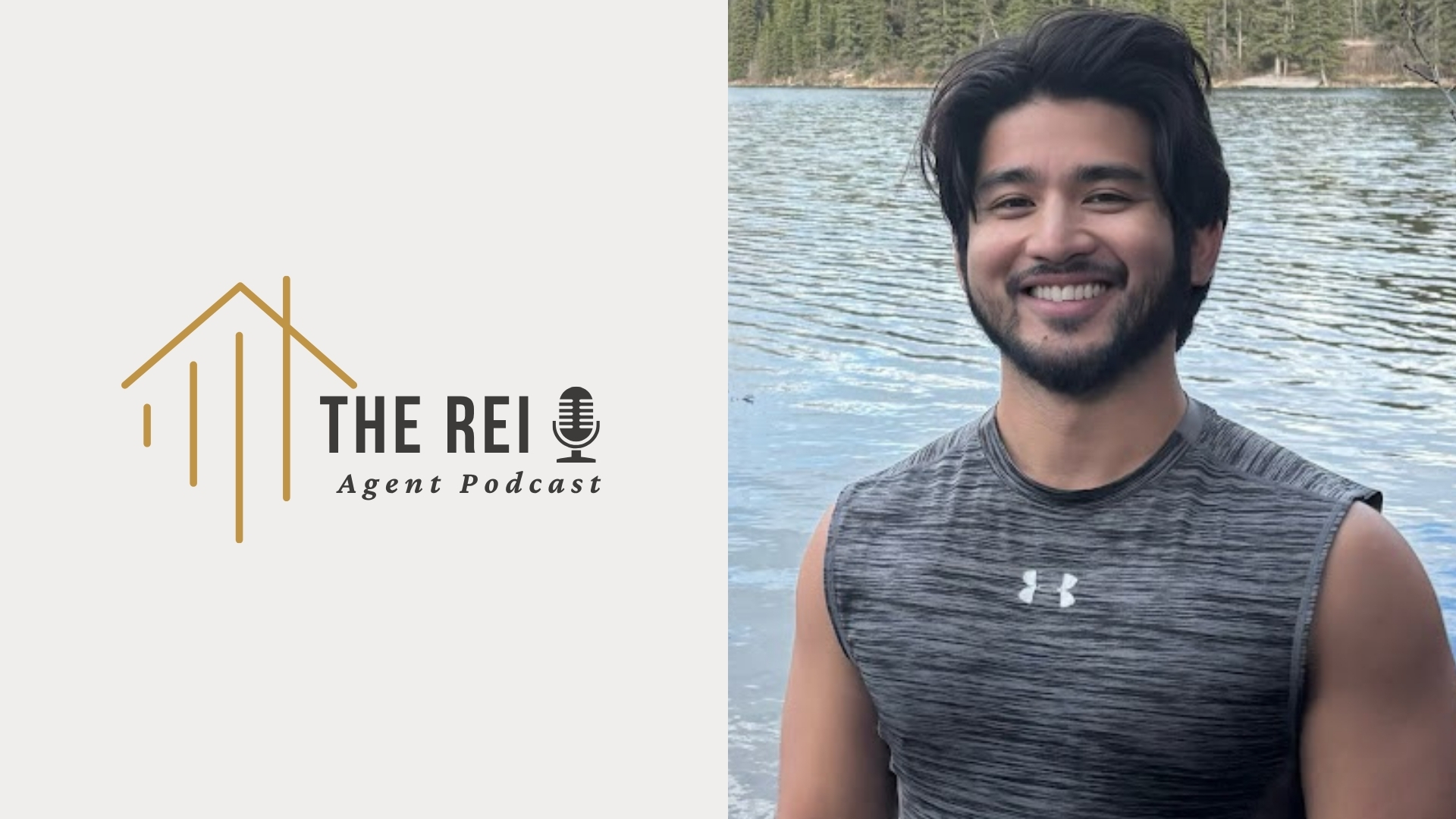
On this episode of The REI Agent Podcast, Mattias Clymer sits down with Herrera, an entrepreneur and property developer whose path has included immigration, door-to-door sales, contracting, e-commerce, personal setbacks, wholesaling, multifamily investing, and eventually development.
His journey was anything but perfectly planned. That may be exactly what makes it so powerful.
Herrera’s story is about discovering that the next level rarely arrives because someone opens a door. Sometimes a person has to knock on 50 to 80 doors a day until one finally opens.
More importantly, Herrera believes that investors and agents often possess far more opportunity than they realize. The biggest obstacle may not be money, experience, connections, or even the market.
It may simply be the belief that they aren’t ready yet.
From the Philippines to a Completely Different World
A Move That Changed His Understanding of Opportunity
Herrera was born in the Philippines and moved to North America at 16 years old. The change exposed him to a completely different economic environment.
He suddenly saw entrepreneurship differently.
“When I came here, I saw, wow, I can be an entrepreneur for nothing, just start out of nothing.”
Instead of waiting for someone to employ him, Herrera decided to create work for himself.
At 17 and 18 years old, he started a painting business and went door to door looking for customers. He estimates that he sometimes knocked on 50 to 80 doors every day.
Plenty of homeowners said no.
Some slammed the door in his face.
He kept knocking.
Eventually, Herrera began booking painting jobs ranging from a few hundred dollars to several thousand dollars. As customers trusted him, they started asking whether he could handle flooring, drywall, and other contracting work too.
He kept saying yes.
Before long, he was hiring painters older than he was and building what would become his first meaningful experience as an entrepreneur.
Success Didn’t Protect Him From Losing His Direction
The Years That Could Have Ended the Story
Progress doesn’t always move in a straight line.
As Herrera’s contracting business grew, he also entered a difficult period personally. He described becoming distracted by partying, drugs, and activities that pulled him away from the person he wanted to become.
He estimates that the period derailed his career for five or six years.
For someone looking only at the finished version of an entrepreneur on social media, that part of the journey can be easy to miss.
Herrera doesn’t hide it.
He credits his faith with helping him change course.
“I discovered Christ and God and that completely just changed my life overnight.”
For Herrera, the transformation included accepting that he didn’t have to remain the center of his own universe.
“I think just the humility to say, hey, I am not the king of myself. There’s a higher power.”
That shift became part of the foundation for what came next.
The Search for a Business That Could Actually Scale
Painting, E-Commerce, Amazon FBA, and Dropshipping
Herrera didn’t immediately jump from contracting into development.
He experimented.
He tried e-commerce. He tried Amazon FBA. He tried dropshipping. Some of those businesses generated thousands of dollars in daily sales, but Herrera found online competition relentless.
Competitors could reproduce products, advertisements, and strategies quickly. Businesses that appeared promising could suddenly lose momentum.
Eventually, Herrera returned to something that had already worked for him.
Property.
The Deal That Changed Everything
Three Weeks and a $50,000 Wholesale Fee
Herrera entered wholesaling and quickly experienced the kind of financial result that forced him to reevaluate everything he had previously done.
His first deal generated a $50,000 wholesale fee, which he divided with two friends.
His share was roughly $17,000.
It took approximately three weeks.
Coming from the contracting world, Herrera immediately understood the difference.
Generating $17,000 of profit through painting could require a dramatically larger job and considerable labor.
Wholesaling showed him another way.
But even that wasn’t the final destination.
The Question That Led Ryan Herrera Into Development
If the Wholesaler Made $50,000, What Did the Developer Make?
One question changed Herrera’s trajectory.
The first property he wholesaled was land purchased by a developer. Herrera knew his side of the transaction had produced a substantial fee.
Then he started wondering about the other side.
If the developer could afford to pay a wholesaler $50,000, how much profit was available after developing the land?
Herrera says he eventually learned the developer was making approximately $350,000 on the deal.
That discovery changed the game.
Instead of continuing to earn fees for delivering opportunities to developers, Herrera began asking whether he could become the developer himself.
The Limiting Belief That Stops People Before They Begin
Experience Comes After Starting, Not Before
Mattias and Herrera spent a significant portion of the conversation discussing limiting beliefs.
People frequently convince themselves that they can’t invest because they lack experience.
Herrera sees a contradiction in that thinking.
“If you think you can’t do it because you need experience, well, how are you gonna get experience if you don’t do it?”
Experience has to begin somewhere.
No developer starts with ten completed projects.
No entrepreneur starts with decades of entrepreneurship.
No successful investor begins with a perfect understanding of every possible deal structure.
Somewhere along the way, every experienced person was inexperienced.
The difference is that eventually they acted.
Ryan Herrera’s Case for Development
Creating Equity Instead of Buying Someone Else’s Equity
Herrera believes development offers something fundamentally different from buying an existing property.
When an investor develops a project successfully, value can be created during construction.
He used a simplified hypothetical example during the podcast.
Suppose a fourplex costs $1.5 million to complete, including land, construction, financing, and associated costs.
Once completed, suppose that building appraises for $2 million.
The project has potentially created approximately $500,000 in equity.
That difference is at the center of Herrera’s strategy.
“When you develop something, you instantly create a big chunk of equity when it’s done.”
Instead of purchasing a finished property at its retail market value, the developer attempts to manufacture the asset closer to its underlying cost basis.
The Development Snowball
Build, Refinance, Recover Capital, and Move Into the Next Project
Herrera described how construction financing can eventually be replaced with longer-term financing after a project is completed.
Using his hypothetical $1.5 million project that appraises at $2 million, he illustrated how refinancing based on the completed value could potentially allow an investor to recover much of the capital committed to the project.
If the financing and appraisal support it, that recovered capital can then move into another deal.
That is where Herrera sees the possibility of rapid scaling.
“You’re gonna roll your now $250,000 into the next deal.”
The concept is similar to the logic behind recycling capital in other property strategies, except Herrera believes development can create a larger equity spread when executed successfully.
Why Higher Interest Rates Haven’t Changed His Conviction
The Cost Basis Becomes the Protection
Mattias asked Herrera how higher interest rates have affected development, particularly because rising borrowing costs have made many existing rental and BRRRR opportunities more difficult.
Herrera’s answer returned to cost basis.
If an investor buys a newly completed building for $2 million, that investor is financing the retail purchase price.
If a developer produced the same asset for $1.5 million, Herrera argues that the lower cost basis provides an additional layer of protection.
“You built it at cost basis. So you’re protected with that half a mil equity.”
Interest rates still matter. Rents still matter. Vacancy still matters. Financing still matters.
But Herrera’s broader philosophy is that creating the asset can provide options that purchasing the finished product may not.
The Developer Doesn’t Have to Swing the Hammer
Ryan Herrera Learned to Build the Team Instead
Development can sound intimidating because many people imagine that becoming a developer requires becoming a construction expert.
Herrera doesn’t see his role that way.
He openly admits that he relies heavily on experienced general contractors, project managers, engineers, architects, and other specialists.
His job is not to personally perform every trade.
His job is to assemble the opportunity and the people capable of executing it.
“I let my experts, the team that I built, take care of it.”
Herrera still visits project sites. He takes photos and videos. He stays involved in higher-level decisions.
But he believes a strong professional team allows development to become considerably less hands-on than many outsiders assume.
Getting Paid During the Build
How a Developer Fee Can Change the Economics
Another concept Herrera discussed was the developer fee.
Depending on the project and lender, a developer may be able to include compensation for development services within the overall project budget.
Herrera explained that those funds can sometimes be distributed through construction draws as milestones are completed.
That can help address a concern many aspiring developers have.
They may understand how development creates wealth at completion, but they still need income while the project is being built.
For Herrera, properly structured developer fees can become part of that solution.
Capital Is Everywhere, But It Needs Somewhere to Go
Why Finding the Opportunity Can Be More Valuable Than Having All the Money
A recurring theme throughout the episode is that people often assume investing begins with having large amounts of cash.
Herrera sees capital differently.
“At the end of the day, there’s capital everywhere. It needs to go somewhere.”
Mattias expanded on that idea.
Someone may have money but lack the time, knowledge, or desire to find and manage opportunities.
Someone else may lack the money but possess the ability to locate, analyze, negotiate, and execute a great project.
Those two people can potentially become partners.
Herrera has raised capital through his network and through social media advertising. He described running Facebook and Instagram video ads about projects and receiving messages from potential investors.
His broader message is simple.
Instead of asking only, “How much money do I have?” an aspiring investor can begin asking, “What value can I bring to the person who already has the capital?”
Why Agents May Be Closer to Development Than They Realize
Ryan Herrera Says They Already Possess Many of the Necessary Skills
Herrera believes property agents have a major advantage when entering development.
They understand markets.
They can analyze comparable sales.
They understand neighborhoods.
They see listings constantly.
They develop relationships with owners, buyers, investors, lenders, contractors, and other professionals.
They already spend their careers recognizing value.
“If you’re a real estate agent, you’re 90% there.”
According to Herrera, the remaining education includes understanding construction costs, zoning, land acquisition, underwriting, and projected completed value.
Those skills are learnable.
Why Herrera Would Rather Build Than Flip
Learning One Difficult Skill Can Open an Entire World
Herrera doesn’t hide his preference.
For someone determined to build a long-term investing career, he strongly favors development.
He believes learning development provides a skill set that can extend far beyond one property type.
A person who understands development can potentially build homes, multifamily properties, apartments, commercial buildings, or larger projects as experience grows.
“Once you learn that skill, you could take that and do anything you want with that development skill.”
The difficulty is precisely what makes the opportunity attractive to him.
If something is harder to do, fewer people will pursue it.
Herrera believes that creates room for those willing to learn.
A Miami Deal Built Around Creativity Instead of Personal Cash
Negotiating the Structure Before Worrying About Owning Everything
One of the most fascinating examples in the episode involves Herrera’s move into luxury development in Miami, Florida.
Herrera described a project involving approximately $1.6 million of land and a planned 3,075-square-foot, two-story luxury home.
Rather than personally funding every dollar required to start the project, Herrera negotiated participation from other parties.
He explained that his builder agreed to contribute $50,000 toward the earnest deposit and another $100,000 toward soft costs such as plans, engineering, architecture, testing, and permitting.
Herrera also negotiated approximately six months before closing on the land, giving the project time to progress through permitting before additional capital was required.
Instead of trying to own 100 percent of everything, he structured participation for the people helping make the project possible.
His builder would receive an ownership interest. His investor would receive an ownership interest. Herrera would retain the remaining share.
The important lesson wasn’t about maximizing percentage ownership.
It was about creating a transaction that could happen.
“I’m not getting 100% of the profits, but I put in no money.”
Sometimes owning a smaller percentage of a large opportunity can be more valuable than owning 100 percent of an opportunity that never gets built.
The Book That Helped Shape His Deal-Making
Alex Hormozi and the Power of the Win-Win
When Mattias asked Herrera about a favorite or influential book, Herrera pointed to Alex Hormozi’s $100M Money Models.
He said the book helped influence how he thinks about negotiations and structuring transactions.
For Herrera, the central lesson is making sure everyone involved can win.
“Make sure it’s a win-win for everyone.”
That philosophy shows up clearly in his Miami project.
The builder receives ownership for contributing capital and expertise. The investor receives participation for supplying capital. Herrera receives participation for assembling and managing the opportunity.
Nobody has to capture 100 percent for the project to be worthwhile.
Success Isn’t Just a Number in a Bank Account
Family, Freedom, Health, Travel, and the Ability to Choose
The final minutes of the conversation revealed another side of the episode.
Herrera turned the interview around and asked Mattias about his own long-term goals.
Mattias’s answer brought the conversation back to the larger mission of The REI Agent Podcast.
The goal isn’t simply acquiring more properties.
It isn’t working every waking hour simply because someone can.
It’s building enough financial and professional freedom to make deliberate decisions about life.
Mattias spoke about continuing to build passive income while remaining involved in property sales, traveling, staying healthy, remaining passionate about his work, and keeping family at the center of everything.
“Ultimately chasing that freedom, that decision to choose what 16 hours a day I work.”
That idea connects perfectly with Herrera’s story.
The businesses changed.
The strategies changed.
The size of the projects changed.
But the ultimate objective became increasingly clear.
Build a life with more choices.
The Bigger Lesson Is Not Development
It Is Learning to See Possibility Where Other People See Barriers
Ryan Herrera’s story can easily be viewed as a lesson about property development.
It is.
But underneath the financing, construction, underwriting, refinancing, and project structures is something even more fundamental.
Herrera repeatedly encountered reasons to stop.
He was young.
He didn’t have extensive experience.
He didn’t begin with unlimited capital.
His businesses didn’t always work.
He went through years when his personal choices pulled him away from his goals.
None of those chapters had to become the final chapter.
He kept changing.
He kept learning.
He kept looking at the person one step ahead and asking a better question.
When he was wholesaling land, he could have been satisfied with the fee.
Instead, he asked what the developer was making.
That question opened another world.
Build the Life You Want by Becoming the Person Who Can Build It
The Next Opportunity May Begin With One Decision
The most inspiring part of Ryan Herrera’s journey isn’t the size of a development project or the potential profit attached to one deal.
It is the realization that a person’s current circumstances don’t have to determine the size of their future.
Someone can begin knocking on doors.
Someone can fail.
Someone can lose direction.
Someone can start again.
Someone can learn another business.
Someone can discover a better strategy.
Someone can build a stronger team.
Someone can eventually become the person on the other side of the transaction.
The distance between those versions of a person is rarely crossed in one giant leap.
It is crossed through decisions.
One door.
One deal.
One lesson.
One better question.
One courageous move at a time.
“We get reward for the things that are hard.”
Herrera’s journey is a reminder that difficult doesn’t necessarily mean impossible. Sometimes difficulty is the signal that there is something worth learning on the other side.
And for the person willing to learn, adapt, build relationships, and keep moving forward, what once looked impossible can eventually become simply the next project.
Transcript
[Mattias]
Welcome back to the REI Agent. My guest today is Ryan Herrera, founder of Herrera Capital and multifamily investor based in Canada, who is focused on small multifamily and value-add deals in high-cost coastal markets. Ryan has built his investing practice in one of the most competitive, capital-intensive markets in the country, where the underwriting disciplines required to make the numbers work is a different game entirely with what most operators face in secondary markets.
He documents his deal flow and investing journey publicly on Instagram, being transparent and operator first perspective that resonates with growing audience of aspiring investors. Ryan, welcome to the REI Agent podcast.
[Ryan Herrera]
Yes, sir, Mattias, thank you so much. It’s a privilege to be here.
[Mattias]
Yeah, thanks, it’s an honor to have you. And I apologize to everybody, I do have a bit of a cold, so I’ve got a bit of a cold brain and a cold voice, but Ryan does not, it doesn’t sound like at least, so we will lean on him. Yes, you can lean on me, yes, no worries.
Ryan, I did, I wanna hear, I did catch a reel about kind of your journey, which I thought was pretty fascinating. So we always start with, you know, your story of getting into real estate, so I would love to hear that story.
[Ryan Herrera]
Absolutely, yeah, no, thanks so much. Well, it’s very interesting. I mean, most people that is in development usually are, I’d say, a little bit older.
So I started pretty young, but because of the technology that we have, social media, it accelerates things so fast. So it doesn’t need to take five, 10 years to get into development. And the reason why I love development so much is because that is the highest way to squeeze your time in real estate.
I know I’m talking to a lot of realtors here, so I’m super excited. But yeah, my story is, I was born in the Philippines, third world country. You know, we’re operating on island time.
Everyone’s pretty just content with life. And I was, I was playing a lot of soccer. I was just hanging out.
But then we moved to North America when I was 16 years old. And right away, I understood I gotta make money. So I got started in a painting business.
So I was highly unemployable. I could not hold down a job, McDonald’s, soccer referee, dishwasher, that’s it. I had three jobs, could not hold them down.
So right away, I knocked on doors. I was knocking on doors from five till 9 p.m. as a painter, just looking for houses to paint. And a lot of people slammed the door in my face.
They’re like, no way am I letting this kid paint my house. But slowly but surely, I was 17, 18 at that point.
[Mattias]
And it was just you that was painting?
[Ryan Herrera]
Like you were- It was just me, it was just me. Yeah, I opened up a sole proprietorship. And that’s it, heading the doors, knocking on 50 to 80 doors a day.
[Mattias]
Wow, wow. Yeah.
[Ryan Herrera]
Did you get better at it? Did some momentum come from there then? Yeah, I definitely did.
Yeah, I definitely got better as time went on. But I started booking jobs. So I started painting decks, painting houses.
And the revenue was like 500 bucks, 2K, 3K, 1K, 25. So it ranged around those. And that’s how I got my start in entrepreneurship.
And kept doing that. And I don’t know if you have more questions, but there’s more to that, obviously.
[Mattias]
Yeah, no, it’s awesome. I think it is interesting to hear different people’s stories. I think oftentimes there is a fire in immigrants.
On their background, where they came from, all that kind of stuff. And I don’t know if it’s necessarily, I don’t know where it comes from necessarily. I don’t know if it’s partly from the motivation that it takes to go to a different country.
This is not easy to leave your home. But I think also, like in the United States, which I would assume is similar to Canada, there are a lot of opportunities. And I think maybe coming from an area where you may not have seen as much abundant opportunities, I don’t know if that’s true for you or not.
[Ryan Herrera]
It is true, it is true, yeah.
[Mattias]
That it almost, I could see a perspective of an immigrant, like why are these locals not fired up about this? Why are they not taking advantage of what opportunity?
[Ryan Herrera]
You know what I mean? Yeah. You’re kind of jaded, maybe.
And that’s okay. I completely respect everyone. I don’t see success as just monetary.
I think success is family and just contentment. And so it’s completely fine. But I do agree.
Perhaps I just, when I came here, I saw, wow, I can be an entrepreneur for nothing, just start out of nothing. And so that started a big fire in me. And I mean, now it’s, the company’s grown pretty fast, but yeah.
So when did you start hiring painters then along the way? I started hiring painters that were like twice my age and it was super awesome, just so fun. I’d bring them McDonald’s and just food all the time.
It’d be so fun. And it got to a point where the margins were getting squeezed. Lots of people coming into the game.
So I had to like lower my pricing. So that was getting a little tough. So I started to scale into other stuff, flooring, drywall.
Because people were saying, hey, you did such good work for the painting. Can you do my flooring? Can you do my?
So I said, yes, yes, yes. And scaled that. I was doing maybe six figures revenue, nothing crazy.
Through that, I got super distracted and I actually got into just a lot of mischievous, just a lot of time-wasting activities. So I did a lot of drugs, a lot of stuff like that. And so that derailed my entire career for five, six years.
So that was not good. So I was just partying and doing drugs. So that was my downfall.
[Mattias]
Oh man, what got you out of it?
[Ryan Herrera]
Well, honestly, my faith. And I mean, I’m not trying to push religion at anyone, but I discovered Christ and God and that completely just changed my life overnight. It was just insane.
That’s a whole story. But I think just the humility to say, hey, I am not the king of myself. There’s a higher power.
And I submitted to that and I was on the stray and arrow. But during that time period, super dark period, I was getting tired of my contract in business. So I started e-commerce.
I started Amazon FBA. I started drop shipping, started all these things. And I saw some success, but I could not scale it to a point where it would grow because the competition online is so, I mean, anyone from India can just not sleep and just grind and steal your products and steal your ads and just, and so I was getting blindsided by competition.
So my stores went down, but it was doing pretty good, a couple thousand a day in sales, but couldn’t grow. So when I stopped doing the drugs and all the dumb stuff, submitted to higher power, I said, okay, let’s go back to real estate because that’s what worked for me. So I got into wholesaling and my first deal ever, my first deal ever, I made 50K.
I split it with two other friends because it was three of us. So 17, basically, and like three weeks. I said, this is it.
If I did this in painting, $17,000 profit would be like a 50K job, a 50K revenue. So I’m like, forget all that. I’m going all into wholesaling and it was okay.
Again, same thing, ups and downs. Sometimes I’d make 3K, sometimes I make 15, sometimes I make 30, but it took a long time to make these deals close because I was doing multifamily, multifamily and land, those two things. So yeah, and so through that, I was getting really burnt out.
I was like, I got to do so many deals. This can’t be it. I’m doing too much work.
And so that’s when two and a half years ago now, I did my first development because I thought back to my first deal. The first deal where I made 50K, it was a piece of land that I wholesaled to a developer. So I was thinking if the developer can pay me 50K, I wonder how much he’s making.
I found out he was making like 350 on one deal. So that’s when I went all in to development. Mind you, I had no money and a lot of listeners here, you’re realtors, you guys are realtors.
You are 90% ahead of the game because you have access to the portal. You have access to these off-market deals. You have access and you have the credibility as a realtor.
So you can get these deals. Now, the biggest thing is always cash, right? You need a lot of money to get into development.
True, but also there’s so many ways and I could talk about that, but yeah. And now I scaled and I have a decent sized portfolio.
[Mattias]
That’s awesome, okay. So yeah, tell us a little bit about how one would, because I mean, I think there’s a lot of limiting beliefs. I think that we get in our own ways so often in everything.
I mean, I think like a lot of people getting just into being an entrepreneur, being a kind of, I mean, an independent contractor is technically what real estate agents are. Yeah, that’s right. And it can be really daunting, really scary to take that leap.
And I think at the end of the day, when you do and you get past it, you can kind of start relying on yourself and realizing that, I mean, you’ve just talked about having success in like three different, at least three different things. And so like my point is, is like, if you were to have worked your way up in a bank or whatever, or in some sort of like corporate life, that job could be, you could be downsized. You could be, that could be gone the next day.
And now like that could be really daunting. Like sure, you can maybe get another job, but you have probably in you the confidence that you could turn around and build a different kind of business if you really needed to push from the shove. And I think, you know, they’re the limiting beliefs that come that when we put on ourselves, they’re just limiting.
They’re not really based in a lot of truth. And all that to say is money and investing is often one of the things that people feel like they don’t have enough of, that they need, like only rich people can, you know, buy real estate or whatever. So tell us a little bit about that.
[Ryan Herrera]
Yeah, absolutely. I’m so glad that you brought limiting beliefs because that is the biggest thing I see, people stopping themselves from being successful. And I mean, there’s many facets to this, but at the end of the day, if you think you can’t do it because you need experience, well, how are you gonna get experience if you don’t do it?
Chicken and an egg thing. You think you need money? Well, how do you get money unless you develop because that’s how you make six figures in your bank profit off of one deal.
I have one student where I consult people too on how to do this. I have one student, he joined my program 41 days ago and he just closed on a piece of land last week. And he’s looking at $350,000 profit in Houston, Texas in a gated community, 350 off of one deal.
And he’s blown away. I told him, hey, if you do another one, that’s 700 in one year, if you go ahead and do another one. So because USA is the best, in my opinion, best country in the world, the funding that we can get as an American is insurmountable.
I mean, hey, look, sure you need good credit score, but that can be repaired, that can be fixed. But if you do have a good credit score, you can get access to 0% interest up to 300K in personal or business credit. The funny thing is when they give you this money up to 300K, guess what?
You gotta spend it on something. You can’t, don’t buy Ferrari, don’t buy Rolexes because it’s a loan. So best thing is buy a piece of land, right?
I always say, how you find deals is, look, start in your backyard. Where are neighborhoods where it’s gentrifying? Meaning they’re tearing down old homes and they’re building new ones.
That’s the one. So that’s it. You find these deals.
You’re a realtor. You know the CMAs. You can pull recently sold comps.
You can see all these. And so that’s where you can develop. So how do you get access to financing?
Personal or business line credit. My team can hook you guys up or you could find any funding person online. They can hook you up.
Number two, you can raise money using social media. So I, because of the online stores that I had, I knew how to run advertising. So what I did to start raising bigger money in the millions, I actually was running ads, Facebook and Instagram ads, video ads of me talking about the project to raise money that way.
And I split it 50-50, 60-40 with an investor. So at the end of the day, there’s capital everywhere. It needs to go somewhere.
Capital decays every year. It needs to go somewhere. It’s up to you to grab that and grow it for them.
[Mattias]
It’s true. I mean, really finding the opportunity is the bigger thing. If you don’t have the money, you have maybe the time, maybe you have the motivation, the knowledge to find a really good opportunity to present to somebody who does have the money and then doesn’t have the time.
You got it. So it’s definitely, a lot of things are possible. Now, I wanted to touch a little bit about the access to financing.
I mean, like, I don’t know exactly the program you’re talking about, because that sounds pretty great, the access to the percent of financing, but just for example, like I have family in Switzerland and most of them don’t own. It’s a great country to live in. It’s great, you know, very wealthy country, very taken care of, but not a lot of people own real estate necessarily.
If you do buy real estate, you’re probably looking at least 25% down and their prices are pretty high. Gotcha. And it’s hard to get started in that kind of environment.
Here, like, you know, you can buy a house for, you know, 0% down. And there’s also programs that are there to kind of help people get started. And it’s just a completely different environment.
And, you know, if you’re a very young agent hustling, you know, you can start investing in just where you live and keep it as a rental to build up equity that you can use for different deals as well. But tell us about that loan product that, that would be 0% interest.
[Ryan Herrera]
Yeah, absolutely. So there are multiple banks where if you open up, so the biggest thing is getting aged LLC. So there are many ways to get, I mean, selfish plug, with my team, we can get you these aged LLC for like 2K, 3K.
The reason why you need to get these aged, or maybe if you have one, because the banks, the bigger players to get access to six figures of funding, they lend easier if they see that this LLC has been aged. If you just opened up a new one, you can still get intro credit through Chase. There’s many other banks, credit unions as well.
The thing is these credit unions, especially they need your business. They just wanna lend you money to get you in the door. The thing about banks is they’re all commoditized.
What’s the difference between TD Bank, Chase? They’re all just money. And so the only way for them to differentiate each other is these intro offers, and they’re obviously different interest rates, but that’s the biggest thing for them.
That’s their product. And so that is essentially how it works. If you get an aged LLC, you can get access to 200K.
Now, of course, with a caveat, it does depend on the personal history of that person. So if you’ve got a 600 credit score, a little tight, but we could help to fix that. We’re gonna have to remove some inquiries, right?
And get you on the right track. But the good news is it is fixable. I know people in jail fixing their credit score.
And when they’re out, when they come out, they’re good to go. But that’s essentially how it works. You’re leveraging your personal credit score, if not personal, business, which is an LLC, you buy this LLC, and then you leverage that to get these introductory special promos of financing.
There’s lots of other financing too, where you don’t need any documents. It’s pretty amazing. So that’s how it works.
If you have just absolute garbage credit, you can always go the route of raising capital from others, which is insane. I run ads, messenger ads, and I wake up and I have an influx of people messaging me. These are especially for bigger projects, because with the funding, you can only get up to like 300K.
If you’re trying to raise a couple mil to do a 20 unit apartment, then you’re gonna have to raise capital, right? So that’s kind of how it works.
[Mattias]
Yeah, yeah, I love it. I think this is raising money or being the money that goes into deals like this is something that you’re not always presented with as options for investing in real estate. And it can be really good, especially as a real estate professional.
And as a real estate agent, you organize that as a real estate professional. And that basically allows you to offset your taxes more than like a doctor couldn’t. If a doctor appreciated their property, they could take that money, that depreciation off their passive income, but not off their active income, which is their real estate or their doctor practice.
Whereas a real estate agent can write off their mission as well. Yeah. So it can be like, if you’re a really high producing agent, this is where some of the magic can happen.
And to give a really good example, a really clear example in a particular deal that I invested in as a limited partner in a syndication, I put $50,000 in the first year, I was able to write off $66,000 off my taxes. And in the second year, I got maybe like another 15 or something, but it was still at that point, we’re like, this is just icing on the cake. And so of course that deal is also returning a pretty good return.
And depending on these deals, they can, you might have an exit plan where you get more than your initial investment back. It might be an exit plan where they refinance the money and you are able to then still have ownership in the property. You have all your initial capital back plus the tax benefits, plus the dividends have been being paid.
And then you kind of still have ownership in it as long as- So it can be a pretty big win-win.
[Ryan Herrera]
It’s a free roll. And I don’t know if you’re a gambling man, but like when you win your money back and you’re playing with house money, it’s basically free roll or it’s called an infinite return. And let me tell you about why development is actually the most insane thing ever.
When you fix and flip a house, make 50K, it takes six months. Okay, cool. If you buy a rental property, an existing one, you buy a fourplex, you’re cash flowing 500 to a thousand bucks a month, whatever it is.
Cool. With development, you get the best of both worlds and it’s brand new. Let me tell you why.
When you develop something, you instantly create a big chunk of equity when it’s done. So usually it takes about a year. Let’s say you build a fourplex.
Okay, and that’s usually what I build. I build between eight to 12 units. That’s my range.
And now I’m looking at going bigger. I’m also developing a luxury house in Miami, Florida, but with multifamily, this is really cool because once it’s done, you will convert the construction loan into a term loan, a DSCR loan. It has to be converted.
You cannot stay as a construction loan when the house is finished. So let’s say you built it for 1.5, let’s just say 1.5 for a fourplex. That’s the land, the soft cost, hard cost, and the interest cost, everything, 1.5. You will get an appraisal. Once it’s done, let’s say it’s worth two mil. You just create half a mil of equity. Okay, Ryan, so what?
What does that mean? How does that benefit me? That half a mil of equity, you could pull that sucker out, not all of it, but most of it once it’s done because you were at 1.5 cost basis. 12 months later, it’s done. It’s worth two. The construction loan will convert into a DSCR loan off the value.
So up to 80%, you can take it, sometimes even up to 90%, I’ve seen it. Let’s say 80% off the new value. So if we do some quick math, if we do two million times 80%, that’s 1.6. Now, remember, your cost was 1.5. So you pulled out all your initial capital from the 1.5 plus an extra 100K, and you kept the building. So now people always ask me, how much capital did you need to start that 1.5 mil project? I have lenders that lend us up to 90%, sometimes even 95%, but let’s just say 90% loan to cost. So meaning of a 1.5 mil project, you only need 10%, which obviously we all know math, what that is, that’s 150K. I just told you guys that you can get up to 200, 300K off of business line credit, or you could raise the capital, whatever you wanna do, but you only need 150 to do a 1.5 mil cost, which is worth two mil. Once you refinance off the two, you get back 1.6. And remember, your 150 is inside this 1.5. So you get back your 150 plus another 100, because you’re getting 1.6, and it’s worth two mil and your cash flowing. And guess what?
You’re gonna roll your now 250, 250,000 into the next deal. That’s kind of how multi-family development can scale so fast, and that’s how I was able to scale super fast as well.
[Mattias]
That’s awesome. And just one extra little point there is when you refinance, most people probably know that, but once we refinance that money, that $100,000 is not taxable. Tax-free, tax-free.
And so that’s huge. Obviously, yeah, you can see how that snowballs. Smaller scale, doing the BRRRR method, instead of when you’re flipping a house, you can then take all the capital out and do kind of the same thing in theory.
But that’s, like the numbers get bigger, more impressive. Everything kind of gets bigger when you go bigger, obviously. So it’s awesome.
And so then are you typically doing like a cost seg on these new construction properties and able to start accelerating a depreciation as well to get extra tax benefits?
[Ryan Herrera]
Yep, absolutely. And to your point about, and the reason why I brought this up is because it’s the best both worlds of a BRRRR or a flip, because you get, and actually another thing, a little hack, a little tip, is in this 1.5 cost, okay, what you can do, and what I always do now, is you can add in what’s called a developer fee inside this. So that depends on which lender you’re working with.
Sometimes they’re a little stingy on how much they’ll give you. But most of the time, you can add 100K to the project. Depends on the size of project, but for a two mil project, you can.
So now your cost basis is 1.6. But what that means is that extra 100K is cost to the project, but that’s to you. You’re paying yourself as like active. So you could build in another 100K.
Now when you pull out the capital, I guess it would kind of cancel out. But if there’s enough room- It just depends what it actually appraises for, right? Exactly, if it’s appraised for more, you could pull out even more.
And the point with the developer fee is, and a lot of people say this, okay, if I develop, I wait till the end to get money. I can’t wait that long, Ryan, it’s too long. Okay, with the developer fee, you’re pulling that out every draw.
So every time you call a draw, your 100K is segmented, batched off of these draws. So for example, you finish foundation. You call your bank, hey, I need 250K, I just finished foundation.
In that 250, you have part of your 100K. So let’s say it’s 20K. So during the build, you’re making money as if you were flipping or burning.
And that’s just one project. Yeah. You gotta pace for your gas, pace for your food, pace for whatever.
[Mattias]
Yeah, now obviously you’re not out there with the pouring the concrete, framing the properties up. How much work is it to like oversee?
[Ryan Herrera]
Yeah, I was just there today. So it’s really, really interesting. I took a video.
This is, you can see, if you can see.
[Mattias]
Yeah.
[Ryan Herrera]
Yeah, so that’s today, literally.
And I think I have some videos here. Let’s see if I have a video. Yeah, I took a video, this video here.
But anyways, to answer your question, because I love development so much, because when you do a fix and flip, you can hire a project manager for a flip, you can. But what happens when you order the wrong size of windows and you gotta replace them? What happens if someone stole lumber from your site and you gotta, the margins are really thin.
So you get a little, you’re forced to put in some sweat equity because you wanna protect, you don’t wanna make 10K off a flip. You wanna make sure you’re making at least 30, hopefully 50 to 80, right, off a flip. With development, we’re making, like I mentioned to you, half a mil of equity.
We are able to hire actual profession, people who post on their LinkedIn saying they have 20 years worth of GC or project management experience. So to answer your question, I rarely, I like going to sites just to take pictures, videos, post it on my website to improve my portfolio. But I don’t know any, I can’t tell you the difference between a two by four or two by six.
I can’t tell you how they put on the piers or the piles for the foundation. I watch some YouTube videos on it to understand. It’s really cool.
They go down to the rock bed, six feet down. Especially in Miami, you have to have that. But at the end of the day, I let my experts, the team that I built, take care of it.
And so maybe, I don’t know, it could be as much as 10 hours a week. Could be as less as, if I’m traveling, zero hours a week. I just look at my WhatsApp because we all communicate via WhatsApp.
And they just send me pictures and videos. So it’s not much work. I have the control whether what color to put.
Should we do carpet or concrete or vinyl, that stuff. But I’m not too privy on the finishes. It’s all up to the market, right?
So not much time, really. So it’s very passive. Development is very passive.
[Mattias]
Yeah, that’s awesome. Yeah. How have the interest rates going up and them being high in general impacts the ability to cash flow these deals?
I know that the BRRRR method is much harder now. I mean, the juice has to be a lot juicier, so far as I know.
[Ryan Herrera]
Yeah. No, great question. And that’s exactly why development is still king.
Because if you’re doing a BRRRR or if you’re buying an existing building, you’re handcuffed to what you could rent it out for to ensure the interest rates are not gonna give you a haircut and make sure you still DSER what? 1.1, 1.2, whatever lenders want. When you develop, you’re at the cost basis.
So I’m at the cost basis of 1.5. If I were to buy what I built from someone like me, I’m buying it at 2 mil. So my interest rate is at the 2 mil. So at the end of the day, you don’t need to refinance fully at the 2 mil.
You could refinance at 1.9, 1.8, et cetera. So to answer your question about interest rates, that’s exactly why I would still choose developing over buying existing. Because again, you’re able to manufacture it at the cost basis.
So if interest rates go up, down, or the rents soften or vacancy goes up, you built it at cost basis. So you’re protected with that half a mil equity.
[Mattias]
Yeah, sure. Yeah, that makes sense. Yeah, I mean, it’s really interesting.
What markets have you been developing in?
[Ryan Herrera]
Yeah, so mainly Alberta, Canada. That’s how I got my start in for the past two, three years. And then expanding to Florida, Miami.
[Mattias]
Cool, awesome. I mean, this has been, I’m sure, very eye-opening. And I feel like people listening to this are gonna feel a lot more like it’s possible to do something like this.
What other golden nuggets do you have for our listeners?
[Ryan Herrera]
Well, I mean, if you’re a real estate agent, you are already doing the activities that is needed if you wanna excel, if you wanna get started in real estate, I highly recommend just skip the fix and flip, don’t do it. If you’re gonna buy rentals, just might as well build it, build your own rentals, because we get reward for the things that are hard. It’s hard to develop.
I’d rather buy existing. Well, there’s a reason why it’s hard, and because of the juice. So you mentioned the juice needs to be worth the squeeze.
That’s where development plays into it. And the beautiful thing about development is once you learn that skill, you could take that and do anything you want with that development skill. You could build a 20-unit apartment.
You could build a strip mall. You could build a resort. And so I think it’s really important to hone that skill if you wanna be long-term in this game.
But hey, I’ve seen people make it work with just buying existing and then doing the BRRRR. Absolutely, you can do that. But just know you’re fighting with lots of other BRRRR people and so there’s a lot of competition in my opinion, maybe not, but development is definitely in the top, the highest, the most difficult, difficult tier of real estate.
So again, if you’re a real estate agent, you’re 90% there. You just have to, I think the missing piece is learning how to underwrite the deal, and that would be how much does it build to cost per square foot? Cost per square foot build, understanding zoning, and land cost.
If you add all that together, understanding the ARV, you’re good to go. And then you could easily raise capital because you’re a realtor, or get the business funding as well, and you could scale. So I’d say development is the most scalable activity in real estate.
Okay, love it, love it.
[Mattias]
What about a favorite book, a fundamental one that you think everybody should read, or just one that you’re currently enjoying?
[Ryan Herrera]
Yeah, I really like, it’s kind of not really real estate, but Alex Hormozi, have you heard of Alex Hormozi? Yeah, Alex Hormozi’s $100 million money models actually helps a lot in terms of negotiating deals. So it’s really interesting.
I’ll tell you the deal that I closed in Miami, Florida. So that deal is on the beach, 1.6 mil land. My build cost is 500 bucks a square feet.
I’m building a 3,075 square foot house, two story. When I sell it, after a year and a half, it’ll be worth around 1,600 square feet for the retail, it’s crazy. And so the way I structure that deal, and I would attribute some of it to the book, but I was able to get my builder to put in cash in the deal.
So he’s putting in 50K for the earnest deposit. So I’m not putting in any deposit, he’s putting it in. He’s putting up 100K for the soft cost, those blueprints, the structural, soil test, engineering, architect, and the permits.
So all that’s 100K. So he’s putting up 50K plus 100K. Now, I also negotiated six months to close on the land, meaning I don’t have to pay up the down payment.
You know how I did the math, you need 10% for the to close the deal. I don’t need to pay that until six months into the deal, which means I’m already finished my permits. And so I was able to, six months to put up the 10%, which I have an investor for, so I’m putting no money.
My builder’s putting in 50K for the earnest, 100K for the soft cost. And so it was structured where, quite literally, I’m using none of my own money for this deal. And that’s because I understood the underwriting game.
But also, yes, the book, $100 Million Money Models, essentially just says, make sure it’s a win-win for everyone. That’s kind of like the summary. It’s a win for my builder, because I’m giving him 15% ownership in the project, 15%.
And then my investor’s getting 50%. I’m getting the rest. So I’m not getting 100% of the profits, but I put in no money.
So yeah, I love that book. Makes you, helps you think differently.
[Mattias]
50% of zero money is, you know, right? But I started, what was the expected, what was the outcome here? Are you selling this then?
[Ryan Herrera]
It is a, yeah, it’s a luxury. It’s my first luxury house. I’ve only built multifamily.
And so I wanted to try out luxury. So it’s a sale. It’ll be five mil exit.
Total cost is like 3.5, maybe 3.8. Yeah, that’s awesome.
[Mattias]
Yeah, that’d be cool. So definitely people could follow you on Instagram to see that, some of that journey and see how that goes. Or I know that you share stuff on your social media.
Where else can people find you?
[Ryan Herrera]
Yeah, absolutely. I’ve got YouTube. I’ve got Instagram.
That’s pretty much it, YouTube, Instagram.
[Mattias]
What’s your handle there?
[Ryan Herrera]
Oh yeah, it’s officialryanherrera, H-E-R-R-E-R-A.
And that’s Filipino with a little bit of Spanish, I guess. But yeah, I know we talked about that.
[Mattias]
Yeah, yeah. Well, Ryan, thank you so much for being on the podcast.
[Ryan Herrera]
Yeah, so I wanna ask you, what’s your long-term goals? If you don’t mind me asking, I’d love to learn more about that.
[Mattias]
Yeah, well, so definitely looking to continue to grow in various ways. So fill out the passive income while I continue to do the real estate sales, which I enjoy. And ultimately chasing that freedom, that decision to choose what, 16 hours a day I work?
To stay engaged, to stay passionate, to continue to travel, enjoy life, stay healthy, keep the family first and foremost, and yeah, be happy.
[Ryan Herrera]
That’s amazing. And you wanna stay in your state there, or are you looking to move?
[Mattias]
Yeah, it’s a pretty good area for us. We do really enjoy it.
[Ryan Herrera]
Okay, yeah, the weather’s good there.
[Mattias]
Yeah, yeah, I mean, we get seasons. So some people like that, some people don’t. I think it’s nice to have a little bit of everything, but yeah, overall, I think it’s a really good spot for us.
That’s amazing.
[Ryan Herrera]
And do you have a big family or?
[Mattias]
Three kids, yeah.
[Ryan Herrera]
Wow, wow, that’s amazing.
Congrats, that’s beautiful. Yeah, so I mean, thank you. I really appreciate you and your time.
Yeah, yeah, thank you.
[Mattias]
All right, yeah, thanks again. Thanks so much for being on the show.
[Ryan Herrera]
Absolutely, thank you, Mattias.
[Erica]
Thanks for listening to the REI Agent.
[Mattias]
If you enjoyed this episode, hit subscribe to catch new shows every week.
[Erica]
Visit REIAgent.com for more content.
[Mattias]
Until next time, keep building the life you want.
[Erica]
All content in this show is not investment advice or mental health therapy. It is intended for entertainment purposes only.