What If the Best Investment Is the One That Gives Life Back?
There is a point in many ambitious people’s lives when the definition of success begins to change. More money still matters. More opportunity still matters.
But so do quiet mornings, time with family, the ability to sleep at night, and the freedom to decide how each day will unfold.
That is the heart of Bree Hartman’s story.
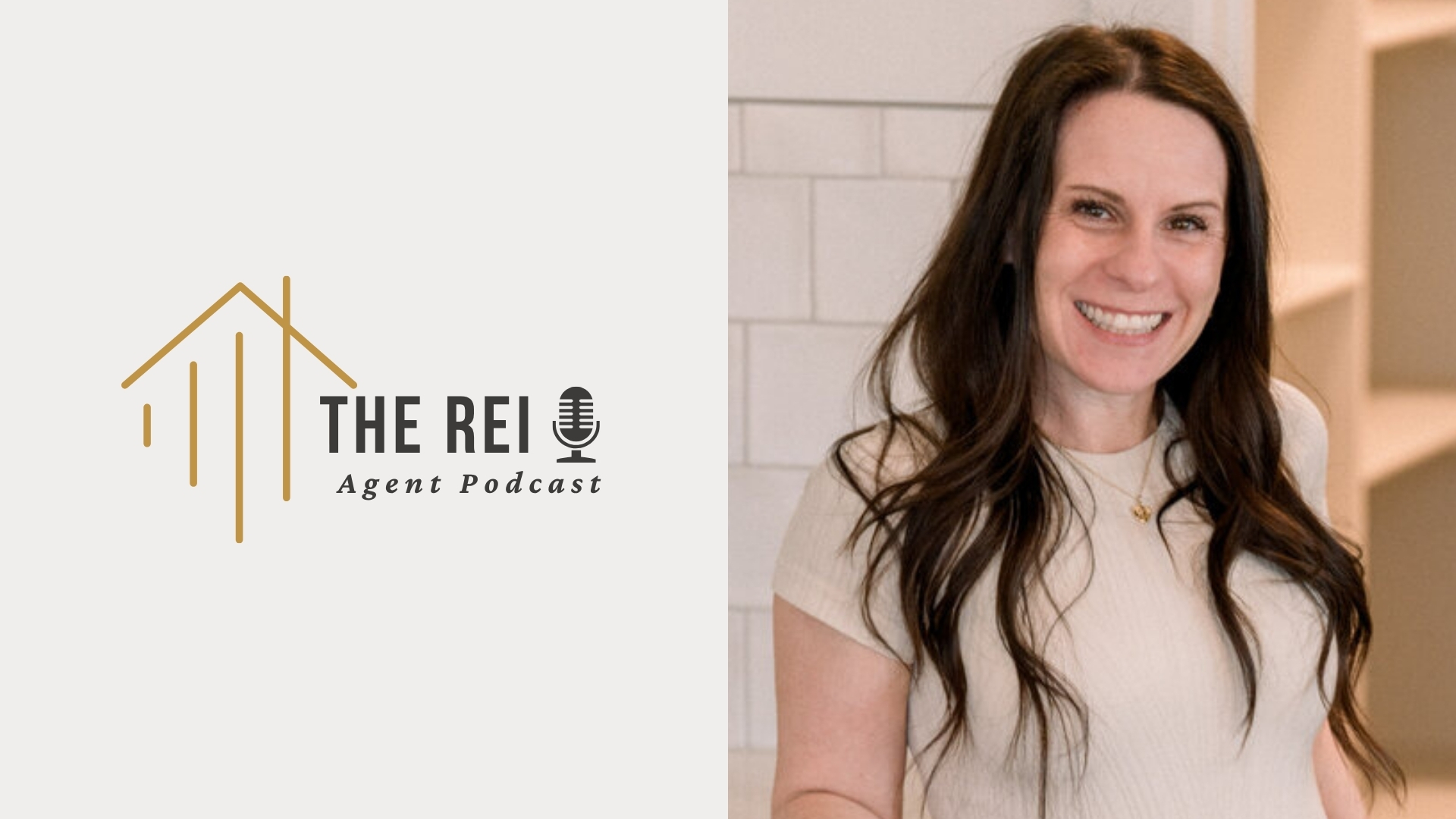
On The REI Agent Podcast, Bree joined Mattias Clymer to talk about the unconventional path that took her from a cubicle to entrepreneurship, from an accidental rental to commercial property, and eventually into a growing portfolio of self-storage facilities.
But this conversation became about something much bigger than storage units.
It became a conversation about building wealth without allowing wealth building to consume the very life it was supposed to improve.
“How do we not work harder? How do we work smarter right now, and then go out there and go do it?”
For Bree, the answer became a simple, boring, scalable business that could generate income without demanding every hour of her life.
She Wasn’t Born Into Real Estate
It Started With a Cubicle and a Growing Feeling That There Had to Be More
Bree’s path didn’t begin with a giant portfolio, family money, or years of commercial investing experience. She described herself simply as a mom with a phone.
Before becoming an investor, she worked as a W-2 employee for California’s Fish and Wildlife agency. She spent seven years living the cubicle life before realizing that the traditional path wasn’t giving her the freedom she wanted.
So she tried entrepreneurship.
She opened a gym and quickly discovered another uncomfortable truth. Owning a business doesn’t automatically create freedom. Sometimes it simply replaces one demanding job with an even more demanding one.
She found herself working around 60 hours a week, often according to other people’s schedules, while earning less than she had imagined entrepreneurship would provide.
Then pregnancy changed the way she looked at everything.
Becoming a mother forced Bree to ask a more important question. She wasn’t simply asking how she could make more money. She was asking what kind of life that money was supposed to create.
The Accidental Rental That Changed Her Direction
Bree owned what she calls an accidental rental property. At first, she thought residential rentals might become the vehicle that created passive income. She imagined owning perhaps 20 houses and collecting income from them.
Then reality arrived.
There were tenants. There were maintenance issues. There were regulations. There were all the responsibilities that come with residential property ownership.
It caused Bree to start thinking bigger.
“I gotta think bigger and better. What else is out there?”
Then she heard people discussing self-storage on a podcast.
No toilets. Fewer tenant issues. Fewer employees. A simpler operational structure.
Something clicked.
Self-storage didn’t sound glamorous, and that was exactly what attracted her.
Boring Became Beautiful
Why Self-Storage Fit the Life Bree Wanted to Build
Many investors are attracted to exciting businesses. Boutique hotels, short-term rentals, beautifully designed properties, and hospitality concepts can look incredible on social media.
Bree wanted almost the opposite.
She wanted something simple.
She wanted something that could be operated remotely.
She wanted something that didn’t require her constant physical presence.
Most importantly, she wanted something capable of producing income while allowing her to be present for her daughter.
“I want a boring, subscription-based business.”
That became one of the defining ideas behind Bree’s approach to self-storage.
At its simplest, storage is the business of renting space. Concrete floors, cinder block buildings, roll-up doors, and empty units can produce recurring monthly revenue without many of the complexities found in hospitality or traditional residential rentals.
Bree also pointed to the operating economics that attracted her. She discussed self-storage as having comparatively lower expense ratios than some other property types, giving owners more room for cash flow and operational mistakes.
That simplicity gave Bree something she valued even more than appearances.
It gave her options.
The Opportunity Isn’t Always Sitting on a Listing Site
Why Bree Looks for the Owners Nobody Else Is Talking To
One of the biggest questions facing any investor is simple: Where are the good deals?
Mattias raised that exact issue. Properties listed publicly can attract intense competition, and asking prices don’t always make financial sense.
Bree’s answer was to return to one of the oldest principles in business.
Relationships.
Instead of relying entirely on heavily marketed opportunities, she became skilled at finding off-market self-storage facilities and directly contacting their owners.
“How can we find these gems and then see how we can take a good deal to a great deal and cash flow it?”
Many of the owners Bree targets are long-time operators who have owned their facilities for years. Some may be approaching retirement. Some may own their properties outright. Others may simply be ready for a different chapter of life.
These owners aren’t necessarily waiting for a mass email, an automated text campaign, or an artificial intelligence generated sales message.
They may simply want someone willing to have a real conversation.
That became Bree’s secret weapon.
A Mom, a Phone, and the Courage to Call
Bree didn’t begin with a massive acquisition team.
She started calling owners.
She learned how to have conversations. She learned how to listen. She learned how to ask whether someone might ever consider an offer.
Those conversations eventually turned into opportunities.
And opportunities turned into deals.
It is a powerful reminder that some of the biggest breakthroughs in business don’t begin with sophisticated technology.
Sometimes they begin when someone picks up the phone.
The Market Rule of Fives
How Bree Searches for Overlooked Self-Storage Opportunities
During the episode, Bree walked listeners through the framework she teaches through Self Storage School.
She calls it the market rule of fives.
Instead of immediately competing for facilities in major first-tier and second-tier markets, Bree looks toward smaller third-tier and fourth-tier communities that may still be growing.
She discussed looking at markets with populations ranging roughly from 5,000 to 120,000 people, median household incomes near or above $50,000, and positive population growth.
Then she looks for signs of operational opportunity.
One of the clearest signals can be surprisingly simple.
A storage facility without a functional website.
Some established owners have been operating successfully for decades without modern online leasing, sophisticated marketing, automation, or updated technology.
To another buyer, that might look outdated.
To Bree, it can look like opportunity.
She Demonstrated the Strategy Live
Bree pulled up Sullivan, Missouri, on Google Maps during the conversation and searched for local self-storage businesses.
Almost immediately, she found facilities that appeared to have little or no online infrastructure.
One facility caught her attention in particular. It appeared clean and well located, yet didn’t seem to have a website.
Rather than dismissing it, Bree saw possibility.
There might be opportunities to modernize operations, improve marketing, increase revenue, introduce new services, or simply begin a conversation with an owner who had never seriously considered selling.
“I think we make it sound harder than it really is.”
That sentence captures much of Bree’s philosophy.
Investors can spend years studying increasingly complicated strategies while overlooking straightforward opportunities sitting in plain sight.
One Property Can Have More Revenue Streams Than Investors Realize
Self-Storage Is More Than Renting Empty Units
Bree also challenged the assumption that self-storage has only one source of income.
A facility can potentially contain traditional drive-up units, climate-controlled units, office space, RV and boat storage, tenant protection plans, portable storage units, billboards, and other opportunities depending on the property.
An office attached to a facility could potentially be leased separately. Additional land might create expansion opportunities. A billboard might generate another monthly payment.
The property might look boring from the road.
But the income statement can become much more interesting.
“People just forget that boring businesses get to have just as much fun as hotels.”
For Bree, this is where creativity and simplicity meet.
The business doesn’t need to become complicated to become better.
Small improvements can compound.
Seller Financing Can Change the Entire Deal
When Price Isn’t the Only Thing That Matters
One of the most compelling portions of the conversation centered on seller financing.
Bree shared an example of a self-storage facility purchased for approximately $500,000. The property contained roughly 83 units and around 12,000 square feet.
The seller owned the property outright and wanted to retire.
Instead of using a traditional bank structure, the parties created a seller financing arrangement.
Bree described purchasing the facility with about 15 percent down and paying the seller 5 percent interest over a seven-year period.
The arrangement allowed the seller to continue receiving income while giving the buyer a financing structure that supported cash flow.
Then came the value-add strategy.
Rates were increased. Expenses were reduced. A website was implemented. Tenant protection plans were introduced. Security cameras were added. Portable units created additional income.
Bree’s eventual goal was to significantly increase the property’s value and potentially sell or exchange it into a larger opportunity.
The Best Deal May Be the One Where Everybody Wins
Seller financing isn’t simply about getting favorable terms.
Bree believes the strongest arrangements solve problems for both sides.
A retiring owner may want monthly income. Another may want to reduce the impact of receiving a large lump sum at once. Some sellers care deeply about who will continue operating the business they spent decades building.
That makes the relationship itself part of the transaction.
“It’s not always about price.”
It may be about trust.
It may be about timing.
It may be about legacy.
It may be about structuring terms that make the transaction work for everyone.
A $9,000 Down Payment That Challenges a Major Limiting Belief
Commercial Property Doesn’t Always Require a Fortune
Bree shared another story from a Self Storage School student that directly challenged one of the most common assumptions about commercial property.
The student developed a relationship with an owner for approximately five months.
Eventually, the student purchased a roughly 10,000-square-foot self-storage property in Texas for $90,000 using seller financing.
The down payment was approximately $9,000.
That number matters because many aspiring investors never begin.
They assume commercial property requires enormous amounts of personal capital.
“I really think that’s the limiting belief that really just stops people.”
Bree’s point wasn’t that every storage facility can be purchased with $9,000.
Her point was that investors should stop assuming they already know what is possible before they have even begun the conversation.
A strong deal creates options.
Seller financing is one option.
Partnerships are another.
Bringing an attractive opportunity to someone with capital can be another.
The first step is finding the opportunity.
Every Investment Needs an Entrance and an Exit
Without a Plan, Investors Are Making a Wish
Bree emphasized that acquiring a property is only half the strategy.
An investor should understand both how the deal will be entered and how it may eventually be exited.
“People that don’t have a plan, they’re just making a wish.”
A value-added self-storage property could eventually be sold.
It could potentially be refinanced.
Capital might be redirected toward another facility.
Depending on the circumstances, an investor may choose to keep the property producing income instead of selling it.
The important point is intentionality.
Bree wants investors thinking beyond acquisition day.
What is the property supposed to accomplish?
How will its income grow?
What could increase its value?
How does the property move the investor closer to the life they actually want?
Then the Conversation Became Much Bigger Than Money
What Is Wealth Worth If It Costs the Life It Was Supposed to Create?
Mattias shifted the discussion toward something central to The REI Agent Podcast.
What is the point of accumulating wealth if the process leaves someone exhausted, disconnected, unhealthy, or unable to enjoy the people they love?
For Bree, this question isn’t theoretical.
She has deliberately designed her investment strategy around the life she wants with her daughter.
Her definition of success includes easy mornings.
It includes what she affectionately calls Hot Tub Wednesdays before school.
It includes being able to put her head on the pillow at night without worrying about emergencies destroying her peace.
“Easy mornings with my daughter.”
That might not sound like the traditional language of business success.
That is exactly why it matters.
Bigger Isn’t Automatically Better
Bree questioned the constant pressure to build the biggest portfolio possible.
More doors don’t automatically equal a better life.
More properties don’t automatically create more freedom.
More revenue doesn’t automatically create more peace.
Sometimes growth can create a beast that must constantly be fed.
Bree’s vision is different.
She talked about acquiring two to five strong self-storage deals per year and developing a boutique storage equity firm that serves her family, her goals, and the people she partners with.
“I think that’s really what we’re here to do, is to have a life on purpose and to have life options and not just create another job.”
That doesn’t mean avoiding hard work.
Bree is clear that growth still requires uncomfortable action.
But there is a difference between working hard toward freedom and building a machine that permanently owns every hour of the day.
Financial Freedom Is Only the Beginning
Build the Income First, Then Let the Money Start Working Harder
Mattias discussed one of the principles he frequently shares on the podcast: building enough investment income to cover personal expenses.
When investments begin paying for everyday life, people gain options.
An agent might become more selective about clients.
A business owner may feel less pressure to accept every opportunity.
A family may gain more freedom to travel.
Someone may simply sleep better knowing their lifestyle isn’t entirely dependent on the next commission check.
Bree agreed, but she pushed the conversation one step further.
Once expenses are covered, what comes next?
Compounding.
She talked about learning how to use asset classes and capital in a smarter, more peaceful way over the long term.
“How do you compound that money and leverage it the right way where you don’t have to work harder, but you’re working smarter with your money over the long haul for your family?”
That reframes wealth.
The goal isn’t simply to earn.
The goal is to build a system where capital begins doing more of the work.
Live Below Your Means and Invest Often
A Simple Philosophy With Enormous Long-Term Potential
Bree referenced two principles she tries to follow: live below one’s means and invest often.
Neither idea is flashy.
But they capture much of the philosophy behind sustainable wealth creation.
Increasing lifestyle expenses every time income rises can trap even successful people inside an endless cycle of needing more.
Investing consistently can create the opposite effect.
It can slowly increase independence.
It can create breathing room.
It can allow today’s work to begin funding tomorrow’s freedom.
The strategy isn’t about looking wealthy.
It is about becoming less dependent on constant income generation.
The Tax Benefits Can Be the Cherry on Top
Cash Flow, Net Worth, and Depreciation
The conversation also touched on potential tax advantages associated with property ownership.
Both Bree and Mattias repeatedly emphasized that they aren’t accountants and that investors should speak with qualified tax professionals about their individual situations.
Bree described a wealth triangle built around cash flow, growing net worth, and depreciation.
She views potential depreciation benefits as the cherry on top rather than the primary reason to purchase an investment.
The property should first make sense as an investment.
It should produce or have a path toward producing the desired financial result.
Tax benefits can potentially make an already strong investment even more attractive.
“We want cash flow to live off of and to invest often, and then we have our net worth that you’re growing.”
The larger message was simple.
Wealth can be built through multiple layers working together rather than through income alone.
Stop Trying to Learn Everything Before Taking the First Step
Go a Mile Deep Instead of Spreading Yourself Thin
Toward the end of the episode, Bree offered advice that applies far beyond self-storage.
Choose an asset class.
Learn it deeply.
Find people who are actually doing what the investor wants to accomplish.
Then take action.
She cautioned against endlessly jumping between opportunities or following every shiny new strategy.
There will always be another trend.
There will always be another business model.
There will always be someone online making another path look easier.
Progress often comes from choosing a direction and staying with it long enough to become good.
“Don’t spread yourself thin, just go like a mile deep.”
Bree also encourages aspiring investors to find mentors or communities led by people who are close enough to the journey to understand what the next few steps actually require.
She doesn’t believe someone needs every answer before beginning.
They need enough knowledge to take the next intelligent action.
Sometimes the People Closest to You Won’t Understand
The Beginning Rarely Feels as Safe as the Outcome Looks
Bree’s current life can make the journey sound obvious in retrospect.
It wasn’t.
She remembered putting her house on the line, taking risks while pregnant, and pursuing a path that members of her family questioned.
They thought she was crazy.
That uncertainty is part of the story that often gets edited out once someone becomes successful.
The beginning rarely feels certain.
The first call feels uncomfortable.
The first commercial property seems enormous.
The first offer feels intimidating.
The first unconventional decision may make very little sense to the people standing on the sidelines.
“Sometimes you have to be a little bit insane in order to reap those benefits.”
Five years later, Bree had built a self-storage portfolio and created a life that was much closer to the freedom she originally wanted.
The uncertainty didn’t disappear before she acted.
She acted while it was still uncertain.
If They Can Run It on a Yellow Pad, Maybe It Doesn’t Need to Be Complicated
Technology Should Simplify the Business, Not Become the Business
Bree offered one final image that perfectly captures the opportunity she sees in self-storage.
Some long-time owners are still running profitable facilities with handwritten records, yellow pads, and simple systems.
If someone in their seventies or eighties can successfully operate the business that way, Bree believes today’s investors shouldn’t convince themselves that the industry is too complicated to understand.
Modern technology can make many of those operations easier.
Websites can automate rentals.
Call centers can help with customer service.
Remote systems can simplify management.
Artificial intelligence can assist with parts of the operation.
But Bree’s philosophy remains grounded in simplicity.
“Don’t overcomplicate it. Keep things simple.”
The Books Helping Bree Think Bigger and Live Smarter
Learning How to Grow Without Simply Doing More
Bree also shared several books that have been shaping the way she currently thinks about business and life.
She is rereading 10X Is Easier Than 2X, a book whose core ideas align closely with the season she is currently navigating.
She is also reading Buy Back Your Time by Dan Martell, another book centered on becoming more intentional about where time is spent.
Both reflect the same question running throughout her entire conversation with Mattias.
How can someone create greater results without simply filling life with more work?
And because not every book needs to be about optimization, investing, or business, Bree also mentioned reading The Seven Husbands for fun.
It was another small reminder that a good life needs room for enjoyment too.
The Real Opportunity Is Bigger Than Self-Storage
Success Means Building a Life Worth Living
Bree Hartman’s story may begin with self-storage, but the lesson doesn’t end there.
Not everyone listening to her conversation will buy a storage facility.
Not everyone should.
The more important challenge is deciding what success is actually supposed to accomplish.
For Bree, success means income.
It means growing net worth.
It means creating opportunities.
But it also means slow mornings with her daughter.
It means Hot Tub Wednesdays.
It means owning assets that don’t own her.
It means building something substantial without accidentally rebuilding the exhausting job she originally wanted to escape.
“How do you make sure this grows and then how do you do it in a way that is beneficial to what you really, really want?”
That may be the most important investment question of all.
Because wealth isn’t only about how much someone accumulates.
It is about what that wealth allows them to protect, experience, and become.
Bree’s journey is proof that the path doesn’t have to look glamorous to be powerful. It doesn’t need to impress strangers on social media. It doesn’t need to be the biggest portfolio in the room.
It needs to move someone closer to the life they actually want.
And sometimes that life begins with something as ordinary as a storage building, an owner’s phone number, and the courage to make the call.
Transcript
[Mattias]
Welcome back to the REI Agent. My guest today is Bree Hartman, founder of Self Storage School, where she helps aspiring investors confidently break into the self-storage industry. What makes Bree’s story so relatable is she was not born into real estate or self-storage.
Just a few years ago, she knew nothing about buying storage facilities and was asked the same question many beginners ask today. Less than 12 months later, she purchased her first self-storage facility, and now she is passionate about helping others shorten that learning curve. Through Self Storage School, Bree teaches investors, emphasizes action over theory, and if you were ever curious about self-storage or wonder why so many investors are making the switch, you’re going to love this conversation.
Bree, welcome to the REI Agent Podcast.
[Bree Hartman]
I am so excited to be here. I feel like our conversation already, like before this, it’s been bomb. It’s been great.
[Mattias]
I know, I should have just record as soon as we get in and just see what happens and surprise you.
[Bree Hartman]
I am so excited to be here. This is gonna be really fun.
[Mattias]
Yeah, Bree, so what industry were you in before what got you into looking into self-storage to begin with?
[Bree Hartman]
Yeah, so I like to say I was a mom with a phone, and I think what’s interesting is I feel like I’ve had nine lives, like everyone else, right? I’m older. I was in my late 30s, and I’m not this young chicken that’s 22 right now getting into real estate, and so I really was.
I was a W-2 employee, so I live in Sacramento, California, and worked for Fish and Wildlife for seven years and did the whole cubicle life and just realized I was just like suffocating, and so from there, I actually started a gym, and I was like, yeah, I’m gonna go out there, start a business. Everyone says entrepreneurship is the best thing, and really quickly, I learned that there was just a lot of work, like 60 hours a week on other people’s time to get very, very little money with no vacation, and so when I got pregnant with my little girl, I think that was my big shift. My big shift was wake-up call.
I had, I laugh about it, one accidental rental, and I was like, this is gonna be the vehicle. I’ll own 20 of these and passive income, and then really soon, I realized, oh, hey, there’s toilets, there’s tenants, there’s all these issues, like service dogs in California, and so I kind of was like, gosh, I gotta think bigger and better. What else is out there, and actually, on a podcast, I heard one day people talk about self-storage, and they’re like, hey, no toilets, no tenants, no employees, less issues, and I’m like, sign me up, so I know that’s a really quick snapshot, but honestly, I think ignorance is beautifully blissful, and wanting a life that’s bigger and better, and it’s like, how do we not work harder?
How do we work smarter right now, and then go out there and go do it, right, instead of just talk about it. Talk is cheap, so that’s really, long story short, that’s how I got into self-storage was that one accidental rental that led into, wow, okay, how do I buy commercial real estate? How do I buy commercial real estate and a business, which is self-storage, and that was my big asset class that I really wanted to go after.
[Mattias]
Do you still have that accidental rental?
[Bree Hartman]
I do, actually. I was like, I got two or three now, and I don’t love them, but here and there, I think it is a good little play, you know what I mean? So I do still have that accidental rental.
It actually is across the street where I live now, so it’s easy, it’s in my vicinity, hands down.
[Mattias]
Well, no, I think it’s one of the things I like about syndications, and if anybody listens to this show, for a while, they’ll know that I kind of preach about syndications a little bit. Not that they’re like, it’s always gonna work, get rich quick, you don’t have to do anything, but it’s a way you can diversify your real estate holdings, which if you’re a realtor, if you’re a real estate-designated professional, real estate makes a lot of sense to own for taxes, for wealth creation. You can use that money that comes in now, you don’t have to wait until you’re retired.
But I think that’s one of the benefits of it, is that you can have different things, and if you do only own single-family or whatever apartments in your area, I mean, that’s a very narrow scope of real estate, and that’s gonna be very, obviously, market-dependent on that. If one law changes, you talked about California laws are very tenant-friendly, that can impact your whole portfolio, so it makes a ton of sense to have some diversification, for sure. And self-storage is definitely a, it’s a popular one.
It’s a one that is definitely, for good reason, that a lot of people I know are excited about.
[Bree Hartman]
Yeah, and I feel like, I guess for you, have you ever rented a unit in self-storage? In your lifetime.
[Mattias]
I have not, actually.
[Bree Hartman]
Okay, no, that’s fair. And so it’s interesting, because I went to the statistics, went to the Googles, right, and they say it’s like one in eight people rent storage in their lifetime, and that could be in an up market, a down market, or a sideways market, but I really think that we’re in America, we’re in a consumerism economy, and so as real estate, like you live in D.C., as real estate goes up and density is high, it’s like, how do you move your things out? And so what a lot of people do is they move stuff into storage, and they’ve been using storage as the easy button for many, many years, and it’s only gonna continue like that. And so I think it’s just very fascinating, because in self-storage, I think why, for sure, I got into it, was that it’s like, how do you have a simple, boring business in commercial real estate?
And that was kind of the self-storage umbrella. And so being able, I think, to scale, right, remotely, and so for me, I live in California, I don’t love, I actually don’t own a storage facility in California. I buy all of mine in the South, or even in the Carolinas, in Tennessee, and we run them all remotely managed.
And so I was like, what is an asset class can I do that with, right? And then how can I own 15 to 18 of these facilities and work from home, right, and have that time with my four-year-old girl? And so thinking, I think, in that regards, is people get excited about boutique hotels right now, it’s like all the rage.
You go on Instagram and all the social medias, and I’m like, that sounds like just chaos to me. Everyone has their own little favorite thing, but I want something that doesn’t have to do with hospitality, I want a boring, subscription-based business, and that’s what self-storage is, is we are in the industry and space to rent space. Literally, we rent air.
It’s like a concrete floor, cinder block building, roll-up doors, and no lights, no toilets. And so that, to me, I think, feels very easy and successful is to have those slow mornings and not worry about, do I have hospitality issues or a lizard coming into my, I don’t know, room, and I have to give money back, and I don’t know. It’s just a very different, interesting world out there now in this space.
And so, yeah, and expense ratios. And so I think people get really interested about this really fast, but self-storage, and in industrial, we have one of the lower expense ratios, which is around an average of 35% to 40% expenses versus multifamily right now is 50% to 58%. And then in hotels, they’re at 60% to 68%.
So just seeing that, you’ve just got more room to cashflow and more room, I always say, for stupidity. So that’s something that I really enjoy as well.
[Mattias]
Yeah, that’s awesome. Now, I know that it can be challenging to find deals at Pencil. Now, I worked with a client that was very into self-storage.
They came from owning, they own another business, but they wanted to invest in self-storage. And they, through that process, we looked at multiple deals. None of them penciled out.
And there was a lot of people accepting cash so that their books didn’t reflect the full profit. And then you’re just supposed to take their word for it. That kind of thing that’s happening.
So I guess that leads me to the question, how does one go about finding deals that actually make sense?
[Bree Hartman]
Yeah, and so kind of like, even like how I teach in self-storage school. So you’ve got two ways, well, three ways, really. But you’ve got on-market deals where, especially as real estate agent investors, that’s where people take those deals to on-market, LoopNet or Crexys of the world.
And those are the ones that are highly competitive. Right now, it’s true. People want over-asking prices and they’re willing to put it on there and trying to get it.
We call it the silly money of the world. And obviously, there’s great deals out there. There’s just more competition, right?
It’s just more and more people attracted to it and eyeballs on it. And so how I kind of teach in the self-storage school is to get really, really good at looking for those off-market deals, right? And building relationships with owners.
And so we are in this silver tsunami. No matter how you want to look at it. We’ve got baby boomers that are wanting to retire.
And it’s high net worth individuals to high net worth individuals. And so being able to go out there in these markets, not think like public storage and cube smarts in these first or second tier markets, where are markets that are still growing that are on these outskirts, right? That we don’t want to compete with.
So finding these off-market properties in these areas that are still growing, that have mom and pop that are unsophisticated, those are the ones that I truly like to target because I build relationships with them. And then most of them, like we’re doing two seller financing deals this month, closing on like a $1.5 million property that will be a seller financing deal with 3% interest. Interest only for seven years.
So these are the parts that it’s like, how do we think creatively when yes, most of the world will skip the, hey, nothing’s penciling. So move on, right? Shiny object syndrome to, hey, how can we find these gems and then see how we can take a good deal to a great deal and cash flow it.
So a little bit, that’s kind of my secret sauce as I was a mom with a phone that no one wanted to talk to me. Like I was like, no one wanted to talk to me. And so I got really, really good at calling off-market storage properties and having just real conversations with them.
And then being at the very end, like, hey, would you ever consider an offer, right? On their property. And that’s when the light bulb kind of went off and I got really good at negotiating these deals.
And then people wanted to talk to me and partner. So I think that’s, I think the secret sauce is going back. Like, again, going back to the basics.
It’s the basics of real estate. Like, where are these good deals and real estate agents? I know that’s a lot of people are on this podcast and listen and it’s like, you guys have the best skillset possible.
Like calling people, having conversations and not doing all this AI agent reach out and stuff and items, which is cool, cool. But it’s like, how do we get back to the basics to do more of that?
[Mattias]
Yeah, a hundred percent. So I can never miss an opportunity here to plug the CRM that we are offering because it is a hundred percent with what you just described and it would work really well for these as well. But it is Ford based.
So you’ve got your family occupation, recreation, dreams. You track that in each contact. So you’re systematically talking to people and trying to learn these things about them by asking good questions related to these things that they care about.
And then when you follow back up with them, you’re able to remember these things as well. And I think right now we are all probably starting to feel, I feel like there’s like this, like we’re kind of getting over this hump where people are starting to get sick and tired of AI a little bit. And if you sense that it’s fake, if you sense that it’s being generated by AI, so if it’s an email, if it’s whatever, you’re just kind of immediately turned off.
Or I think a lot of people are. And if you get into like the texting stuff, or if you get into like the faking your voice and trying to be this fake AI agent person, I just think that people sense it. And I’m not saying there’s no success there, but I think that we are in a relationship business, both of us, right?
And I think that it’s something that you should treat like gold and you don’t wanna kill that off by trying to do less or get fancy, so.
[Bree Hartman]
No, I hear ya. And I know we were talking about, cause that is something that, cause people come to me all the time and they’re like, hey Bri, like how are you finding these off-market properties? And so if you want me to, I can kind of share lies, like how do you find like self-storage properties?
And this is something that you guys can do today, cause I think that’s the biggest part is like action, right? Like it’s less fluff, like more action is very, I preach. And so before I can like share my screen and especially for like, even like real estate agents of yours are gonna crush this, I wish I knew this sooner, but what you think about is, okay, if you wanna buy a social storage facility and look for these mom and pop facilities that are unsophisticated, I call it the market rule of fives.
And so in self-storage school, we talk about, okay, how do we not compete with threes, which are these public storages, keep smarts of the world, where everyone’s like, oh, there’s storage on every corner. I’m like, yeah, because you’re looking in these first or second tier markets. And then the second thing I want you guys to think about is these third and fourth tier markets are areas that they’re growing, right?
There are areas where people are fleeing, right? These big areas like Atlanta, Georgia, like there’s so much traffic, same thing with Dallas, like they’re going into these outskirts and roads are being built and data centers are being formed. And so normally these are between 5,000 people to about 120,000 people in population.
Like that’s a good sweet spot to start at, right? And then the third thing is, okay, people have to have money, right, to buy storage or to pay their, you know, every single month. So make it easy, right?
Because that’s the goal in business. And so a medium household income of $50,000 is really a sweet spot. And then my last little part to this is, you know, being able to find those properties or cities that have areas that are growing just by even 0.1%. So I just want you guys to keep in mind when I open up the screen and then we’re going to look for the last part to this, the fifth one is facilities that either don’t have a website or they’re facilities that have a website that’s like godaddy.com or one that was like, you know, backward, the rotating E. Like those are the ones that exist. They’re a website.
So it’s kind of like a fake thing, but it’s like you can’t actually rent a unit online, which means they’re unsophisticated. So I just wanted to find that first. And so I’m just going to open up my screen and just share an area just that we were just like actually looking at like yesterday.
[Mattias]
And this is fascinating. Yeah, while you do that, I’ll just say too, go to reiagent.com, sign up for our newsletter because you will get things like she just said. She just listed off some amazing tips there.
We send that out every week. So it summarizes the content there. So if you’re driving around now and can’t get to it, definitely do that.
I’ll also save this for later, go to YouTube or I think it’s on Spotify and video as well because she’s about to show us her screen.
[Bree Hartman]
Yes, big nuggets. So what I like to do is just go to the Googles, it’s free, right? And I’m going to put in just Sullivan, Missouri, right?
Sullivan, Missouri. And so it was very fascinating. Someone just picked this town because it was like 45 minutes from where they currently live.
And so this is kind of the whole area right here. And so what I’ll do is I’ll just click on nearby. And then what I’m going to do is I’m going to write self-storage and I’m going to press enter.
And so what’s neat about this is that this is called like the Google map pack. And so these are the little dots. These are all the storage facilities in this town.
And so, you know, from here, what I like to do is, you know, looking on this main road right here, these are, so here’s the website, right? And then here’s no website, right? So it’s so crazy.
Like how did these facilities make it through COVID? I don’t know. It’s because they’re baby boomers.
They don’t have to. They’re already making, they’re already cash flowing. They’re already making a ton of money.
Why would they change? That’s really what this comes down to. And so like what, why break it?
Because it’s already working. But what’s crazy is, is you just go on, right? And that’s where I just wanted to prove to you because people talk about it.
And it’s like, no, like there’s this really exists out here in this world in commercial real estate. And I think this is the true opportunity at hand right now is like, we’re in a buyer’s market. So like, let’s make this work.
So here’s central storage. I’m just gonna click it. I don’t know anything about it, but it’s right here on the main road as you enter in this town, no website.
Okay, 4.3 stars, 18 reviews, somewhat decent, you know, cover photo at least. And then what’s, you know, fascinating, still no website, you know? And so I’m gonna take my little man, drop him right here and check it out a little bit.
And this looks like a pretty facility. Like, would you buy this?
[Mattias]
Yeah.
[Bree Hartman]
Yeah, I know. I’m like, like climate controlled. You have a billboard right here.
You know, you can definitely tell, like they don’t even have an area code. Like that’s a mom and pop. Beautiful, clean facility with maybe a little bit of expansion and free marketing all day long.
And so this is where I would start the calling, right? And I would start the calling and building the relationship and just having a conversation with this owner and building up that relationship and seeing if they would ever consider an offer, you know, on their facility. And so I think we make it sound harder than it really is.
But, you know, from here, you know, people forget boring businesses. We have eight to 10 different revenue streams, right? So we don’t just sell, you know, self-storage units, right?
We’ve got climate control. We’ve got drive up. We’ve got right here, this is an office, which we triple net lease and rent out our office to make more money on top of our facilities when we buy them.
And then on top of that, this guy has a billboard that probably pays him monthly. And then I’ve got a guy, if I bought this property, I would put four more, probably two more billboards at each quarter to make more money here and maybe a cell tower. And then you’ve got tenant protection plans that you’re gonna upcharge people to have, $12 a unit, $12 every single one, right?
So there’s lots of different revenue streams, RV and boat, people just forget that boring businesses get to have just as much fun as hotels. It’s just not as pretty and beautifully Airbnb eccentric, right? But to me, I’m like, this is beautiful to me.
It’s simple and it’s easy and I can run it remotely from a call center and a boots on the ground. And I get to do what I wanna do with my girl and buy back my time. So I just wanted to share with you guys, I mean, I can go on and on, but I wanted to make this really fast and clean and clear, but you can do this in areas that you live, just think outside the box, right?
And that’s what I teach in storage school. It’s like, how do we take these main foundational concepts that we’ve known for years, even in residential, apply it, right? To self-storage and then double down, so.
[Mattias]
No, it’s awesome. Thank you so much for sharing that. And I’ve invested now in a couple of syndications, they’ve all been mobile home parks.
And I bring that up because it’s not sexy.
[Bree Hartman]
Yeah, yes. Hands down.
[Mattias]
They’re not sexy. But when you really dig into it and really think about it, I mean, that’s the best thing to get into, really. I mean, like it is a lot easier.
Like, so there’s a lot, I’m not gonna hate on, you know, Airbnb’s and everything, but that obviously was a big craze and there was a lot of hype there and it is really cool to think. And a lot of people want to buy a property that they’re gonna go live in, or sorry, vacation in as well. So it’s gonna give them money, it’s gonna pay for itself, they’re gonna be able to go to vacation there.
But I think, you know, there’s a lot of risk there. Like, you know, jurisdictions can change their laws, all those kinds of things can happen. And whereas if you were to go after something that’s not as sexy, like self-storage, like, you know, mobile home parks, that income could then pay for your vacations.
You can go wherever you want. That’d be another way to look at it, right? Like, so like treated separately, it’s a business.
And that’s really awesome.
[Bree Hartman]
And I’ll say something controversial. It’s so funny. I think just like, you know, it’s like people bought Peloton in 2020, like everyone bought a Peloton and a treadmill and they’re like, I’m gonna go use it all the time.
It’s at my house. No, you’re not. You want to go to different places.
You know what I mean? But like, again, I get the concept of it. And, you know, I think it’s like, what do you really need?
And, you know, is it that lake house? Is it that, you know, X, Y, and Z? But only you can answer that question.
You know, it’s like, will you actually use X? And then do you need that, right? Or is it, do you want more, you know, is operations for you something that’s important to be remote and something that is, you know, easy and simple.
And so that’s kind of, that was my, like, I think just a big like epiphany, right? Is like, how do I keep it simple, stupid, really? And again, we’ll talk about things that are not, like, and I’m very just authentic about, you know, like how this all works.
And there’s days where I’m like, oh my gosh, you know, but there’s also points where it’s like, wow, it really is less headaches than some of these other asset classes that, you know, my colleagues, you know, are dabbling in. So we can go down the operational, you know, pathway, or we can kind of go and talk about seller financing, but it’s, it all comes down to, you know, your big why, like in asking yourself five times, like I did that five times, like what do you really, really want? And for me, I knew I had to buy outside of California and I knew I wanted, you know, being able to have financial and time freedom for the next like 10 to 15 years and own a portfolio that I can do faster and easier.
And that to me, you know, was self-storage. So pick that asset class and just go for it and stay in your lane. Don’t get that shiny object.
Cause that’s the biggest thing is Alex Ramosi talks about, you know, everyone will have at some point in their, you know, career in life, a woman in the red dress or a man in the tuxedo, right? That like is dangling at you. And when business is profitable, it’s crazy how easy that dangle is to get to that next level.
[Mattias]
Yeah, no, thanks. And I just wanted to say, like, I’m not saying you can’t be successful and Airbnbs are not a good asset class to get into. It’s just, it’s just a clear different one that is, yeah.
So it’s good to just really understand what the business looks like on a day-to-day, which you’ve just described, like, you know, that’s one of the huge benefits to you is being able to be remote, being able to have that time freedom is big for you. So it’s definitely understanding all those aspects. And then obviously also what does, what drives the value in these properties is I’m assuming it’s also cap rates.
So getting really good at the operational side is important, right?
[Bree Hartman]
So important, yeah. So this is a really good question. And so we’ll go into some fun numbers.
And so like getting, and that was one big thing is like getting really good at analyzing the deal and underwriting, right? And knowing what a facility is worth because you never want to overpay. And so like the two biggest things I think is that we teach and it’s very important is, you know, how do you find a good deal, right?
And then how do you decrease your risk and structure it so that it works well? And so, you know, a big part to this is like, we bought just like three years ago, we bought a half million dollar storage facility, right? It was seller financing.
And so this property was 10,000, no about 12,000 square feet, 83 units roughly. And what we did with it was the owner owned it outright. He’s like, I just want to, it was in Louisiana.
He’s like, I just want to move to the Carolinas and retire. And so we use seller financing. And so we said, hey, we’ll buy it for half a million with 15% down.
So 75K down, which is less than some houses. And then we will pay you 5% interest, you know, on that for seven years. And so he’ll get to make over like, it was like 600 and something, 680,000 over time.
But that decreased our risk with seller financing. And then what’s beautiful about this is we pay him, I know this because it goes straight from our bank account, $2,300 a month, right? And then we get to cashflow the rest.
So what we did here was raise rates about 35%. And so, you know, what we’ve done with this facility is we buy it, right, for half a million with 75K down. And our goal is to sell it of spring 2027 for about 1.2 million, about a seven and a half, eight cap range. And so the whole goal, you know, from getting it from half a million to 1.2, and it doesn’t, you know, maybe people are like, oh, that sounds like a small number, but guess what we’re going to do is 1031, go take it to a bigger deal, right? And that’s the whole goal is how do you build your net worth? How do you build your net wealth and cycle that?
But the things that you do to take commercial real estate, because residential is all on comps, right? No matter how nice my marble kitchen looks, your house is going to be based on the comps of that neighborhood. In businesses, they go based on your gross income, right?
And it’s like your gross income and your NOI divided by your cap rate is your purchase price. And so how do you increase your NOI over time? How do you increase your net operating income?
And so for us, what we did was it was like a 35% increase, maybe a 40 now, decrease our expenses a little bit to 35, 30%, make it lean, make it automated, put a website on there. We did tenant protection plans. We have a security cameras up and we added portable units along the fence line to add some more income there.
And so it was, I would say an easier lift, I would say. And then in four years, we’ll go out there and sell it to 1031. So that’s just an example, you know, on what is possible.
You could also refinance and go do it again, right? There’s multiple different ways to exit. But I think just the answer to your question is how do you find value, right?
And right now I’m really getting into, you know, back in the day in 2020, I mean, people were just searching for good deals where they can just increase their rates. Like, cool, that’s not creative, but you know, it worked because the 2020, everything worked. Now it’s like, how do you take a good deal and make it great, right?
And so how do you make a good deal, add revenue on top of that, and then add additional revenues down the line and then dangle a little carrot, keep some on there because you want to go exit and sell it or refinance to go do it again. So that’s kind of how we teach is like, that’s the value that you get to add in self-storage and how we like to look at, buy it, you know, for what it’s worth today, negotiate it, and then take it to, you know, 2X or however much you want to push based on the runway. Yeah.
[Mattias]
You know, when I started in real estate, there was, I kind of went to my broker and asked about, you know, somebody’s asking about, you know, seller financing and like, I don’t mess with it. I don’t think you should even touch it. Like, and I was like, why?
I said, well, if they can’t get qualified by bank, like, you know, why are you going to mess with them? Why are you going to deal with them as clients? But, you know, it is such a win-win opportunity.
And yeah, when you’re looking at this kind of space, you want to look into the win-win. So when something’s on the market, you know, there are going to be other people like that need to 1031 money. And I think that’s often why we’re seeing a lot of these commercial properties, maybe still selling for numbers that don’t really make sense because the people need to put that money into something.
They’re 1030 wanting money away. And so they’re saving on the taxes and maybe we’re accepting slightly less of a great deal. And then if so, when you’re going off market, like you’re talking about, you’re finding the mom and pops who want to retire and they don’t want to have this big capital gain hit when they sell.
And so that’s where that owner financing becomes such a win-win. You can negotiate terms a lot of different ways that you can figure this out in so many different ways, which makes it so exciting. Like you could maybe put it on a 50 year note if you wanted to, I don’t know if I’d recommend it, but you don’t have to follow the rules that the banks have created.
And you can find what makes most sense for both parties. So, you know, sometimes having less money down so they don’t have that capital gains hit is also still a win-win for them. If you can still make a cashflow and have you make sure your operating expenses are, you know, really well-documented, like that’s a great win-win for you and potentially, right?
So it’s awesome.
[Bree Hartman]
Yeah, and I mean, I’ll just put like a bow on this too. And this is, I think we’re in a really sweet spot and we have no crystal ball, no, you know, how do I say it, like CPA or anything like that. But I do think we are in this buyer’s market where, you know, rates have a little bit gone up and we don’t know where they’re gonna go and they haven’t moved, right, in a while.
Commercial real estate, we follow residential and it’s slower actually. And so we’re in this sweet spot where it’s been five years, rates are refixing from people’s loans and people are like, I wanna retire. I’ve been waiting with my hands, like sitting on my hands for three years and they want offers.
And so we’ve been getting more, you know, putting out more offers. Like I put six offers out last week, more offers we’ve been putting out now than we have in the past like 24 months. And it’s because these interest rates are allowing us to be creative and think with seller financing and get more creative.
People are open to looking at that now. And so just like you said, the three reasons, if you haven’t heard like seller financing is, you know, they normally own it outright and so they get to be the bank, right? And so that helps us in multiple ways is where, you know, decreases our risk a little bit more because it’s backed by the property, not the bank.
And then number two, we get to look at terms over time that allows us as a business owner to cash flow more. And that’s, you know, that’s rule number one in business is like we need a cash flow, cash flow is king. And so that’s a really important part.
And then the biggest thing is it’s not always about price, right? It’s about who’s gonna take over the business the best way, how much money they’ll get at the total of that seven year balloon. And then number three, how do they not pay Uncle Sam?
Like I hear this all the time, right? How do I reduce my, you know, capital gains if I get a million dollars all at one time? Like that’s a lot.
You’re gonna be paying a lot of money in taxes all the time. If you just get that big lump sum. So I just have been, you know, moral of the story is, you know, be creative, think outside the box and start that conversation.
And the person that starts that conversation and is able to communicate that clearly and the benefits to the seller is gonna win. And that’s the cheat code there.
[Mattias]
Well, and you kind of alluded to it as well, but I mean, these are often these people’s like whole lives. I mean, like this can be like somebody who’s like, you know, their baby.
[Bree Hartman]
Biggest transaction they’ve done in a long time. Yeah, business baby.
[Mattias]
And yeah, and so, you know, that relationship thing that you’re building, that you’re talking to them, you’re focused on the relationship. You’re not just spamming them with, you know, things. That is part of it because like you said, like that’s important.
Like they want to have that torch be carried on. They don’t wanna just, you know, sell out to some commercial thing that’s gonna, I don’t know. So that’s important as well.
[Bree Hartman]
And I’ll make one, you know, plug. We just had a storage school student purchase a 10,000 square foot property. So same, literally same size as ours for on a seller financing deal in Texas, made the relationship and he worked with them for about five months.
And he was able to get $90,000 as the price, put 10% down, $9,000 down and is a five-year balloon. And so like, it really changed my mindset about building relationships and taking your time and not just spraying people, but really, you know, building that relationship up. And it’s not always about price, but it’s about, you know, what is that win-win for everyone there?
And so that owner just wanted to kind of like say, you know, give it to someone who’s actually going to help in the community and they wanted to go on their merry way. So it’s just very fascinating. $9,000 is like, you know, less than, I don’t even know a house, mobile home, who even knows at this point, but I live in California.
So my eyes are skewed a little bit. Yeah, yeah. So I was just like, it’s just, you know, I think these things when people say, you have to have all this money to get a commercial real estate, you have to have all this money to buy self-storage.
I really think that’s the limiting belief that really just stops people because I hear in the DMs, like I talk to people all day long and they’re like, Bri, I’ve been thinking about buying storage for 10 years or eight years. And the first question I ask is like, why haven’t you done it? Like, why haven’t you done it?
And they kind of like, cause I need a lot of money, right? Or like, I don’t know how to find a deal. And so, but the needing the money part really gets people hung up for some reason.
And it did for me in the beginning, like it was one more zero to my first house that I bought. But at the same time, like if it’s a good deal and it cash flows, like you’re going to be able to take that opportunity to a doctor or someone who doesn’t have that opportunity and say, hey, do you want to make money together? Like, let’s go, right?
And so that gives you leverage in the upper hand. And I think that’s what a lot of your real estate agents that listen to this podcast, like that’s your opportunity right now is to use your voice and to be different and to build relationships authentically and to think outside the box. And that’s how deals are going to be had, I think right now in this market.
And that’s how you have to think.
[Mattias]
100%. One other point I wanted to make from what you had mentioned before is like the exit strategy can be to sell. So you’re looking to do the value add stuff to increase the value, et cetera.
But you also mentioned that you could do a cash out refinance, refinance that deal. That’s tax-free. You can turn around and do whatever you want to then with that money tax-free.
So you could roll that into another deal if you wanted to. You could, yeah, go buy that vacation maybe.
[Bree Hartman]
What’s cool, like we always say there’s two strategies, right? You have to think every deal you buy in real estate, it’s your how do you enter and how do you want to exit? Like you have to have a plan.
And people that don’t have a plan, they’re just making a wish, right? And that’s not good either. But the guy that I just talked about bought it for $90,000, 9K down.
Within 36 months, he will be able to either sell at 300K at like an eight and a half cap or he’ll be able to take about $120,000 out somewhere around there and then not kill the pig, keep the pig going and go buy another one in that market. And so those are the two opportunities to grow your net worth and to build that portfolio because to be honest, it’s not just one facility that will probably change your life. It’s probably one to three, right?
Depending on the size that it takes for you and what your real monthly goal is for income in your family. So yeah, those are just two thought processes that I very much like teach and preach is like how do you make sure this grows and then how do you do it in a way that is beneficial to what you really, really want and not just like a fantasy.
[Mattias]
Yeah, no, I love it. Well, you’ve talked about it a little bit. I want to get into it a little bit more but talk some about how you are pursuing this, trying to live intentionally and trying to not lose sight of what’s important, et cetera, like by what’s the point of accumulating all this wealth if you just die alone, unhealthy and sad, you know what I mean?
[Bree Hartman]
Yeah, no.
[Mattias]
You’re pushed to life.
[Bree Hartman]
I love that because we were talking a little bit about this and I think the summer brings up a lot of just like, hey, what do you want, right? And so I think for me, I’ve been really dabbling in that and I think you should always, like you have to always reinvent yourself. That’s what’s so cool about life is like you’re growing, you’re reinventing yourself and I’m doing that constantly.
And so, for me, even just getting into storage in general was two things that I define a success is like easy mornings with my daughter. And I was telling Mateus that we do hot tub Wednesdays. So easy mornings with her, hot tub Wednesdays in the morning before going to school and then being able to lay my head on the pillow and sleep well and not feel like I either, you know, like can’t either make ends meet or there’s toilets breaking at like 1 a.m. Like that’s to me not like exciting. It’s like, that actually gives me more anxiety. So those are two, you know, like elements that I always think about. And then, you know, for me, you know, really defining this, it’s not the bigger the portfolio.
Like I think a lot of, I think we’re all rethinking this and seeing some of the syndications, I’m just saying some do really, really well and we’re seeing some fall apart and it’s because they created their own beast. Like they were, the more to the masses, feed the beast, bigger the amount of doors or square feet you have, the win. And in that case, it’s not always 100% true.
Like for me, it’s more about, I buy two to five good self-storage deals every single year and I’m creating a boutique, you know, storage equity firm for myself and my family. And so I love partnering with my self-storage school students. I love also creating that for them because I think that’s really what we’re here to do is to have a life on purpose and to have life options and not just create like another job, right?
I don’t mean, you still have to hustle. Like you still got to put in the work and like work and do things that are uncomfortable because I do it every single day and it, trust me, it does not always feel great. But at the same time, I think there’s also a point of burnout and push, push, push, you know, culture that I don’t want to go after.
I’m like, it’s not worth it to me. So that’s what I’m kind of like really right now redefining is, you know, I found the vehicle, I found self-storage, which is the asset class. And now how do I want to do it and not be about all the money, right?
Because you can always compound your money elsewhere too. But how do you, you know, how do you work smarter and not harder? And so that was something like a book, if you haven’t read it, 10X is Easier Than 2X by Dan.
And he is, I just, this concept is something that I’m really thinking about right now.
[Mattias]
I love it. Yeah, so true. Like, I mean, one of the things I preach on the show is the goal of getting to be, you know, having your expenses covered through your investments.
And it’s a lofty goal. I mean, definitely it’s possible in various routes. And this is certainly one of them that could be really beneficial to people.
But I think there’s always a time where, or every agent that’s been in the business for enough time, they’re going to have ups and downs. They’re going to have various stressors. And it’s really easy when the times are really good to want to just kind of expect that to happen forever.
And just to kind of have, you know, increase your lifestyle, that kind of stuff. If you take the approach of first increasing your, you know, your passive income to a point where you can then, you know, start increasing your lifestyle based on, you know, well, I got a new deal that brings in X amount a month. Maybe I can afford this new other thing or whatever.
I think that’s an approach that makes you able to sleep better at night, right? You can use, maybe you can be more selective with the people you work with in your real estate business. Maybe you don’t want to deal with certain people that just keep you up at night.
You can more easily fire those negative clients because you don’t need their money. And so it’s a great thing and it’s really good to, it just takes a little bit of intentionality to plan, to think through, to not just let life happen to you. So that you can, you know, what’s a realtor in the summer able to like, you know, travel for a month?
[Bree Hartman]
Like that, you know. Teacher summer, I call it the teacher summer. I want a teacher summer, which is what we try to do.
But I agree. Like, I think it’s that, you know, people talk about the two rules in real estate investing, which is like, what is it? Live below your means, right?
And invest often. It’s like the two big things. I can’t remember who created that.
I did not. But I always definitely try to live with that, which is like live below your means and invest often, right? And I think what I’ve been thinking about, you know, cause it is important.
They first want to go to that part of like, how do I cover my expenses and live, you know, day to day and not worry about it based on your investments. But I think the biggest shift that I’m making into now is, you know, how do we, how do we compound, right? How do you leverage and use your asset classes to compound your capital smart, smartly?
I don’t, that’s not a word, but like, you know, in the most peaceful way. Like that to me right there is, it’s like less is more. How do you compound, which I don’t think a lot of people talk about.
I think it’s all about, you know, financial freedom. And like, to me, I don’t know why that triggers me so much, but it does. Financial freedom.
I see like cars and like, I don’t know, like trips and I’m like, cool. But how are you thinking smarter? Like, and that’s what I want to just like, and this is me thinking outside the box and me getting kind of roo-roo because I’m going through a lot of this right now, but how do you compound that money and leverage it the right way where you don’t have to work harder, but you’re working smarter with your money over the long haul for your family?
[Mattias]
Yeah, absolutely. I love that. The other piece that I just wanted to touch on, we don’t really have to get into it.
I know you’re not an accountant, but there’s should also be tax advantages for these kinds of investments as well. So that’s another bonus. Like, I think when you are thinking about the realtor 401k, if you will, like, you know, investing in different properties, you can take tax advantages from them as well.
So definitely check with your CPA about that as well as you’re making plans to do these things. But it’s just, and to me, it’s just a no brainer.
[Bree Hartman]
And for people that aren’t thinking about this, I guess, so in commercial real estate, you can do cost segregations, which is or bonus segregations studies on the businesses that you own. And honestly, the top ones they say are self storage, mobile home parks, and RV parks right now, for some reason, because there’s a lot of things that you can depreciate. But how we like to use it is it’s like, it’s a cherry on top.
We always say it’s a cherry on top. And I’m no CPA, so talk to your CPA. But how we like to do it is like, we’ve got a triangle, right?
So if we think about wealth, it’s like we want cash flow to live off of and to invest often. And then we have our net worth that you’re growing. And then that bonus on top of that triad is your depreciation.
Like how are you depreciating so that you can work smarter, which means you don’t, it helps offset taxes. It can help do all these X, Y, and Zs for your family. And so, and everyone’s different, but honestly, you can play that game.
And it’s a legal game that they’ve made for us. They set up for us. And I think people that have not really thought about that yet should, should do it right now.
But I think that’s an important piece that, I call it a cherry on the top because it’s true, right? You should be already making it with those two other items, but it’s like, how do we add a cherry on top to just push you, right? To 10X you a little bit more.
[Mattias]
Yeah, and being a real estate professional allows you to write off your, again, I’m not an accountant, so definitely double check with yours, but it allows you to write off your commission. So like you can, like a doctor would not be able to write off their salary with, if they were wanting to invest in one of these, they could typically take off the income they earn, passively, et cetera. They could write off that, but they couldn’t do their own income.
But as a real estate professional, you can. So it’s really huge. And if you, to give you a small example, and I’ve said this a couple of times, but we invested $50,000 into a mobile home syndication in the first year.
We actually only owned it for like a month at this time, but we got a K-1 of like $66,000 we were able to write off of our income off of a $50,000 investment. So like that’s a huge benefit to our finances and that. And yeah, and it wasn’t as good the next year, but there was still like another 12 or whatever.
So I mean, it was still a great thing. And if you kind of repeat and invest in more of these things that will just continue to get better and or those savings will continue to come in.
[Bree Hartman]
Hands down, absolutely. And I’m laughing right now, cause I can’t help myself, but I’m always thinking, I’m like, there should be like a dating website or some type of fun podcast where you’ve got like high net worth individual, like doctors with like real estate professionals, right? It’s like, how do we match these up so that like, but I’m just laughing about this cause I’m like, I’m sure it exists.
But if you don’t know, there’s a joke in real estate. It’s like, go marry a high net worth doctor and help each other out, right? Obviously that’s not true.
Make sure you’re like very well equipped for a good relationship long-term, but there is a joke in this industry. And I smile every single time about it, I laugh.
[Mattias]
Or some people were doing the whole Airbnb loophole as well. If they could.
[Bree Hartman]
Yeah, exactly.
[Mattias]
But anyway, you’ve already given us tons of gold nuggets, but I just wanted to check if you have any gold nuggets for us now.
[Bree Hartman]
Yeah, so I honestly, I think from that, it’s just more, it’s figuring out, right? It’s like, what is that asset that you truly, want to double down in and go there. Don’t go, don’t spread yourself thin, just go like a mile deep.
And then I think, from that, it’s like, you have a question, right? Do you personally wanna own it, right? Do you wanna own it and manage it and do all those items and have that ability to do it, which you can, or do you want to go place your capital with someone that’s gonna do it for you, right?
So those are the two biggest pieces to that puzzle. But I very much think that, if you are in this season of like, for me, as a W2 employee, cubicle world, state worker, I wanted more, like I wanted not just a monthly paycheck, like I wanted something more that I can just live this like abnormal life, right? Not like the ones on Instagram, but like how I wanted to do it, right?
So, and I’m a rebel. I don’t want someone telling me what I can and can’t do. But that’s, I think the biggest part is, finding someone of that asset class and plugging yourself in, right?
And that’s the biggest thing is how you can do this, is go find a community or someone that you resonate with that’s only five places above you. Like don’t go find a guru that charges you a million dollars but it’s like, go find someone, plug yourself in and then go after it, right? Like be relentless.
And it’s gonna not feel great in the beginning, but it’s worth it. And so that’s what I have very much done my whole entire life to learn something, and to do it exceptionally well is like, I don’t know all the answers, nor do I wanna read about all the answers and go through YouTube University. I wanna find someone that’s actually doing it and putting their mouths to that money and making it work.
So yeah, that’s kind of like my little spill of kind of like what I’ve done and done faster. And I’m grateful now. Like I put my house on the line.
I did all these things when I was pregnant. And five years later, being able to build up a self-storage portfolio and get to live this life. I’m very grateful that I went all in, but it did not feel comfortable in the beginning.
And my family questioned every single thing. They thought I was absolutely insane. So sometimes you have to be a little bit insane in order to reap those benefits.
But I just think my biggest part is you’re worth it. And if a 75, 80-year-old can run a self-storage facility on a yellow pad piece of paper with tallies on their unit mix and do it in cashflow, like you can do it too, especially now with AI. That’s I think the biggest part is don’t overcomplicate it.
Keep things simple. And if you see some value to be had, and then you can operate it better than what’s currently going on, which a lot of baby boomers are moving out that way, go out there and buy it and do it. Take it down, make it happen.
So that’s my thoughts.
[Mattias]
I love it. And then you already mentioned 10X is better than 2X. What about, do you have any other favorite books or fundamental books you think everybody should read?
[Bree Hartman]
Right now, I am reading two. I actually, I’m rereading them. 10X is easier than 2X.
And the other one that I’m reading is Buy Back Your Time by Dan Martell. And I think I’m rereading them this year because I feel like I get new things out of them. But I really think it’s a time where you’re like, cool, I don’t wanna spin my wheels.
And I feel a lot of us are just spinning our wheels, doing things on routine or because they’re, want to do X, Y, and Z because the other person next door is doing X, Y, and Z. And it’s like, no, how do you really wanna do it? And how can we do it faster and smarter?
So those are my favorite two books right now. And then just for fun, I’m reading, it’s called The Seven Husbands. And so I guess it’s really, really good.
It’s on this high book reader’s list. And it’s a fun, just not work-related book. But it’s so good.
It’s like understanding this female based on all the seven husbands and the gossip. So definitely check it out, too.
[Mattias]
So. Erica always has to have a not intense book to.
[Bree Hartman]
Yes.
[Mattias]
A pleasant book.
[Bree Hartman]
I agree. I’m all about it.
[Mattias]
Yeah, so then finally, where could people find you on social media, websites, et cetera, if they wanna learn more?
[Bree Hartman]
Yeah, so I’m on Instagram at @bree.theinvestor. So it’s just B-R-E-E.theinvestor. I’m over there, that’s me. So definitely come say hi. I love when people say hi.
I can put a face to who they are. And then I know I wanted to give this just to your listeners here. But I wanted to give you guys a playbook.
So it’s a self-storage deal-finding cheat sheet as well as a storage calculator. So if you guys do want that, you can either send me a DM on Instagram just with the word “playbook.” Or you can send it just as a text message to my business phone at 916-579-7209.
And just say, hey, I heard you on the Real Estate Agent podcast. Sorry, the Real Estate Agent podcast. And I want the self-storage playbook.
And I’ll send that right your way.
[Mattias]
Awesome. Well, thanks so much for being on the show. It’s been a lot of fun talking to you.
You’ve given us lots to think about, lots of good information. Again, if you are on the go listening to this, definitely go to REIAgent.com later to get the newsletter so you can get this summarized. We do also have all the episodes as blogs.
So you can read them if you want, if you prefer. All the links will be on there as well. But yeah, again, Bri, thank you so much for being on the show.
You’re motivating me. I wanna start calling some local self-storage places.
[Bree Hartman]
Yeah, let’s go, let’s do it.
[Mattias]
Take care.
[Erica]
Thank you so much. Thanks for listening to the REIAgent.
[Mattias]
If you enjoyed this episode, hit subscribe to catch new shows every week.
[Erica]
Visit REIAgent.com for more content.
[Mattias]
Until next time, keep building the life you want.
[Erica]
All content in the show is not investment advice or mental health therapy. It is intended for entertainment purposes only.